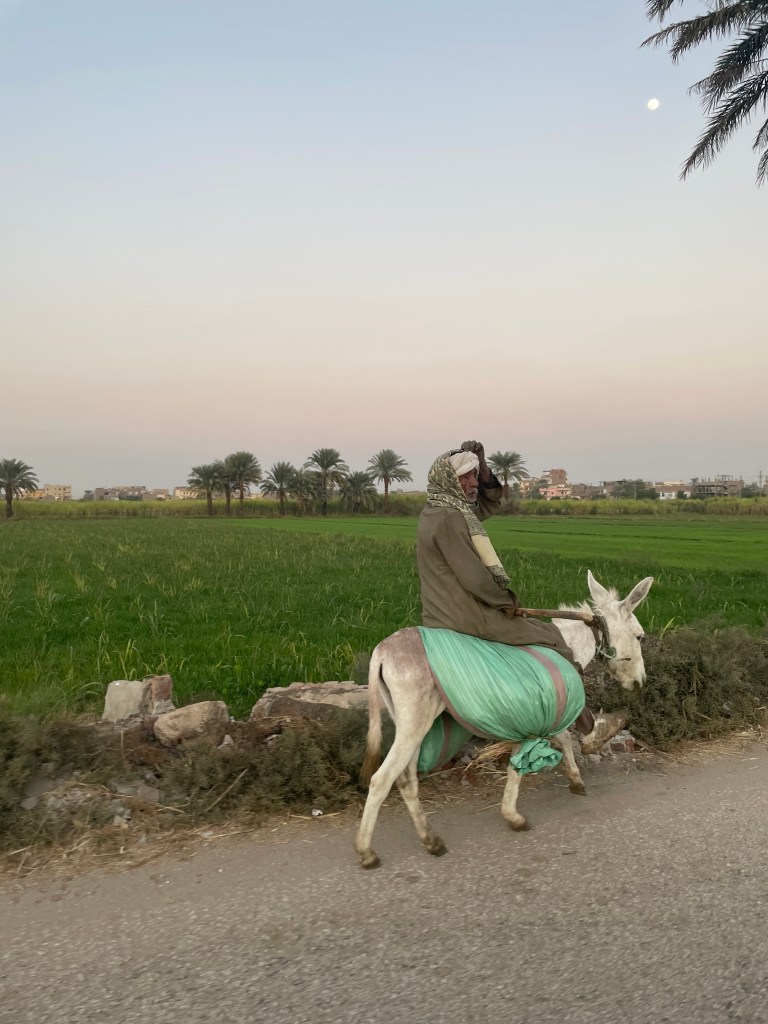
For a few minutes, the low horizon burned a deep orange as the sun set over the date palms and dense green fields. An old man, wearing a thick grey robe, rides a donkey, using his sack as the saddle, as the sky darkens and the moon rises. If you block out the electric wires that run overhead, a sentimental soul might be carried three thousand years into the past.
Back then, before the dams and grey robes, when even the Pharaoh kings went about shirtless, the annual flooding of the Nile was a big deal. The good Pharaoh was supposed to maintain Ma’at, the divine balance. If the river ran dry and enough Kemet (black silt) didn’t pile up across the fields, there wasn’t enough wheat and barley to tax, and things could turn sour. Too much silt would bury the living, and not even the funerary-minded Egyptians appreciated too much of that. With a job description like that, who would begrudge a Pharaoh a few delusions?
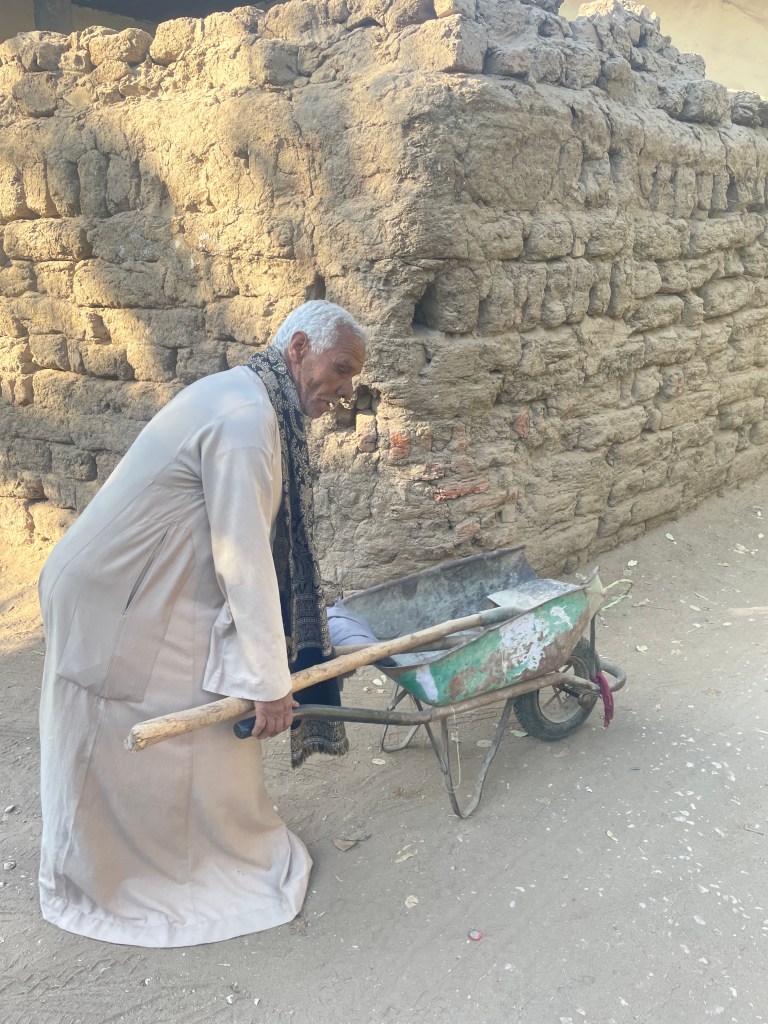
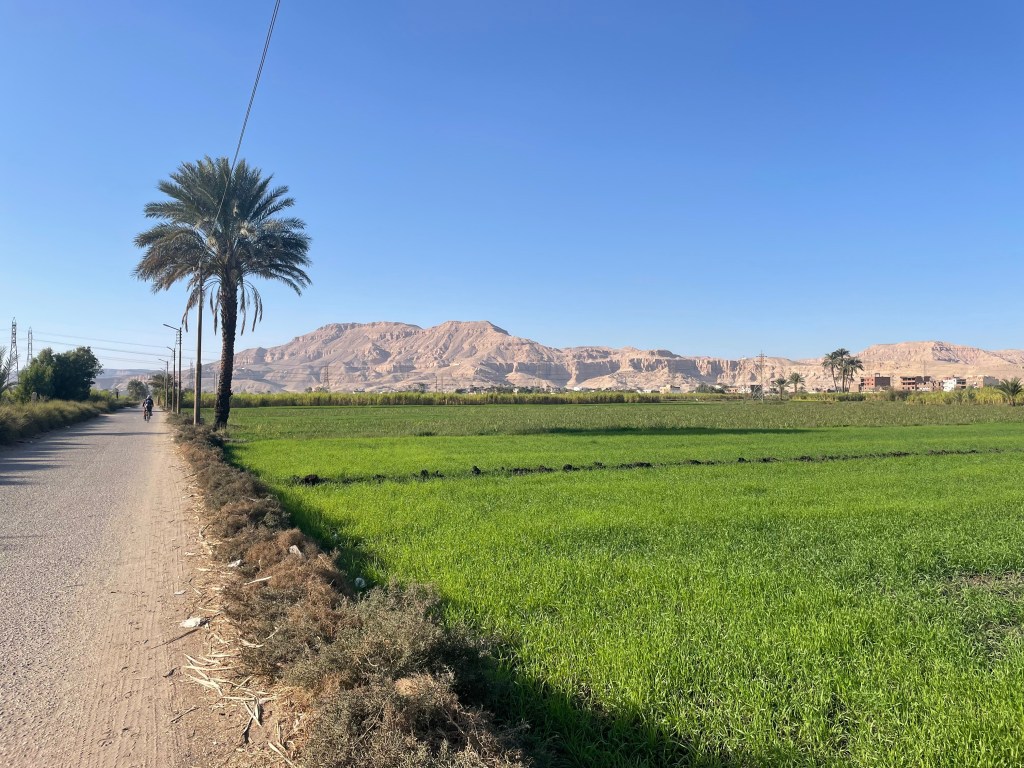
Now, with the accumulated silt of a thousand years and dams to maintain the divine balance, things are simpler. Turn on the taps and sweet dates bloom. Otherwise, everything reverts to sandy brown dust.
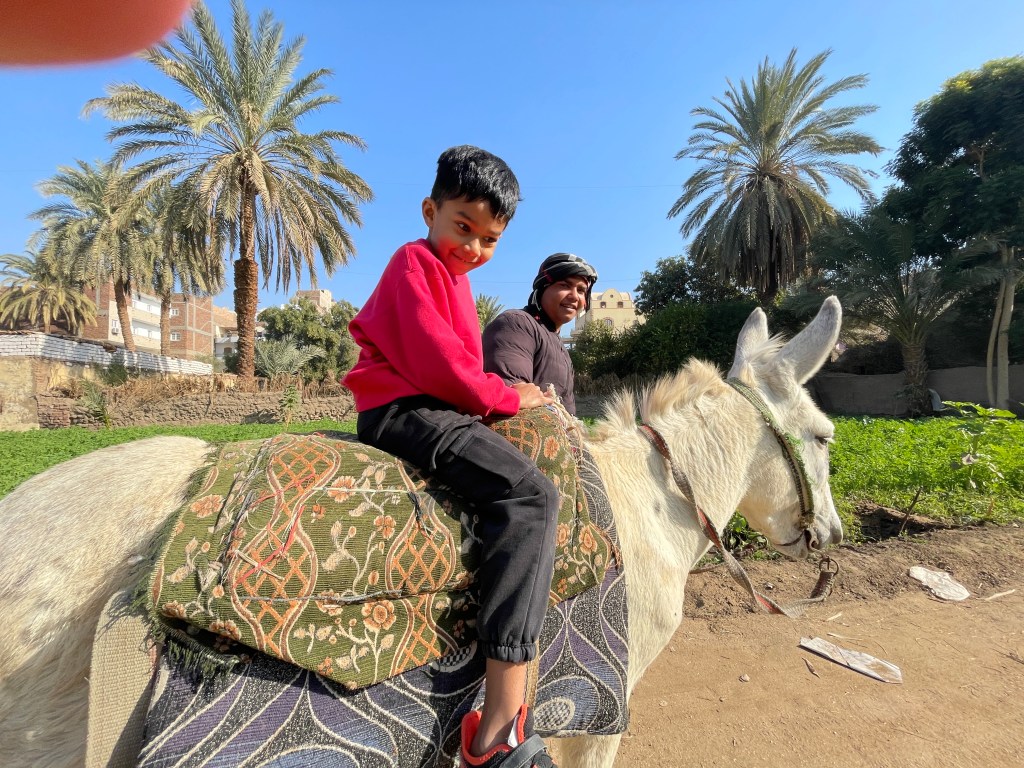
In the morning, I found a furry white donkey for Arjun to ride. Mr. Lucky, with his soft white forelocks, is more accustomed to hauling wooden wagons and trotting along with the kids of the Nile, so Arjun had to try hard to cling onto the slipping saddle. Mr. Lucky quickly grasped the situation and kept a slow pace along the muddy streets. The local kids laughed a lot and profiteered a little.
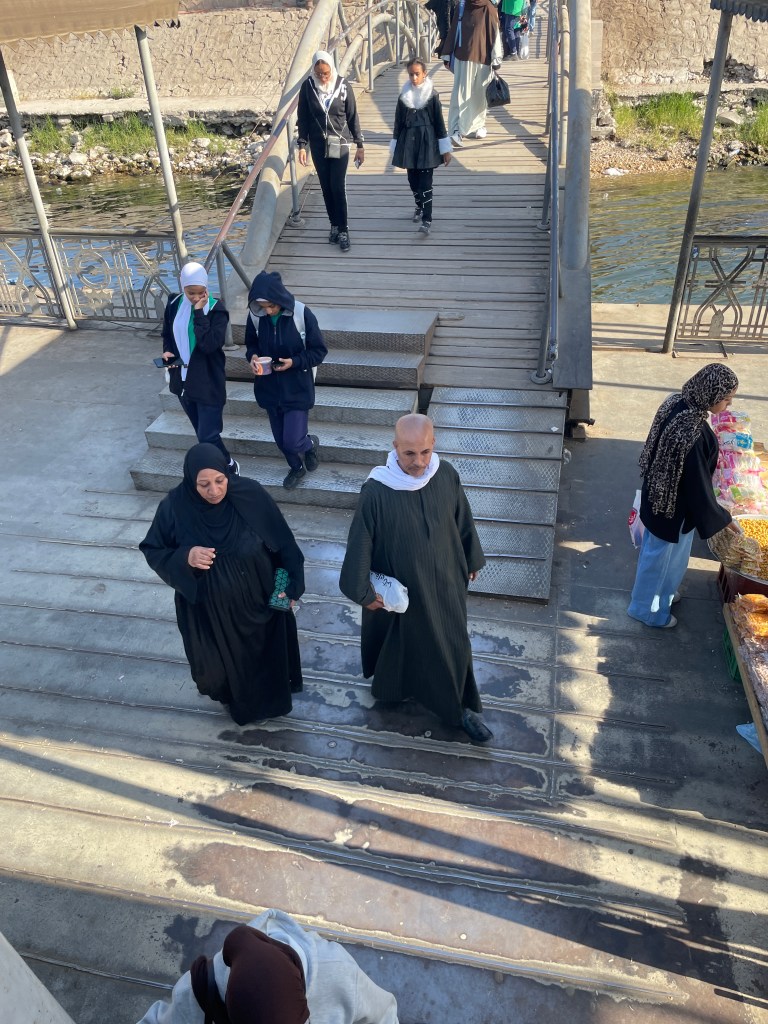
We whiled away the morning riding the public ferry across the great river. The water smells of muddy, silty fish. The engine rumbles, and diesel fumes layer onto the river smells. To better blend in with the locals, we start chewing roasted pumpkin seeds and spitting out the shells onto the deck. The women and the old sit on the lower deck. The upper deck is for men and smoking.
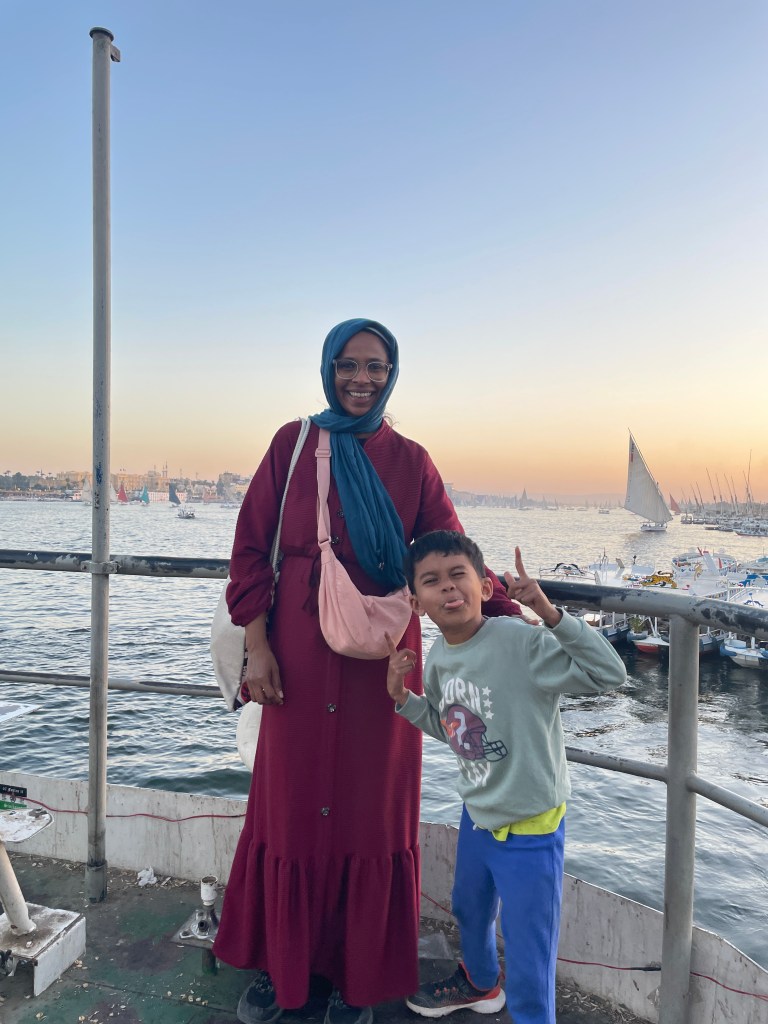
Once enough grey-robed men have boarded, the ferry swings around from the West Bank with a deep groan. We are headed to the East Bank. The Pharaohs, who obsessed over the nitty-gritty of living and dying, looked at the Sun rather closely and came up with some simple heuristics to maintain good old Ma’at. The East Bank was for living, and the West Bank was for dying. So, they built their grand temples and palaces on the East and had their dark tunnels and colorful tombs on the West. Life followed the Sun, rising and dying in neat geographical directions.
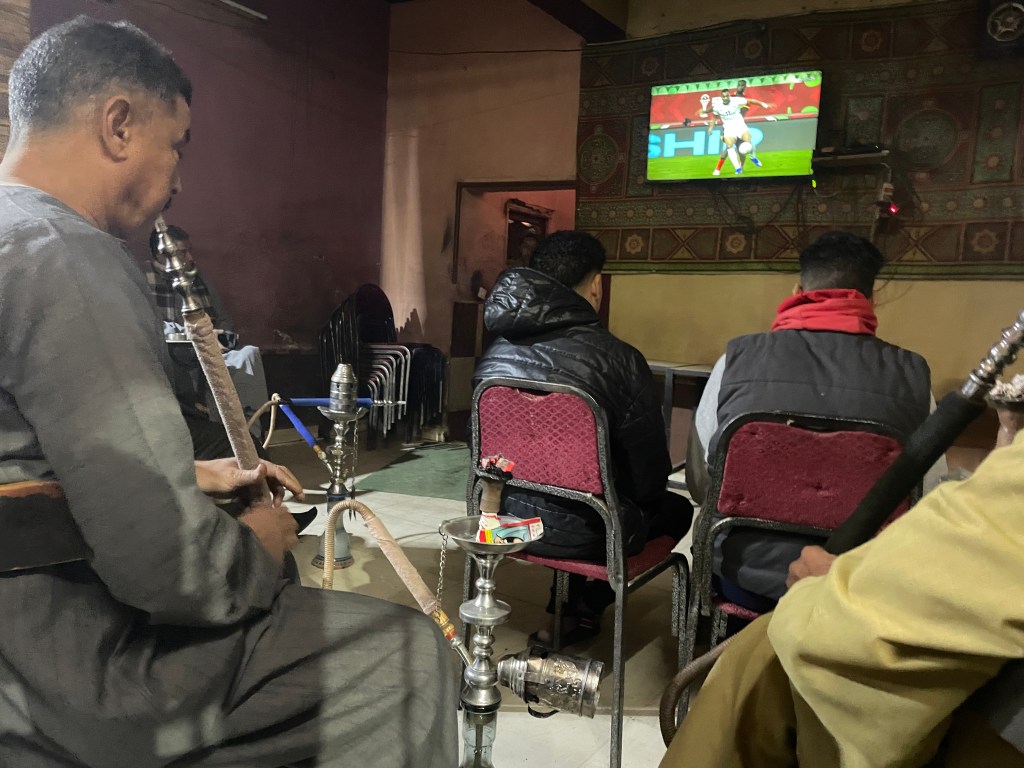
At night, in honor of these ancient rites, we head back to the West Bank and settle down into a grimy cafe. Egypt is playing Angola in the Africa Cup, and everyone is drawing deeply into their hookahs. With each drag, they cough with deeply wet satisfaction. Being too late for caffeine, I get some sort of tea, which even the kid approves of. A bona fide hunchback emerges from somewhere.
It would be very uncool and downright blasphemous if Dhanya were to be here, so she is making the most out of the Nile’s bounties and a bit of mutton back “home.”
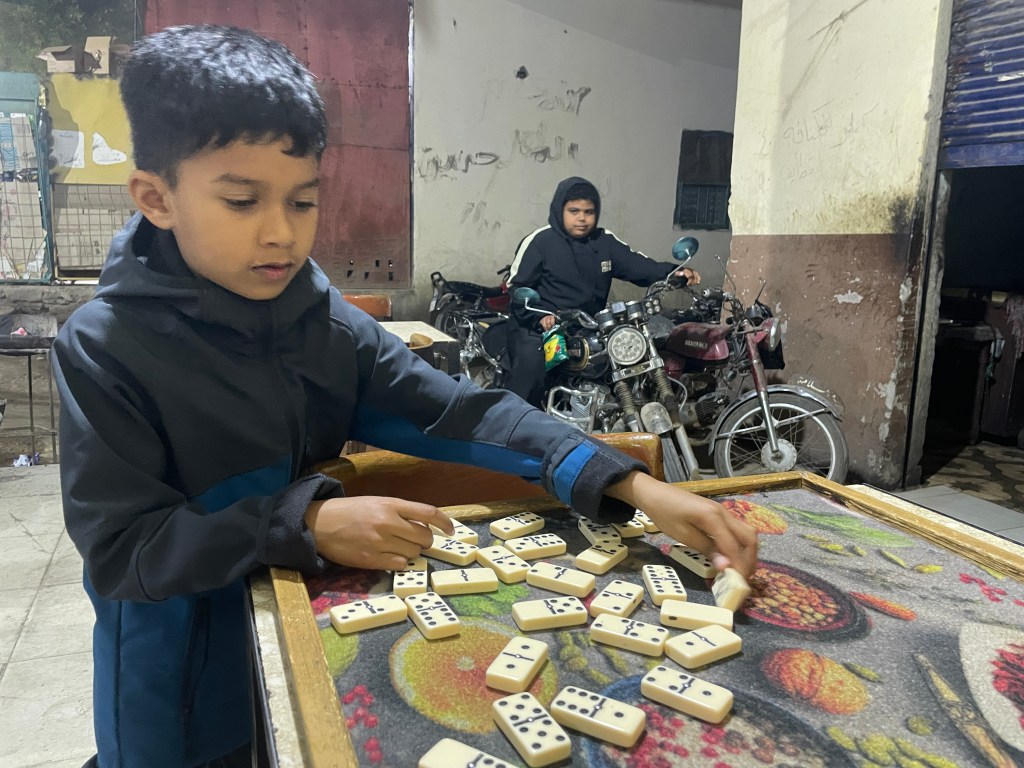
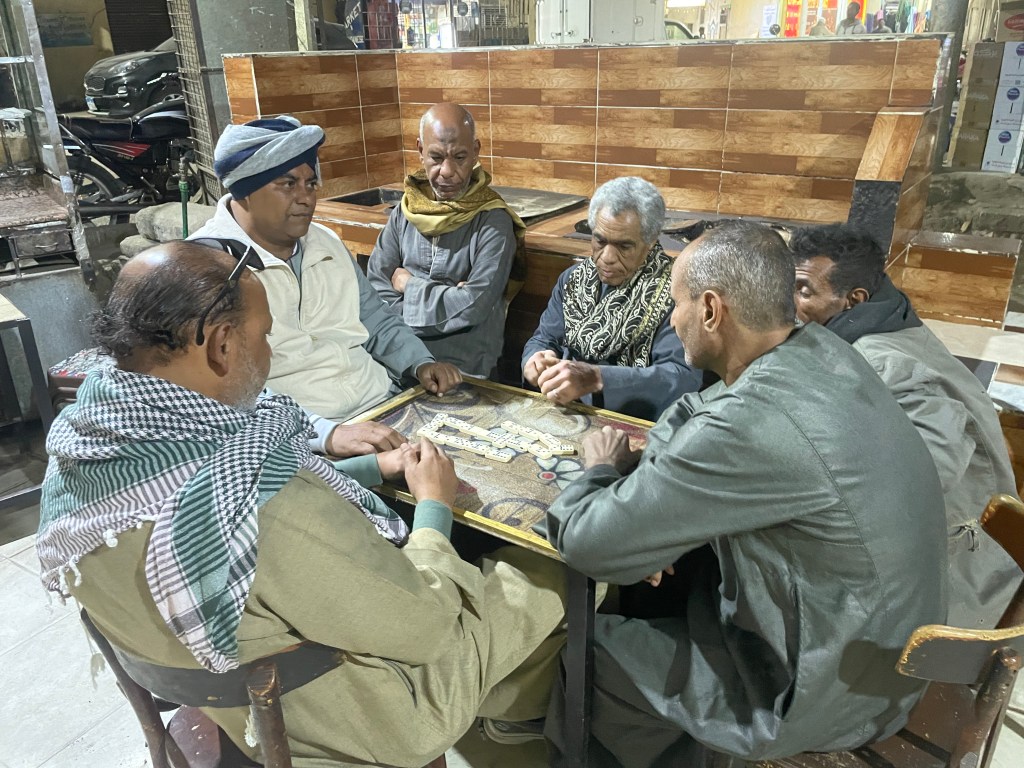
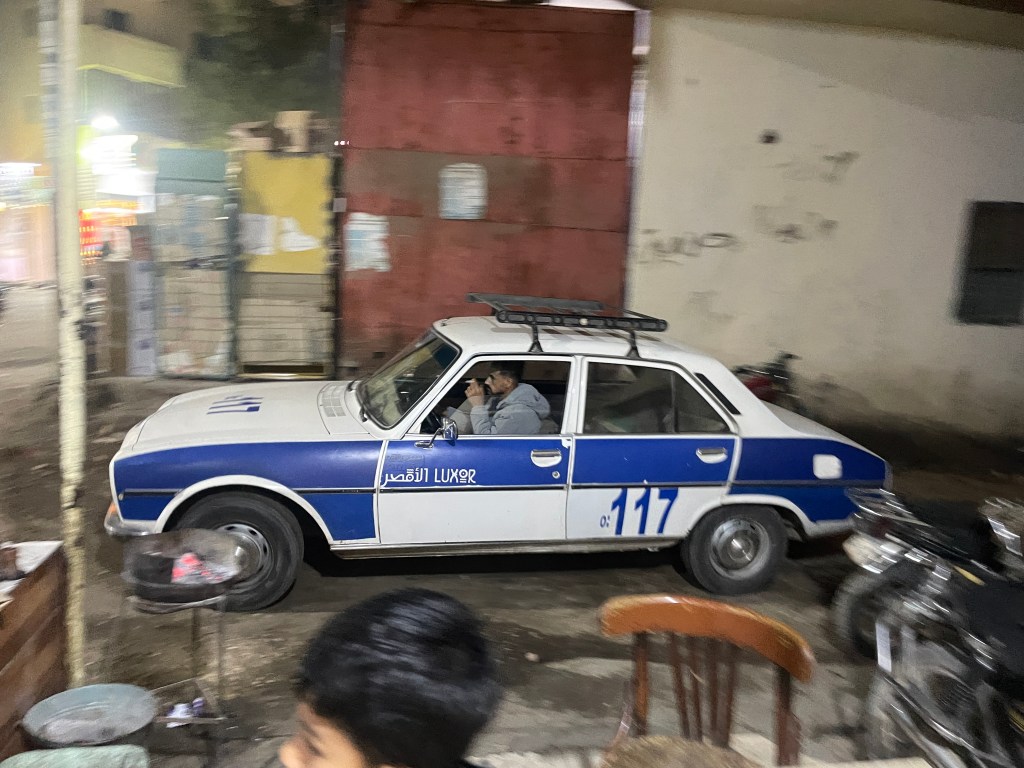
Outside, men are slamming dominoes onto the table. They smile welcomingly and let us observe how the game is played. I don’t understand a thing. Kids ride motorbikes, and we gaze at the sixty-year-old Peugeot 504s (Beugos to the locals) that drive by. The “King of Africa,” these old cars need only a hammer and Egyptian grit to start rolling. I’ve seen empty shells of these Peugeots spring to life with enough blows and a spot of incandescent welding.
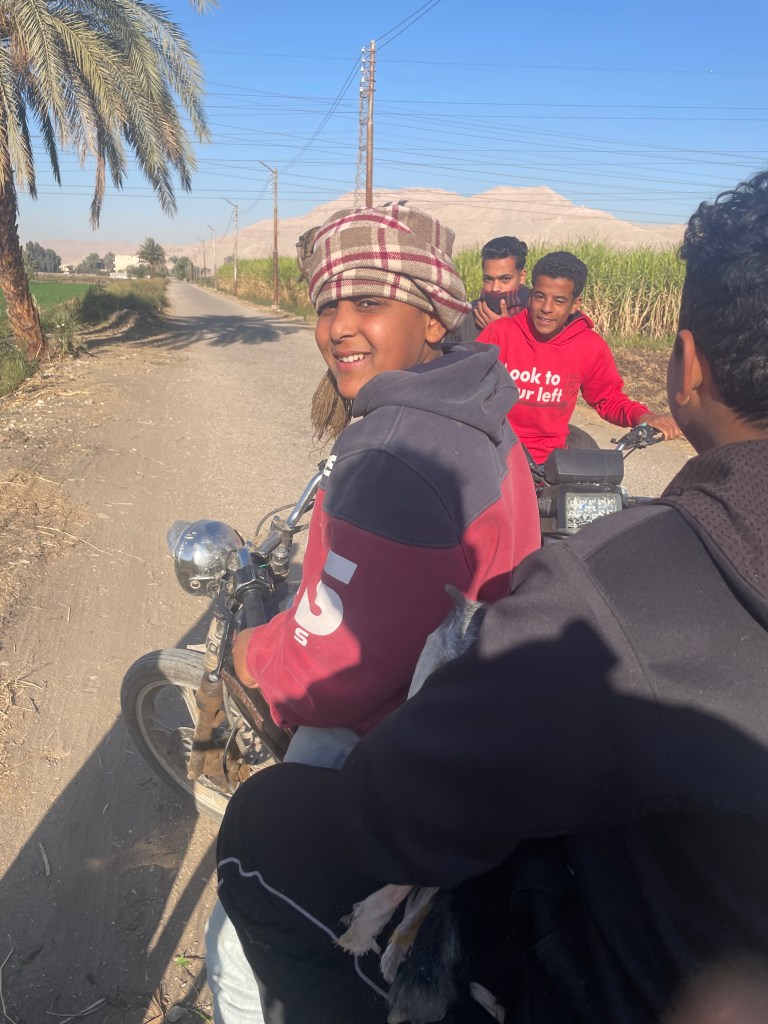
Early next morning, we set sail on rented bicycles towards the funerary sites. The early morning air is crisp, and our spirits soar. Yesterday’s toiling donkeys are grazing in solace. When we reach the open fields, we get waylaid by a bunch of kids riding a motorbike. I recognize Ibrahim, the butcher’s son, who offered us grilled and oily scrambled intestines for free yesterday. I did taste a bit to save face. Today, he and his young bandit friends carry a trussed-up goat and some fodder. I wonder if the goat will live to eat the fodder. But Ibrahim’s friends pester us rather brazenly for some money, and I don’t get to find out the fate of the goat or the fodder.
We move on and have to haul our cycles up a steep embankment on which the narrowest of rail lines are laid out. I learn that these will carry wagons full of sugarcane in a few months. The Nile may have been dammed, but the silt of all those past floods still yields.
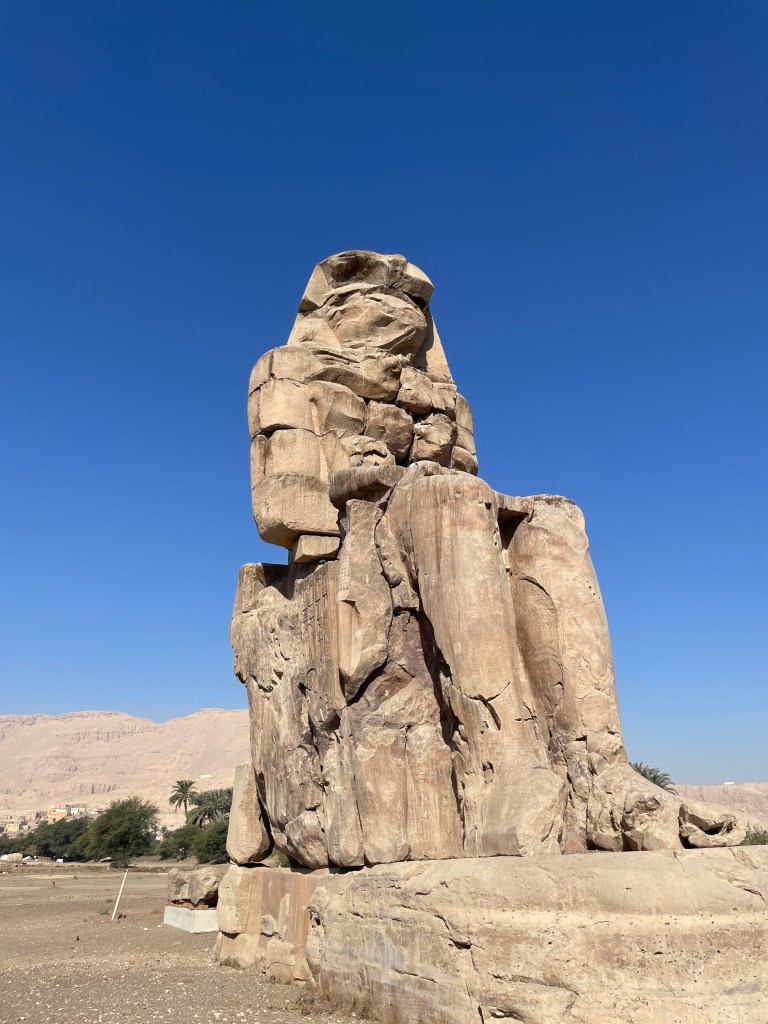
Our next stop is two giant and weathered sandstone statues. They sit with their hands resting on their knees, propped up by giant blocks of stone that provide seating that has survived the tumble of three thousand years. This used to be the mortuary temple of a Pharaoh, Amenhotep III. A mortuary temple might sound a bit grim, but it’s a concept that is still going strong. We just call them memorials to nation builders now. Amenhotep’s spirit (Ka) must have survived, but the body looks a bit the worse for wear and tear. There is a distinct froggy vibe to what must have surely been a powerful, if not handsome, god-king.
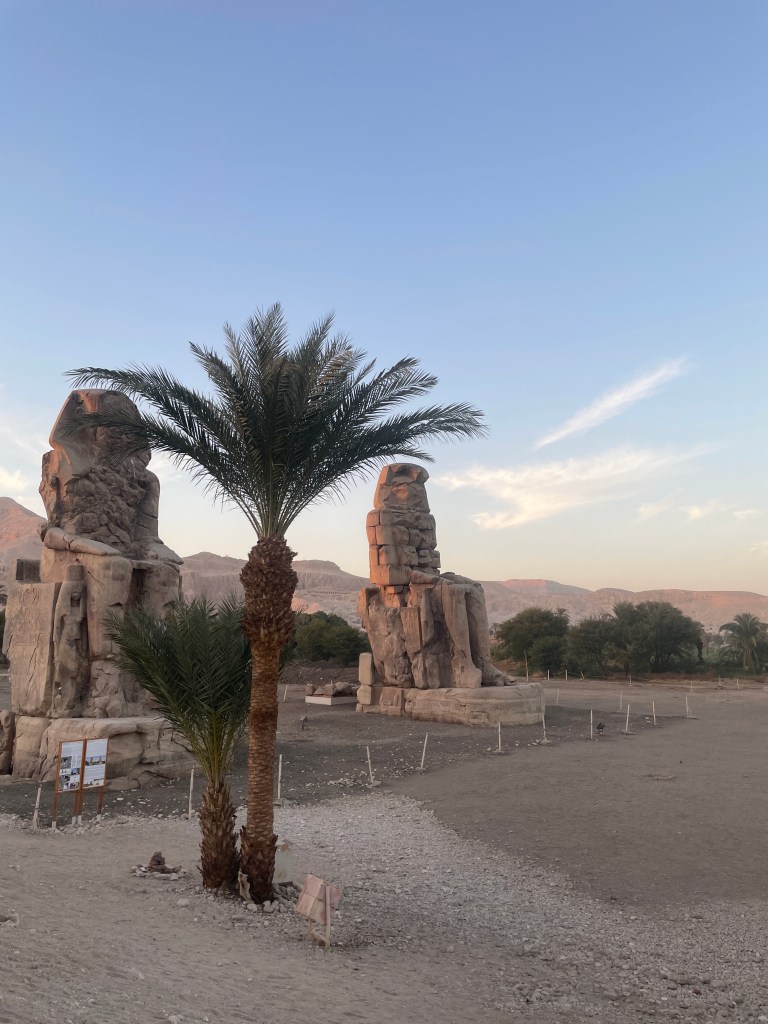
It’s early in the day for the tour buses, so we take our time walking around. These sites were popular during Roman times, and my favorite gay emperor, Hadrian, visited here. Being a noble gay, he also had a woman wife (to maintain Ma’at). Sabina didn’t get too much love, but at least got her name tattooed onto the foot of Amenhotep. For some reason involving obsession over Greek mythological heroes, the Romans called this the Colossi of Memnon. Perhaps Amenhotep’s spirit didn’t survive after all.
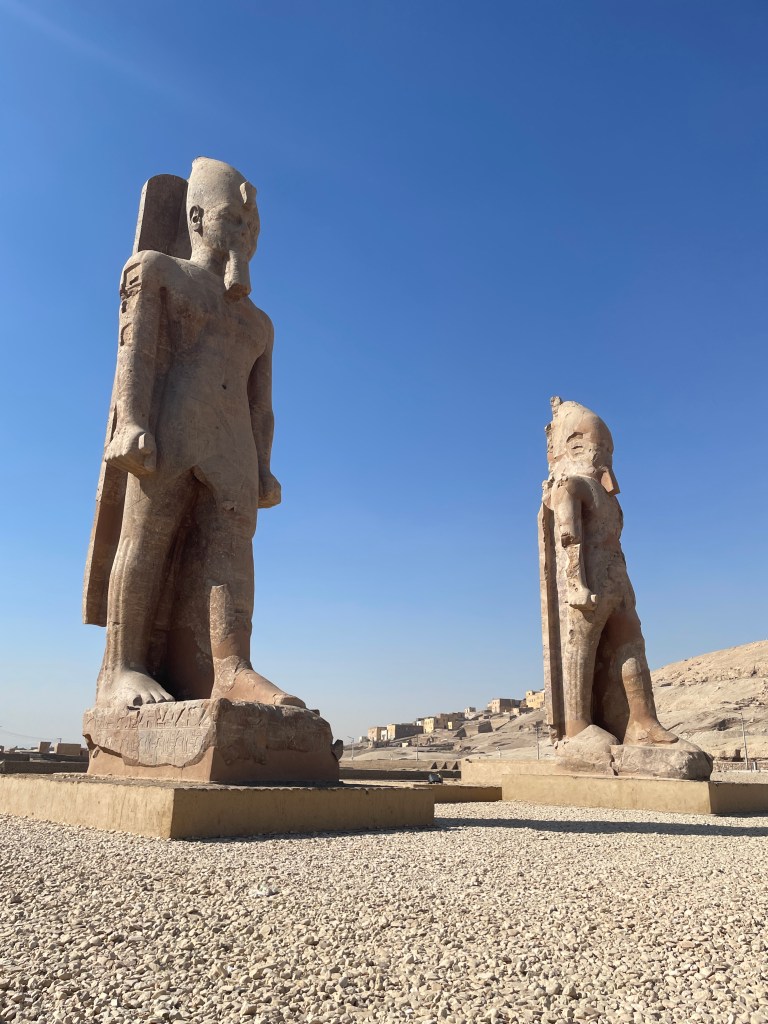
Now, we are firmly on the tourist trail, and I make light work of the slight gradient, pedaling on smooth roads. Soon, we arrive at two more statues of Amenhotep, which have been meticulously put together and raised from the dust by European archaeologists. The Ba of Amenhotep might still soar on the wings of the Horus. I am not making up the word “Ba.” The Egyptians knew that the soul had two parts—the Ka, or the life force that sticks around the body and gives rise to the whole mummification industry, and the Ba, who soars on the Horus to join the Ra, or Sun. Ka, Ba, and Ra: everything rhymes with monosyllabic elegance. These guys knew their stuff.
While resting in the shade of the Ka, we meet Elizabeth, a French lady who still wears her pearls in the desert heat, runs a pottery studio, and has made Luxor her home for several years. We exchange notes and promise to return tomorrow.
Close by is the funerary temple of Ramesses II. The grandest of all the Pharaohs, the red-headed king would insist on being worshipped as a living god. The others waited patiently until their death. But Ramesses the Great was in a hurry. He built the grandest temples, bludgeoned the most heads, made the sculptors depict the said bludgeoning in great detail, and had the pragmatism to rebrand a stalemate with the northern barbarian Hittites as a great victory. Building a nation is never easy.
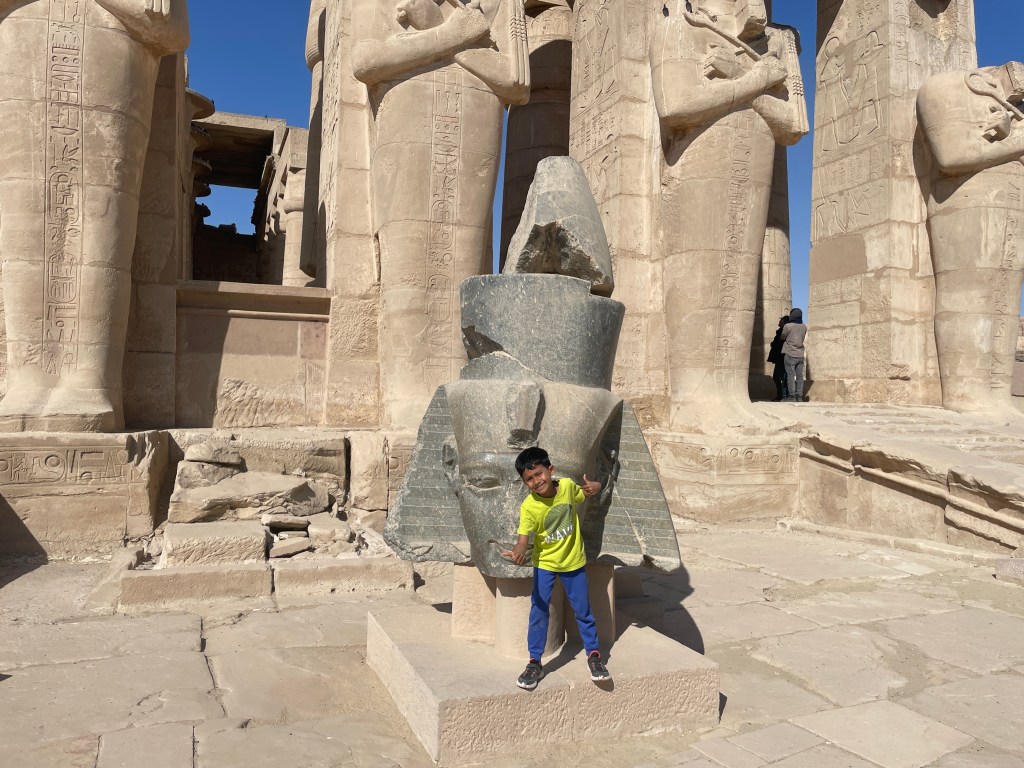
Arjun must first eat his brunch before we enter the hallowed temple of Ramesses. In a quirk of destiny, the giant statue of Ramesses toppled sometime in antiquity, and its fallen head has generated much passionate poetry regarding the futility of it all.
We enter through a hall of towering pillars. Here, under the desert sun, I understand where the Greeks got their idea of the stout Doric pillar. These sandstone towers are chunky and flare up at the top. The date palms that abound were the obvious inspiration. I get my first glimpse of Egyptian hieroglyphs. Ducks, quails, and horned vipers are carved deep into the stone with precision that would make a modern typeface proud.
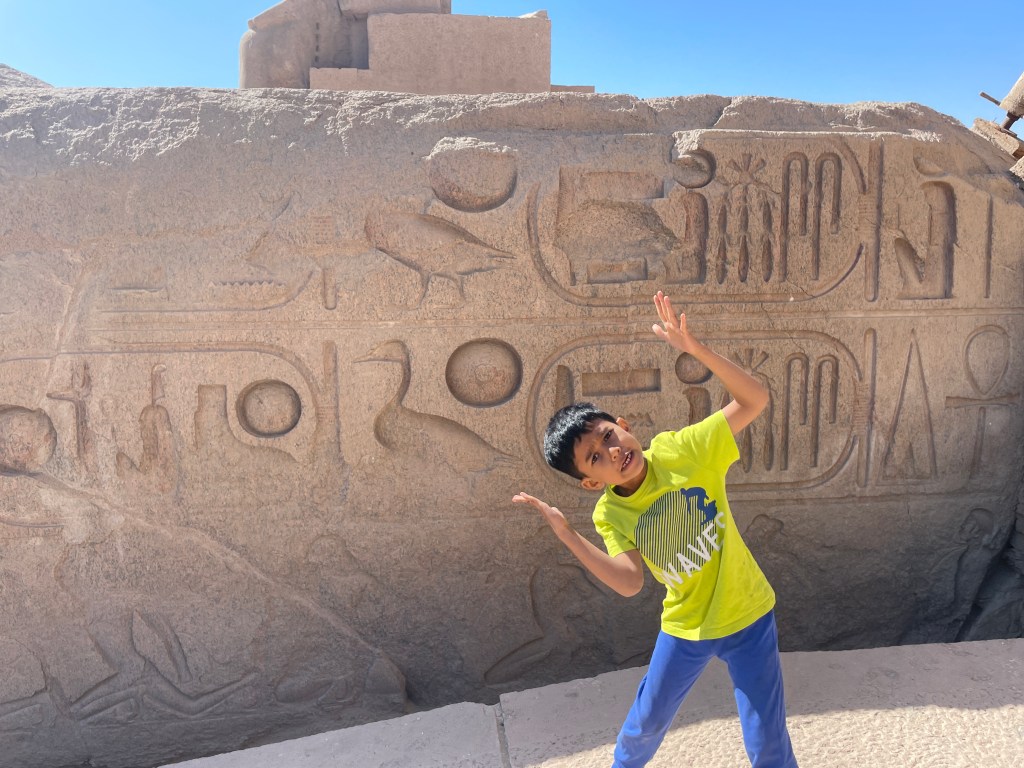
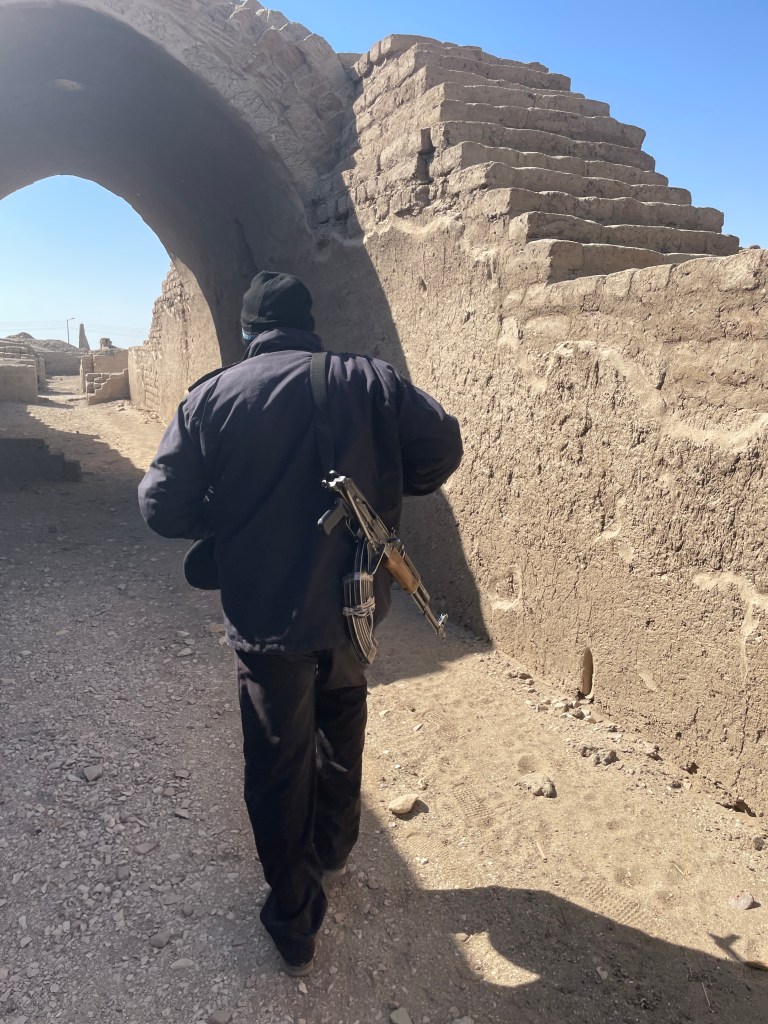
Arjun, chasing some pigeons, attracts a guard with a Kalashnikov. He walks up and immediately takes a liking to us. A single brown man (with a shemagh) and a young boy child is the greatest of door-openers in Egypt. I bring out whatever little Arabic I know. Soon we are being shown carvings of Ramesses riding the sun barge and all that stuff about Ka, Ba, and Ra.
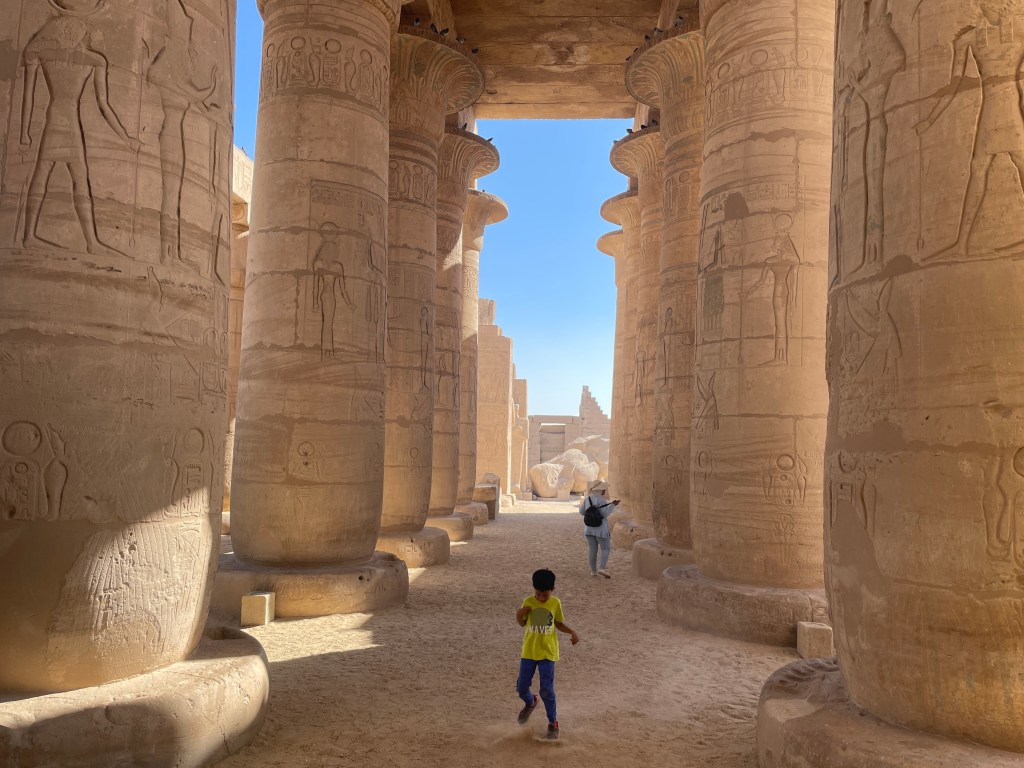
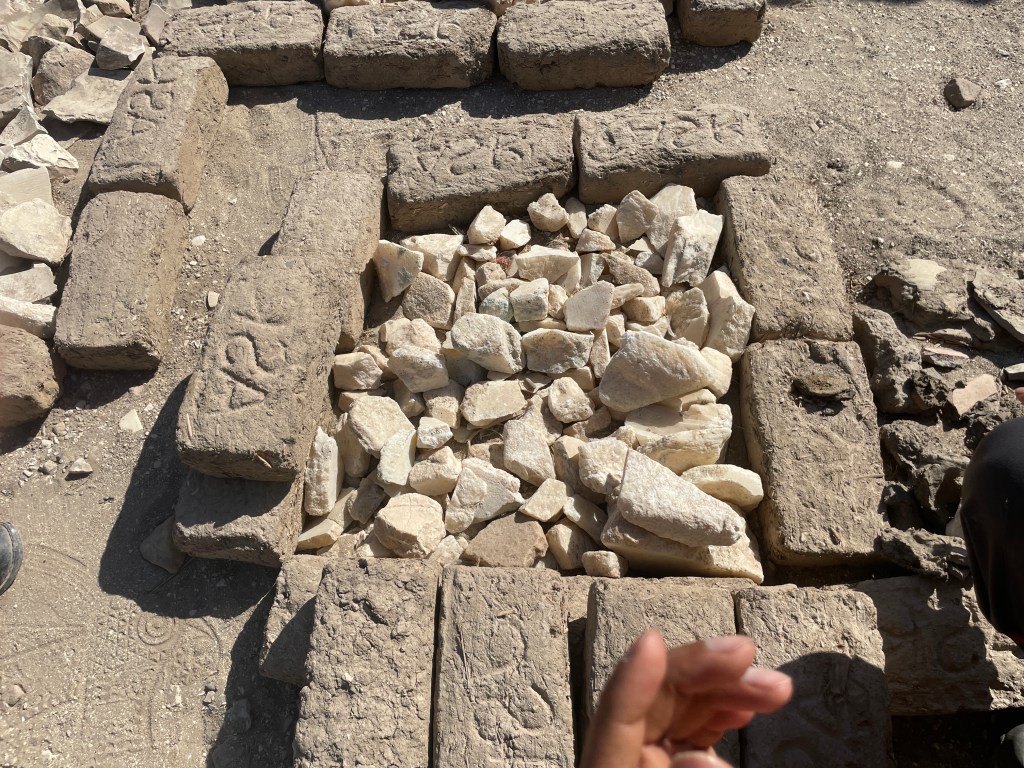
We say good things about Egypt, and our guard takes us further afield. With the machine gun slung behind his shoulder, we are shown the granaries, bakeries, and several deep pits where the guard proclaims lie the bones of many kings. I am happy enough to see piles of alabaster shards. I read that the bakeries here produced a thousand loaves of bread.
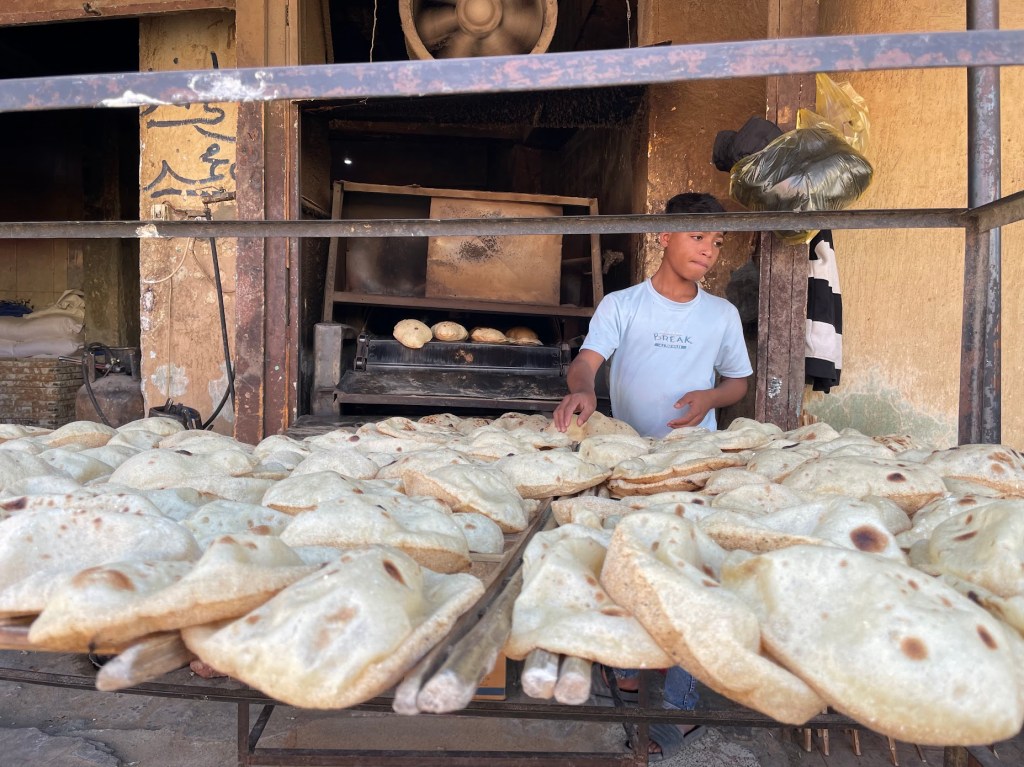
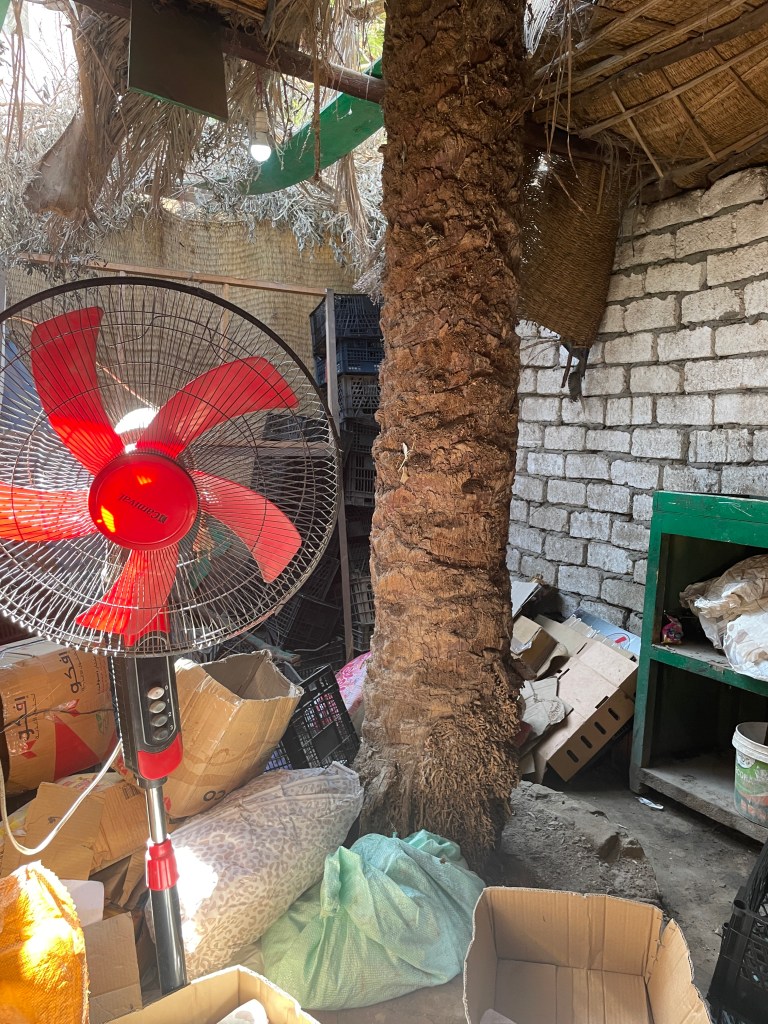
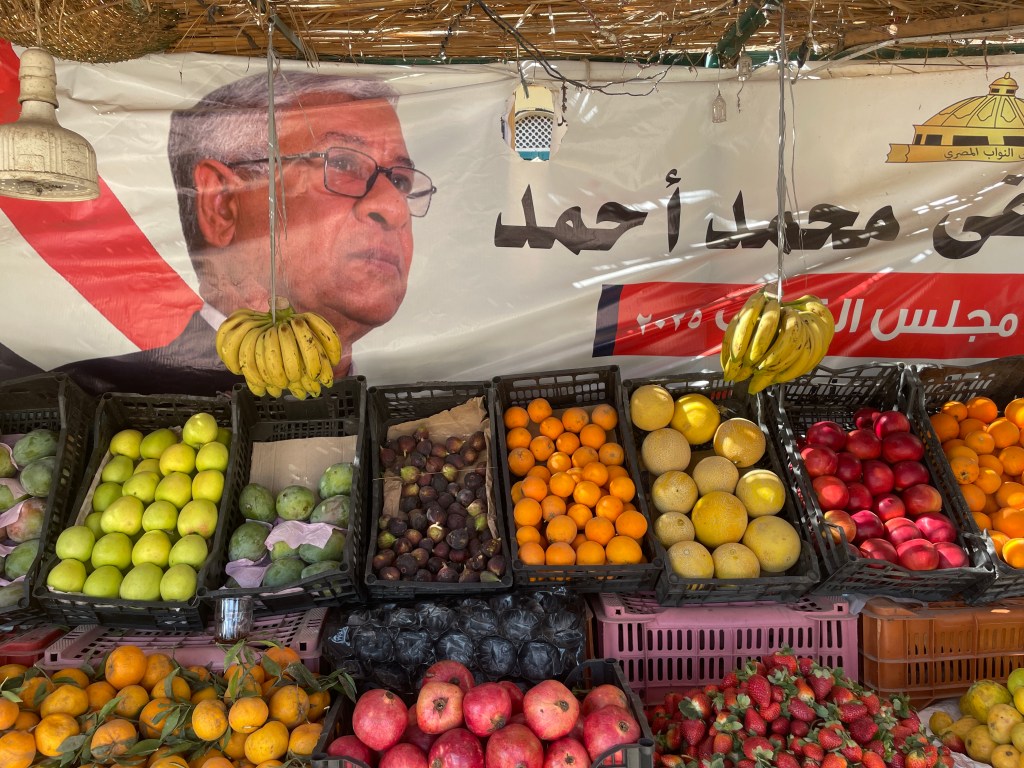
The high priests who performed the rituals on behalf of the great Ramesses must have had a ferocious appetite. As we cycle back, we stop by a little vegetable stall. The freshest and muddiest of potatoes are piled up beside juicy strawberries, melons, and oranges. A date palm grows right in the middle. Here in ancient Thebes, they blow up the roof to let a date palm flower.