I float on my back, sculling the cool, blue, salty water with my palms and look straight up at the sun. It’s winter in southern Turkey, and the sky is a vivid polarised blue. The waves are rough, and the seabed drops sharply in a jumble of a million smooth pebbles.
I enjoy the Mediterranean on my back, and my newly acquired swimming confidence, venturing out a few meters, all the while a little nervous about the salt water stinging my eyes. Arjun watches me from the shore. I must look like one of those mermen (husbands of the mermaids), who explore the coastal pleasures. Only a lot more hideous and without the curls.
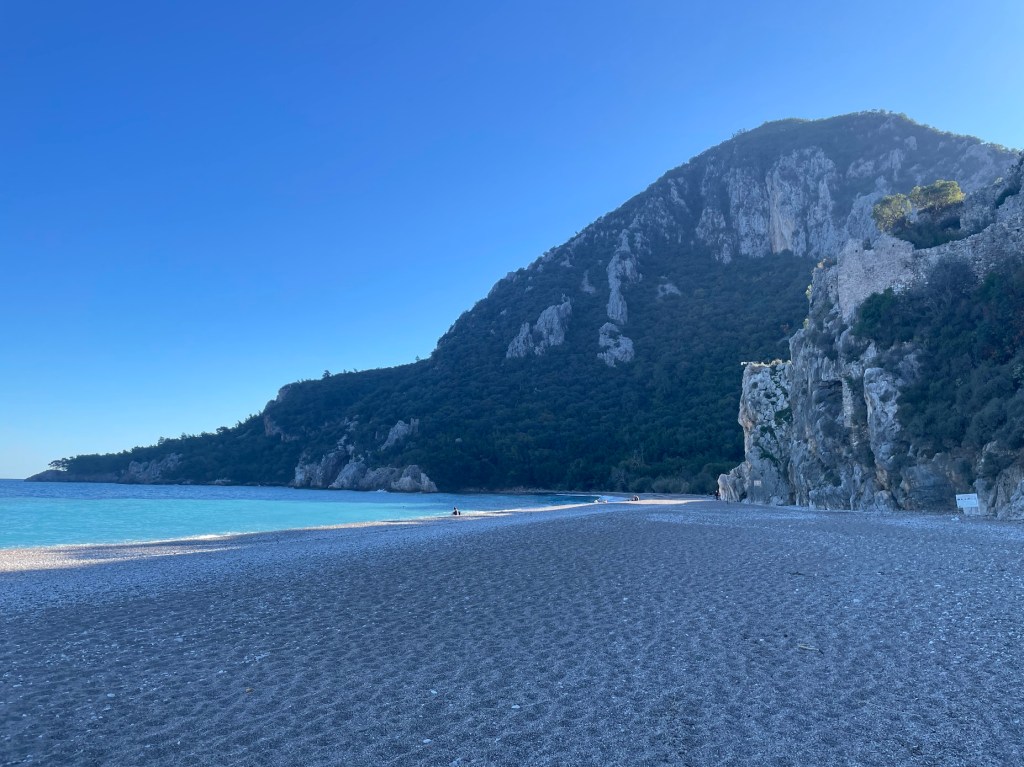
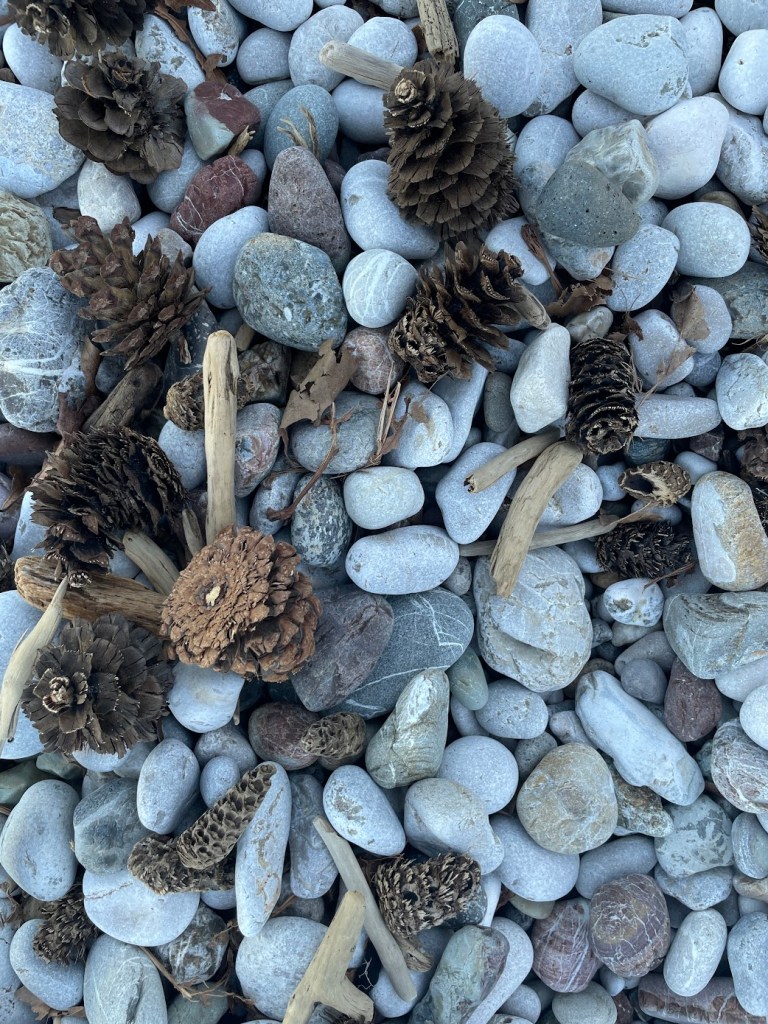
In the hot daze of the sun, I hear a crunching sound from under the waters. Sound travels through water, in strange ways, and my submerged ears tighten. What bones are being ground? I listen carefully. It’s just the pebbles, gravity, and the waves. With each rushing foaming push, the sea kicks the white stones up the steep beach, only for gravity to do its job when the waves recede. That even rhythmic crunching is a bit too much for me, though, and I beach myself in ungainly fashion and walk back proudly towards Dhanya and Arjun.
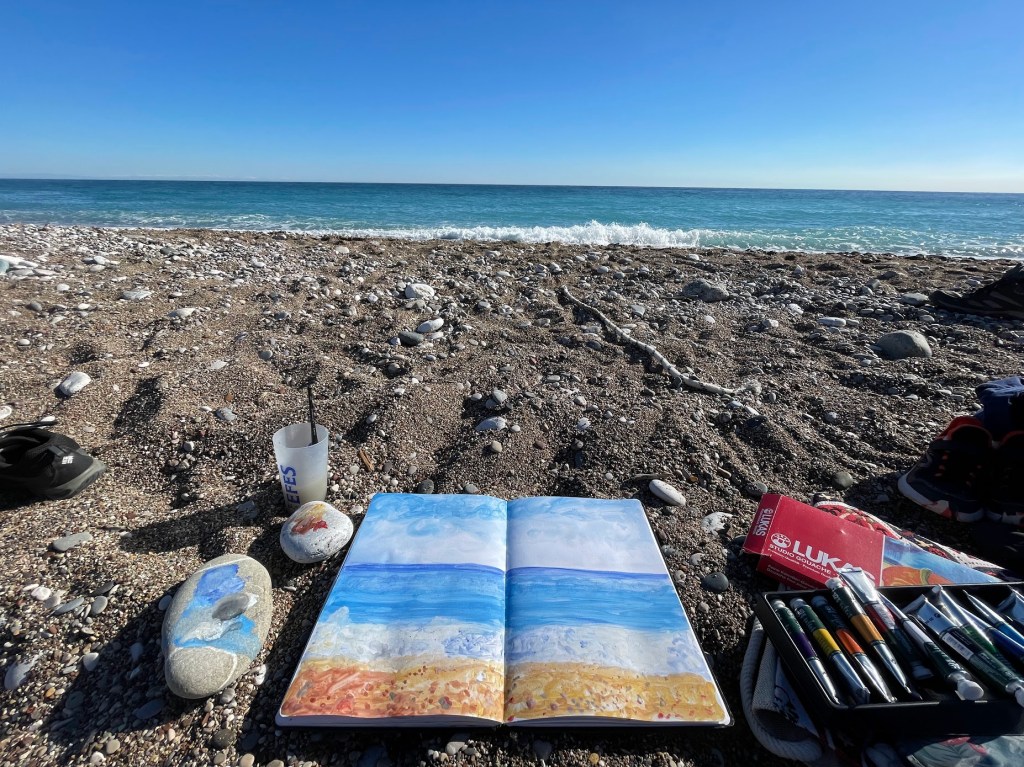
Dhanya has very wisely decided to paint the sea and sky. Arjun has somehow managed to lose his clothes and become warm in the sun. I lie down on the pebbles and dry off.
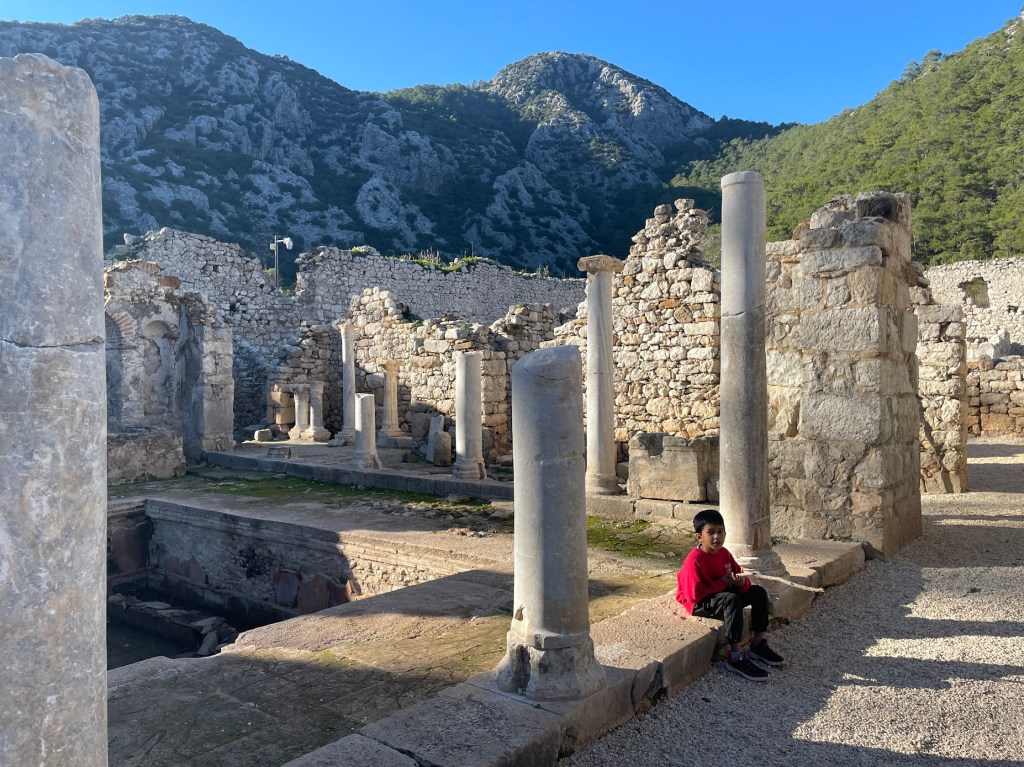
We relax and eat oranges in the cove. A stiff breeze blows over the sea. Two thousand years ago, pirates too found this place to their liking and founded a city called Olympos. We walk to one end of the pebbled beach, buy our tickets, and step right into the ancient city. Modern archaeologists have come up with depressing names like “Necropolis street” and “Harbour tombs” for the sights, but it’s still possible to enjoy a stroll on the ancient paved streets and admire the remains of once grand Corinthian pillars.
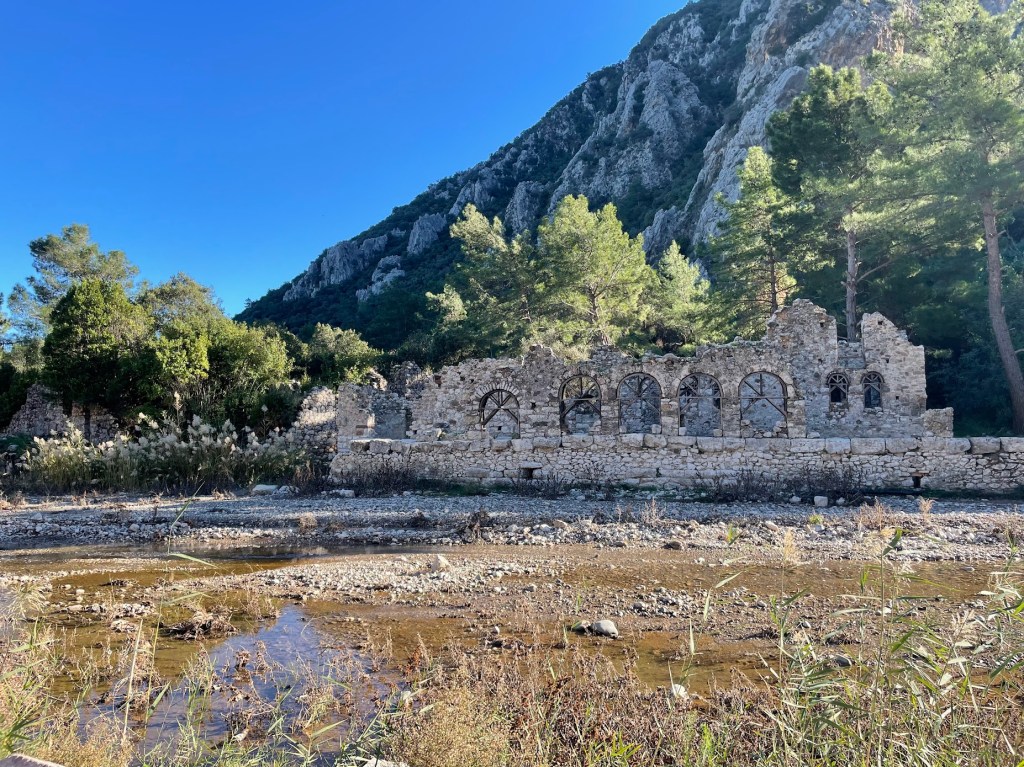
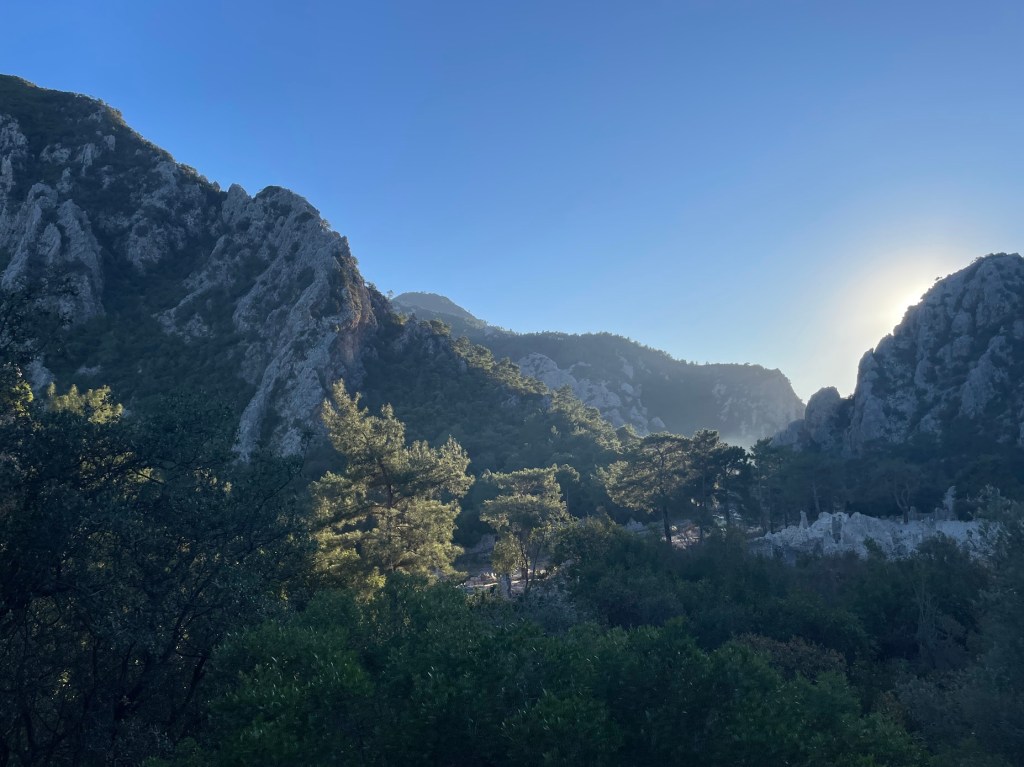
A placid and clear stream empties into the cove, and the green hills offer shade. A bit over two thousand years ago, this little corner of the Mediterranean in Asia Minor was a bit lawless. True, the Greeks had civilised these people, but here, far away from the philosopher kings, pirate chiefs held sway. They might have been pirates, but they were Hellenized enough to want thermal baths and mosaic floors. A certain Zekenites was their chief, issuing coins and recording his name for posterity.
A noble man, who had the decency to set himself on fire, when Julius Ceaser finally sailed from Rome and claimed all of Asia Minor. When Julius was a young lad, he had been kidnapped by pirates of the very same Anatolian stock. The legend is that he was insulted by the paltry ransom, and it seems that he finally had his revenge when he became Caesar.
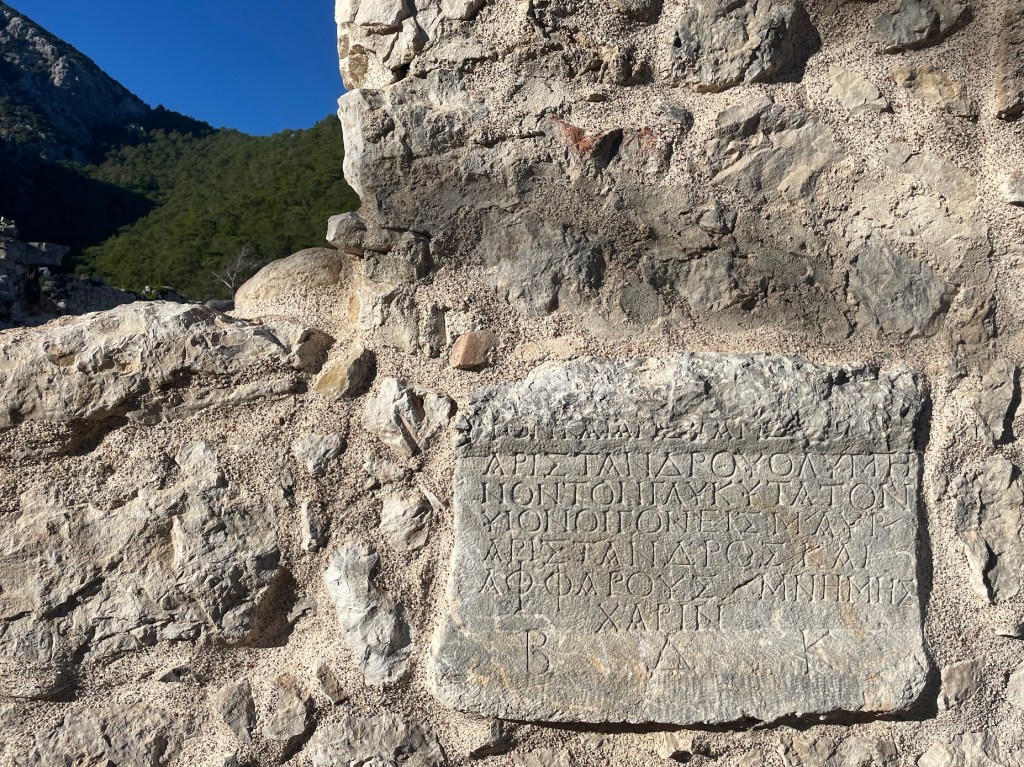
I embrace my inner faux archaeologist and impress Arjun by reading out a chiselled Greek inscription. “Aristandros” something, it goes. The Greeks did not believe in spacing out their words, and I quickly give up the struggle. “Excellent Man”, it means, and I rejoice by stealing some Roman brick shards.
Olympos, then, was part of the Lycian league, a federation of independent city-states that dotted the more picturesque corners of Asia Minor and paid their respect to the Caesar in Rome. Even the framers of the American Constitution were impressed by this arrangement. A little bit of hierarchy always goes a long way.
After a lazy afternoon peeking through limestone arches and caressing thousand-year-old bricks, we head back home. At the end of the beach, we meet Doga and his friends, who have been living out of their campervan for months. Of course, Arjun wants to see the interior of the camper. Doga claims that his is too dirty, so we get a tour of the cleaner ones. There is a mini DJ mixer and a blind cat, who has her own little deck.
One early morning, I walk with Arjun along the road that runs through the village. We walk past the graveyard and a whitewashed mosque, with a blue minaret, whose muezzin has been waking me up every day. The resemblance to a blue domed greek orthodox church somewhere in the Aegean Sea is remarkable.
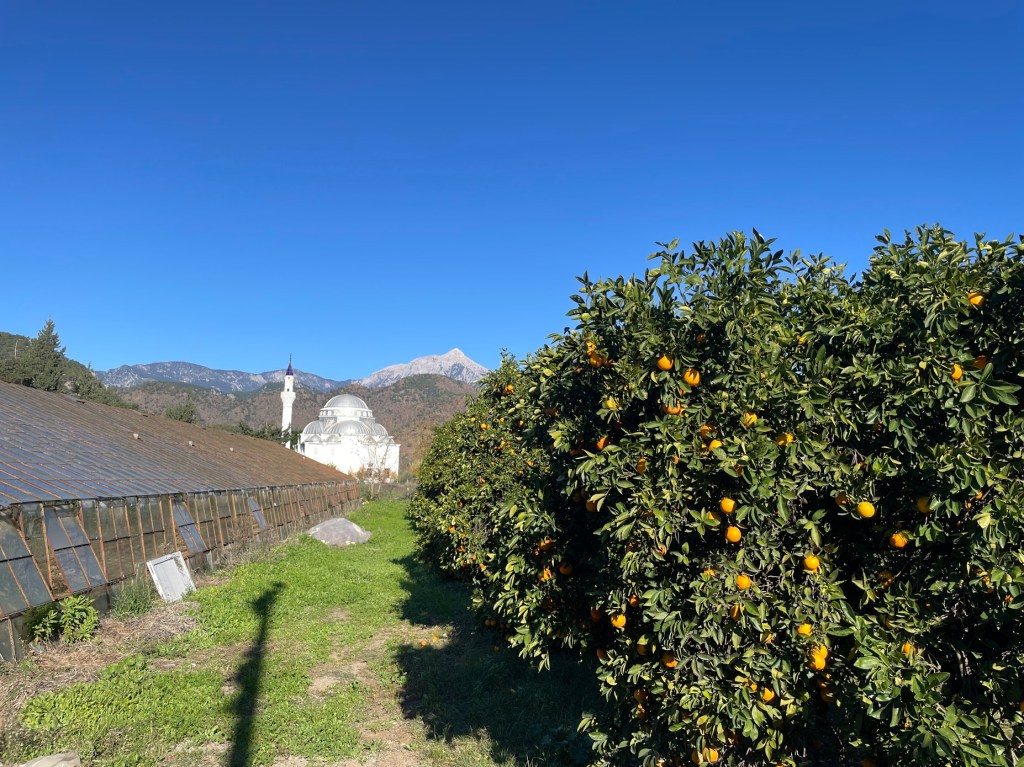
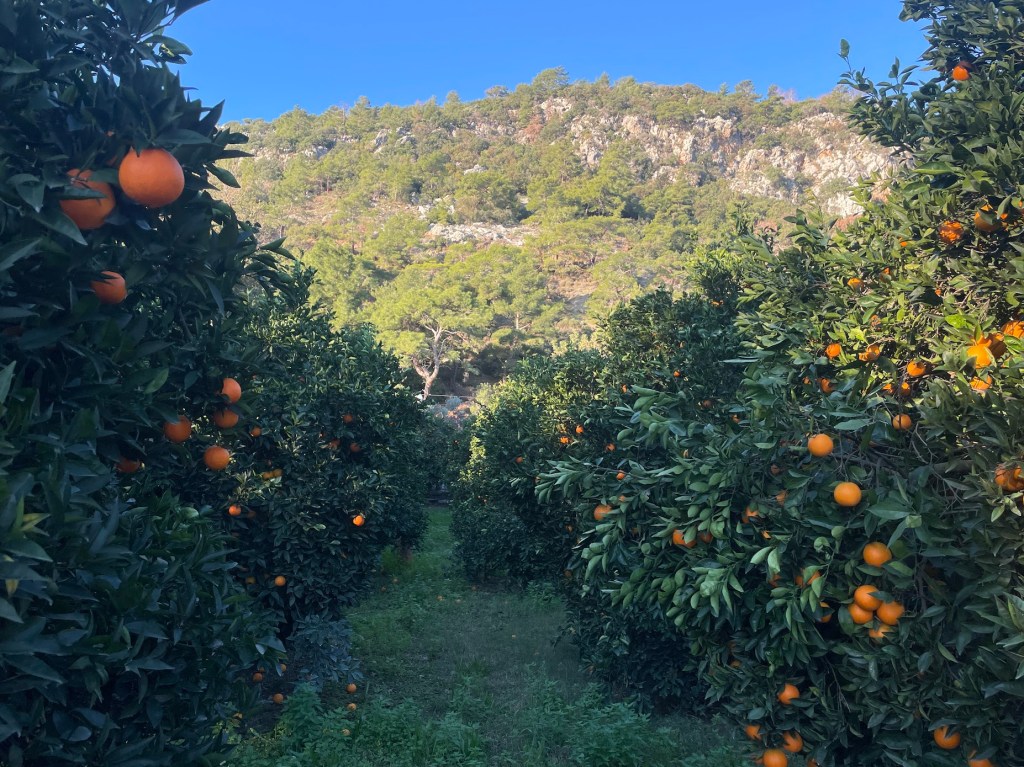
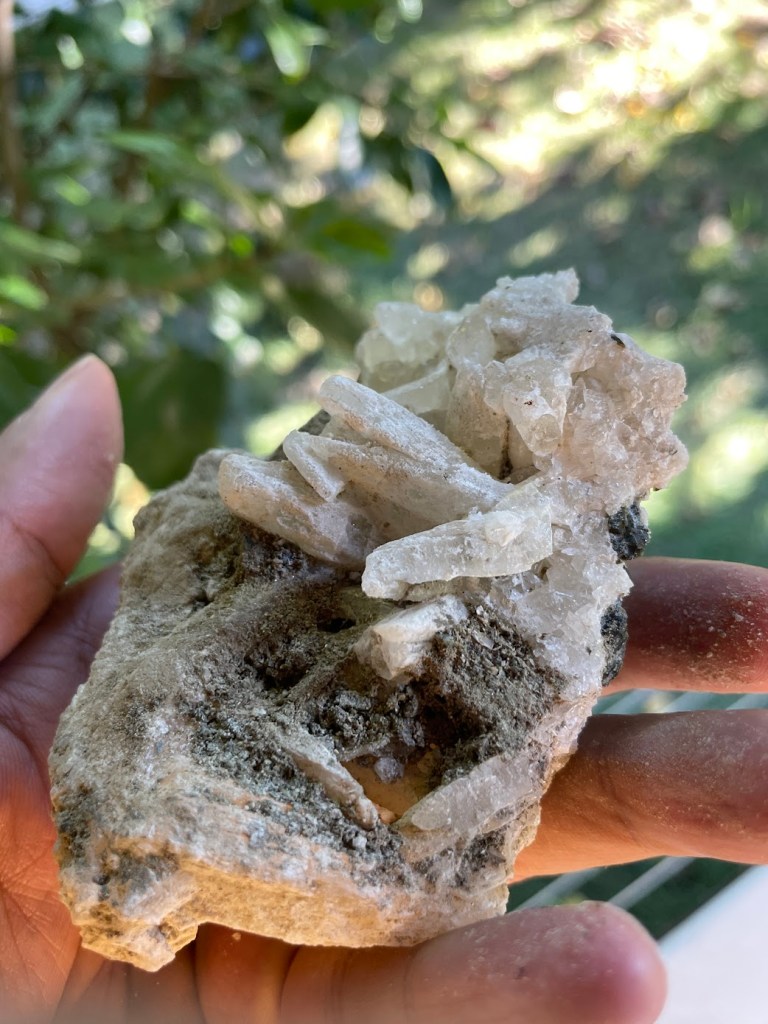
The land is teeming with Orange orchards. The neat rows of dark green trees are heavy with the juicy fruit. Chickens rummage through the fallen, mouldy oranges, and a little hairy dog barks safely from a distance. We walk a bit, and I sit on a large block of waxy green serpentine rock. Arjun digs for crystals in the hillside, and lo and behold, we soon find a handsome bit of rock with shapely quartz fingers sticking out.
The hills above hold many more wonders. Pliny the Elder, who wrote the world’s first encyclopedia, had a small section devoted to the fires that burn atop Mount Chimaera. A lion-headed monster, with a goat sticking out of its back and a serpent for tail, illustrated the text. We walk up to the mountain and find the grandest of tabby cats. His fur is obviously singed, and he settles down into our laps with an easy purr. Perhaps at night it does turn into a shapeshifting monster.
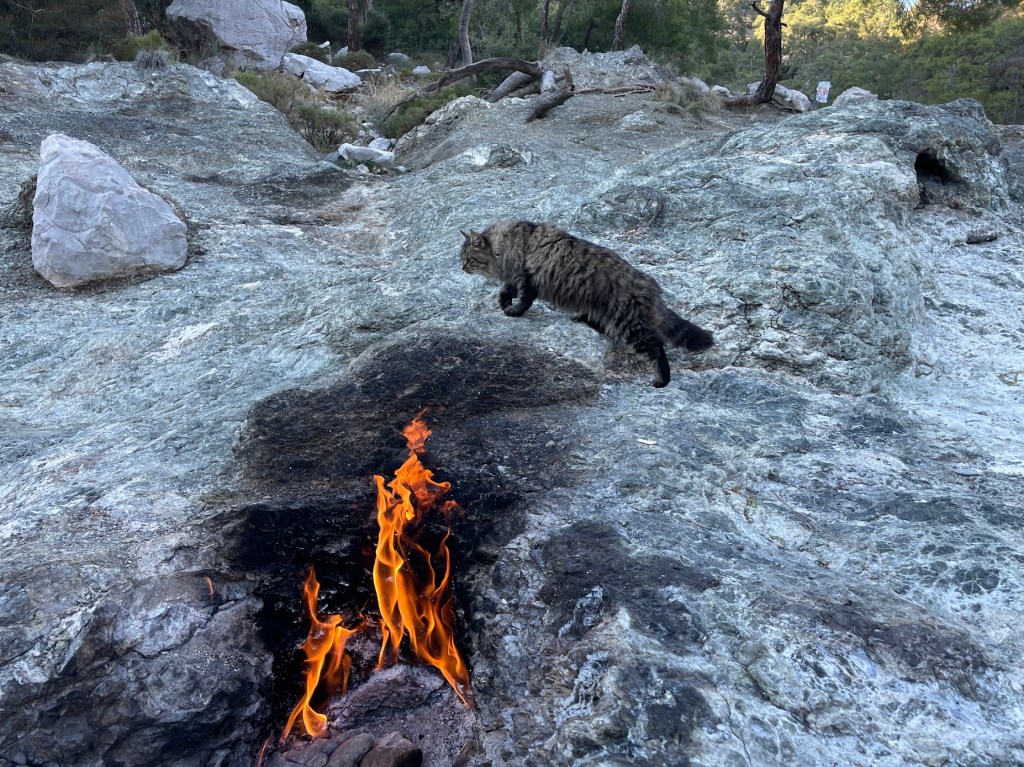
All is not fable, though. The fires are real, and we warm ourselves over the flames that hiss from the vents. Hydrogen and methane emerge from the bowels and combust in an orange glow. The hillside is bare, and there is a whitish residue over the rocks. Arjun thinks he is the first human to have discovered fire and seeks pleasure by setting fire to a large stick I provided him with. A couple from Kazakhstan also arrive, and very generously share their marshmallows, which bubble and caramelise in the magical fire.
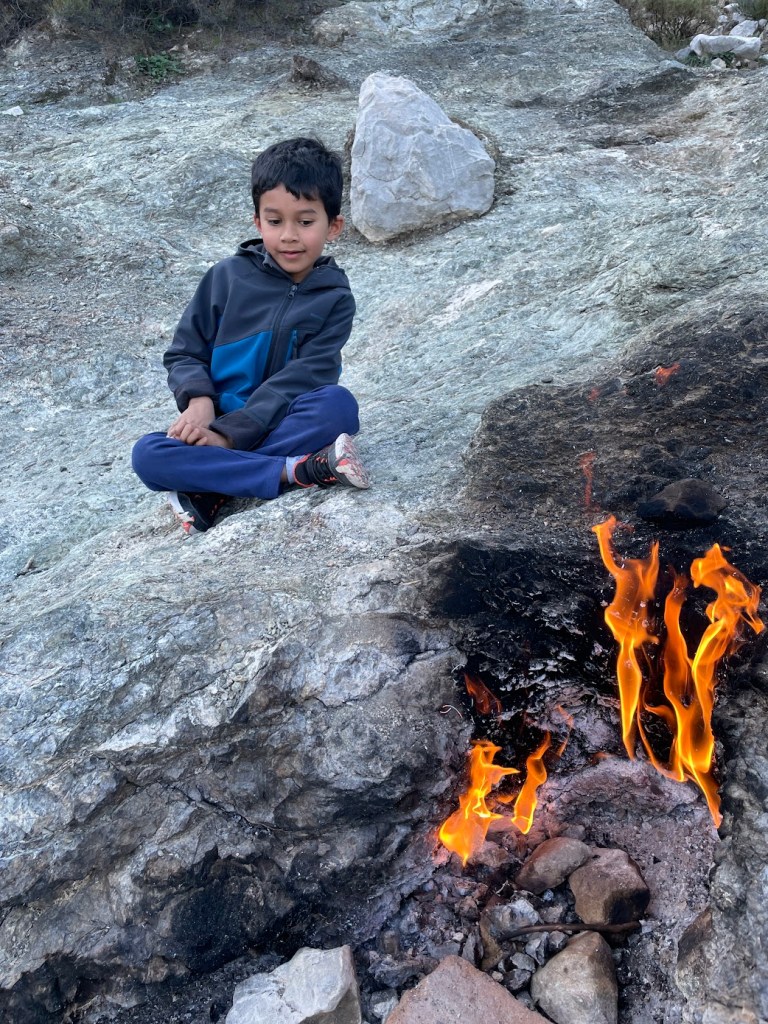
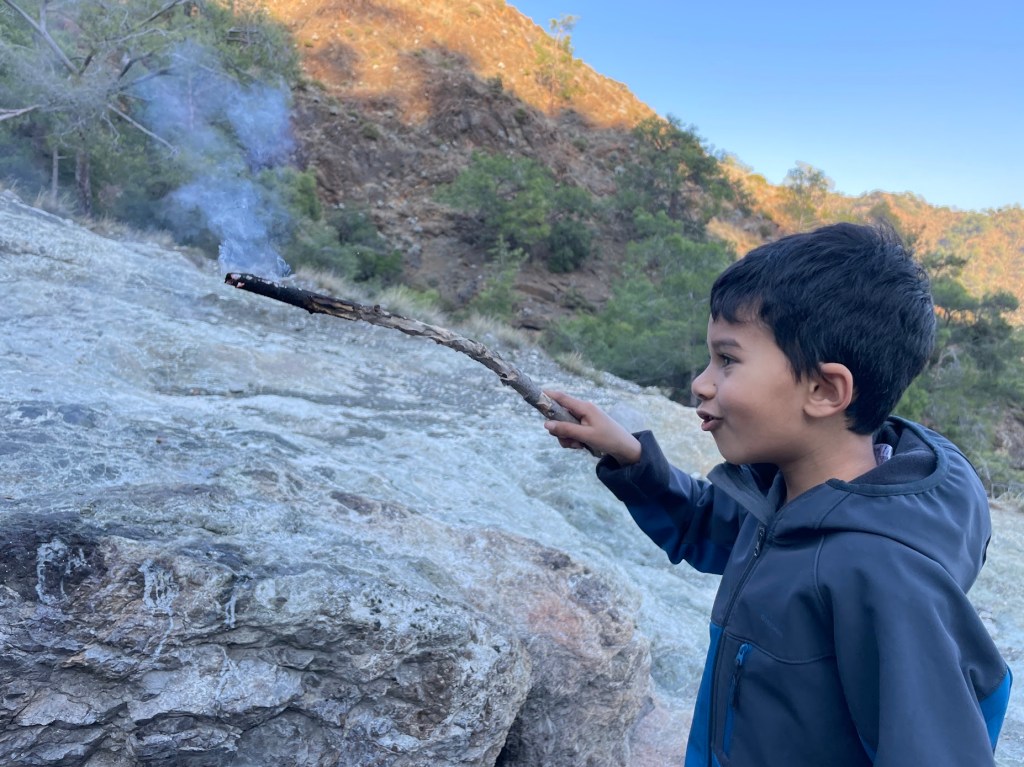
We return here on many afternoons. I even get clever and roast a carrot on a stick one day. We feed the cats fresh cheese. They are Turkish cats after all. One evening, when I am exploring the hillsides above the fires, I hear a loud hubbub of voices. School kids have arrived from Antalya. They have the most relaxed teachers I have seen. Teenage boys swing twigs that burn brightly, and everyone giggles and laughs.
We can see the bay from the hills, and in another cove a bit to the North, is the ancient city of Phaselis, where Alexander the Great showed up one day riding his beloved Bucephalus two thousand and three hundred years ago. The inhabitants, who were under the Persian empire back then, were more interested in trade and welcomed the Macedonian king with a golden crown. Alexander must have spent a few pleasant days camping by the shallow, tranquil bay before marching on to do violent battle with the kohl-eyed Darius (the third) in Persepolis later that year. The Lycians chose wisely, embracing the life of the Agora and the amphitheatre.
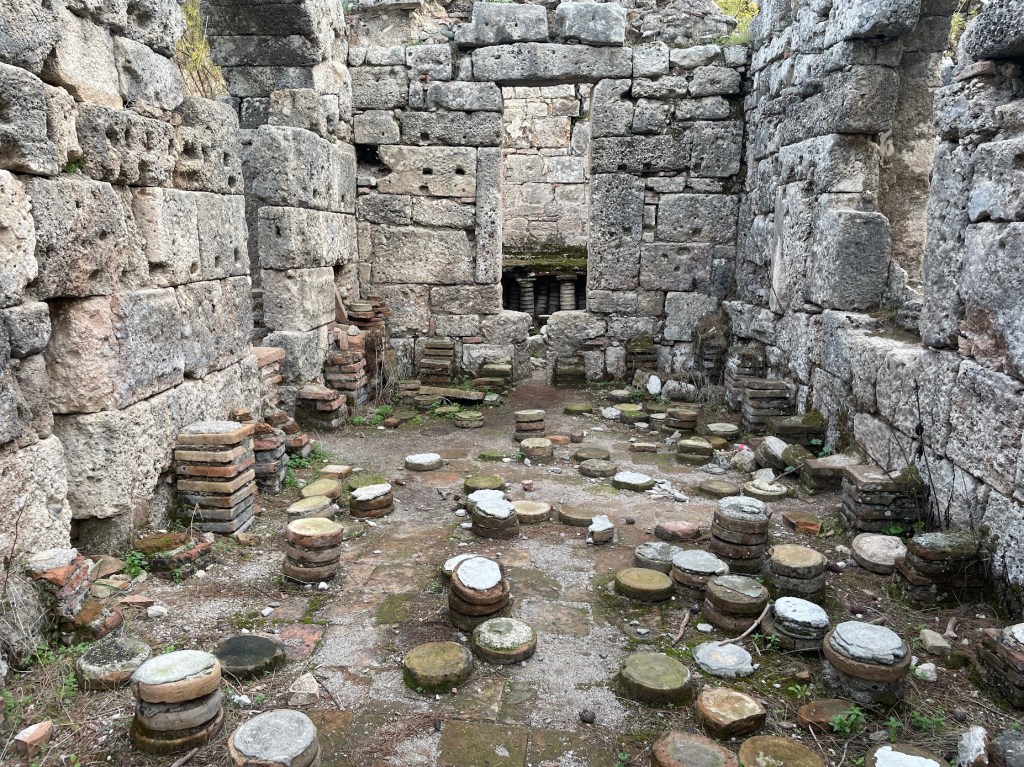
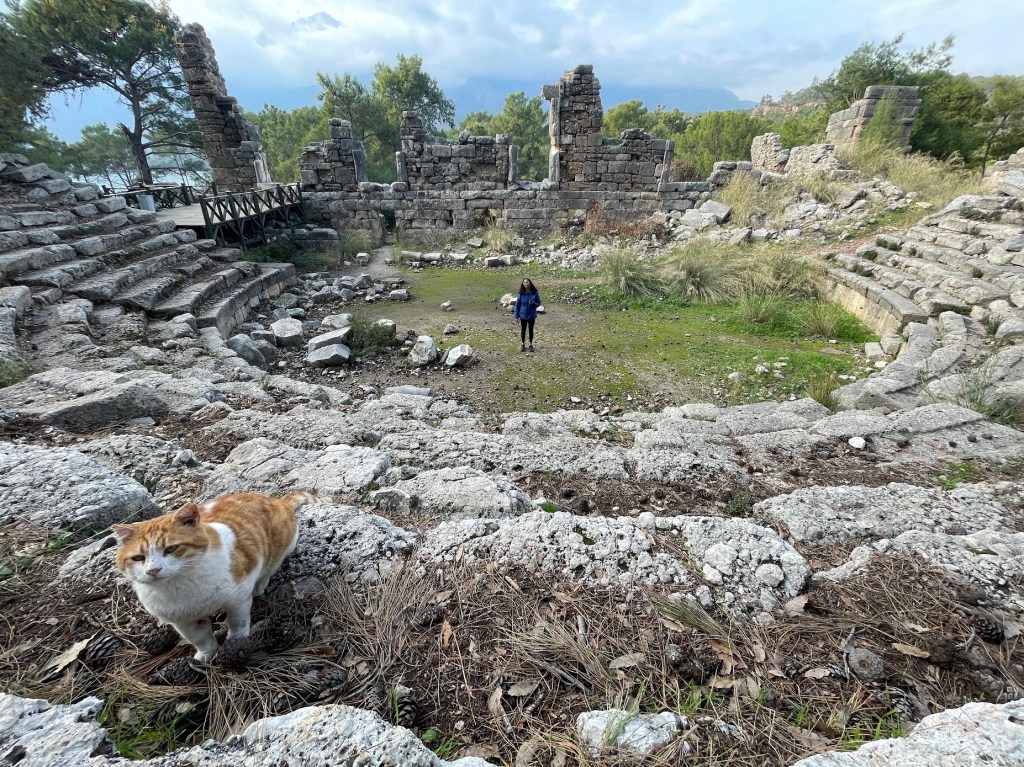
The Romans followed the Greeks, and the fine tradition of public performances continued. We have already seen three amphitheatres over the last few days. One must remember that whatever the archaeologists claim, these must, after all, have been smallish backwater towns. And yet, they all are built around the template of public baths, grand paved streets, and little amphitheatres for a bit of song and dance. That is civilisation.
We find the amphitheatre, and Dhanya descends the limestone blocks, gets centerstage and sings a few lines from Iron Maiden’s “Alexander, the Great”. He would march on and on, in search of the great golden seas that were promised to him by Aristotle. A man who had the sense to rule over lands where olives, figs, and saffron bloomed.
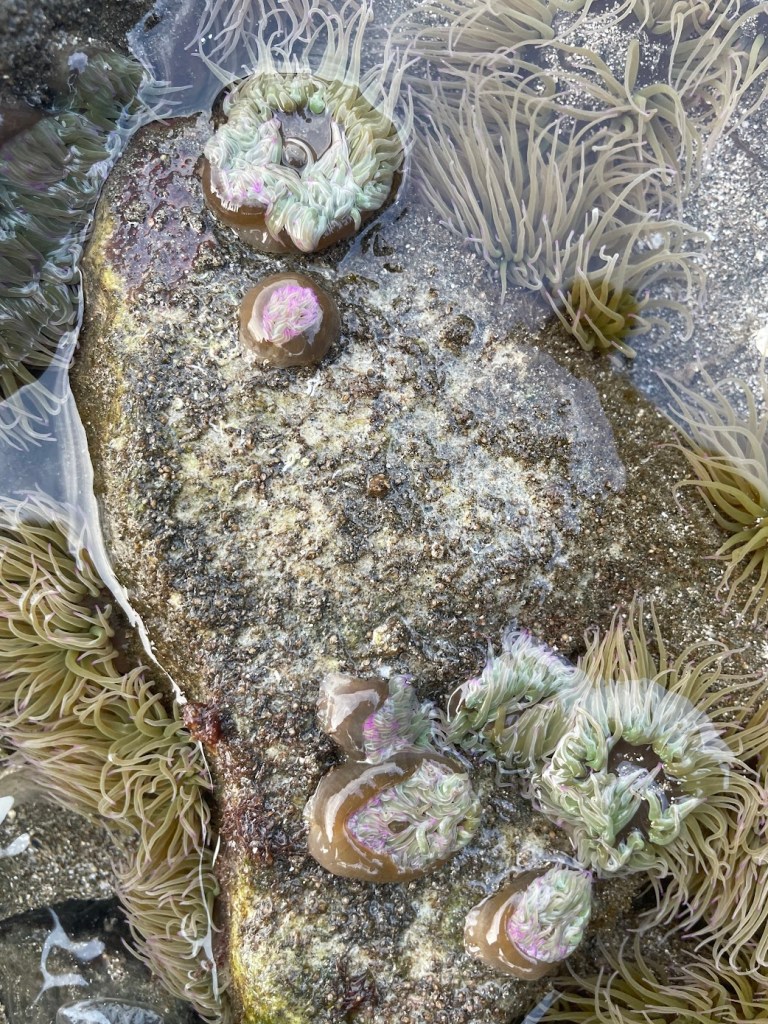
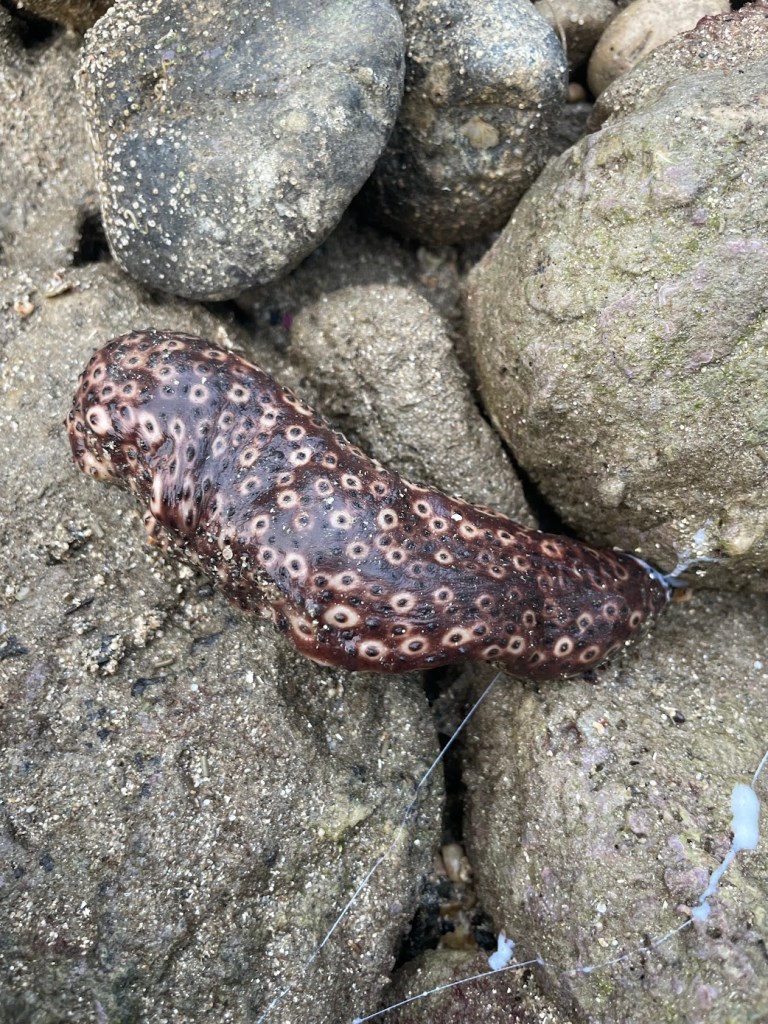
We march on and on towards the still bay and find mats of sea anemones whose green tentacles sway and filter nutrients. Arjun wades into the waters, and I find maroon sea cucumbers, which give off white gooey stuff when squeezed gently. I do have pretensions of being a budding naturalist. A dark, thick piece of black glass that we find on the beach promises to either be obsidian or the remains of some pirate’s wine jar.
 Three Bears Travel