One always expects pigeons around Mosques. A flock of pigeons, fluttering away from a minaret, amidst sandy browns and a call to azaan, is a Hollywood trope for good reason. It’s the perfect “quiet” shot, before the real action gets underway. The Hummers are expected in a few minutes.
And so, I did not expect seagulls swirling over the white minaret, set against the blue skies. These are probably Silver-backed gulls, but telling sea gull species apart is complicated. Istanbul has quite a few such conundrums.
It’s around noon, and the speakers on the minarets burst to life with the dhuhr prayer. This is the Suleymaniye jami (mosque), five hundred years old, and raised during the pinnacle of the Ottoman empire. They have obviously employed a muezzin of the highest calibre. The faithful are reminded, in ever-increasing fervour and nasality, about the greatness of the divine.
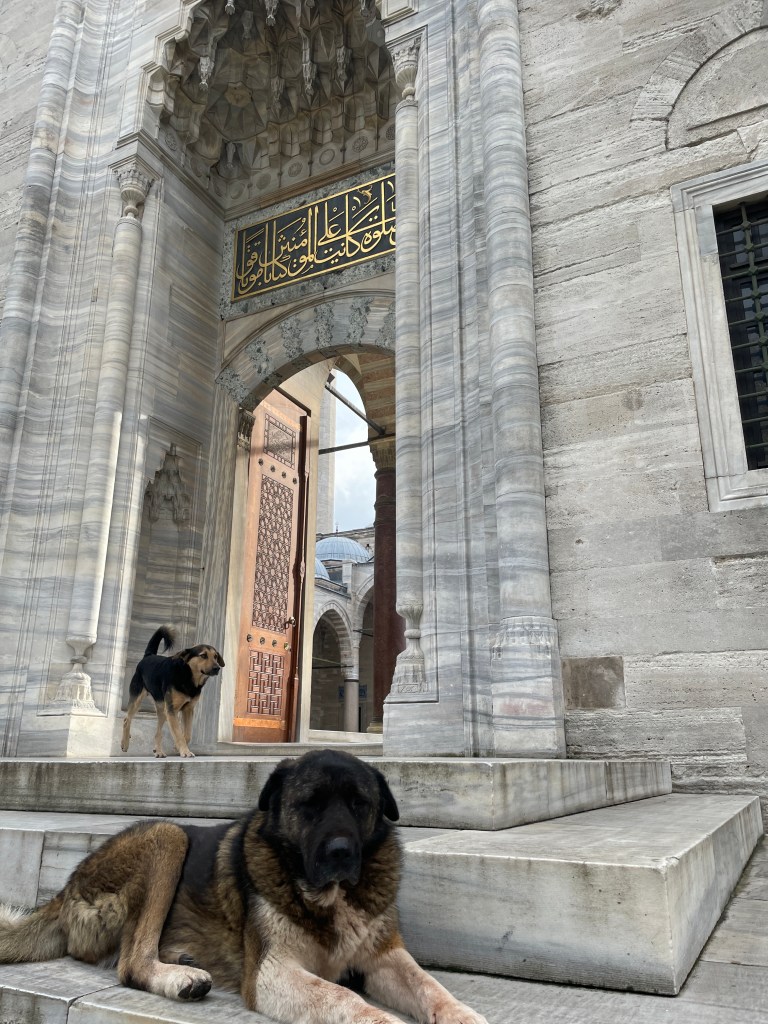
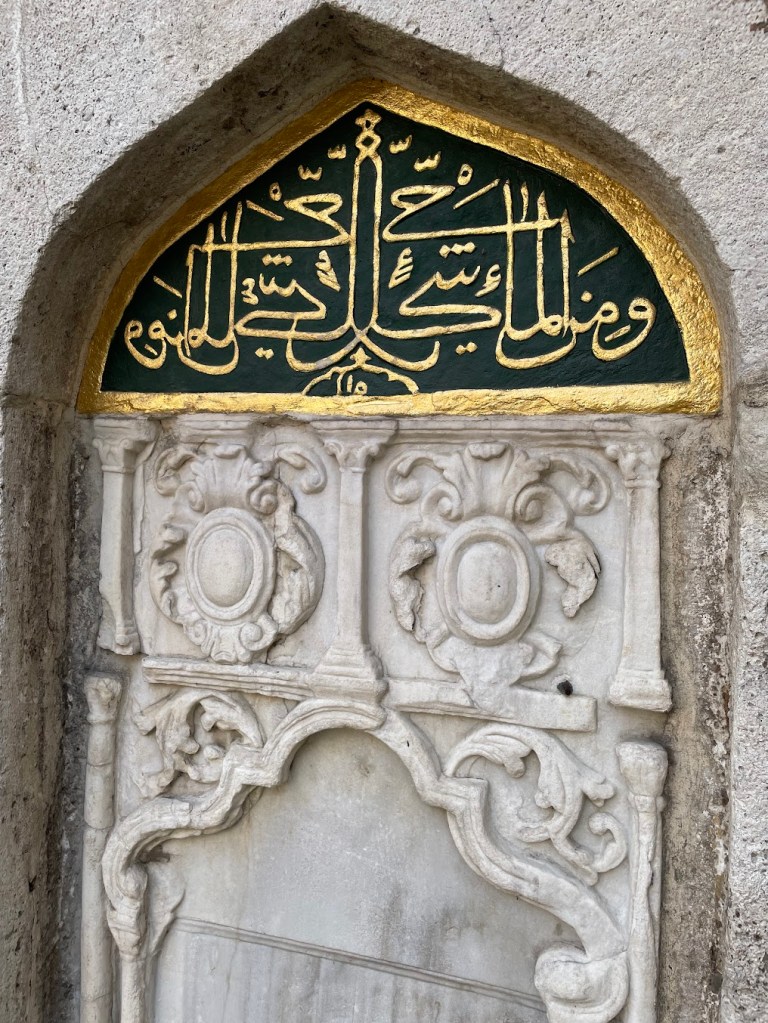
Being mere tourists, we decided to survey the exteriors for a while. There is beautiful gold calligraphy, inlaid into green stone. A large hairy dog, with a muzzle that would do a true Turkish shepherd dog proud, rests on the marble steps. He’s a gentle giant and spends his days in sleepy piety.
The mosque is set on a little hill. There are several smaller blue-gray domes on one end. They adorn what used to be madrasas, kitchens, and caravanserais back in the day. What a beautifully oriental lilt the word caravanserais has! Islamic pilgrims and traders all huddled over their hookahs. A lamb sizzling over coals somewhere.
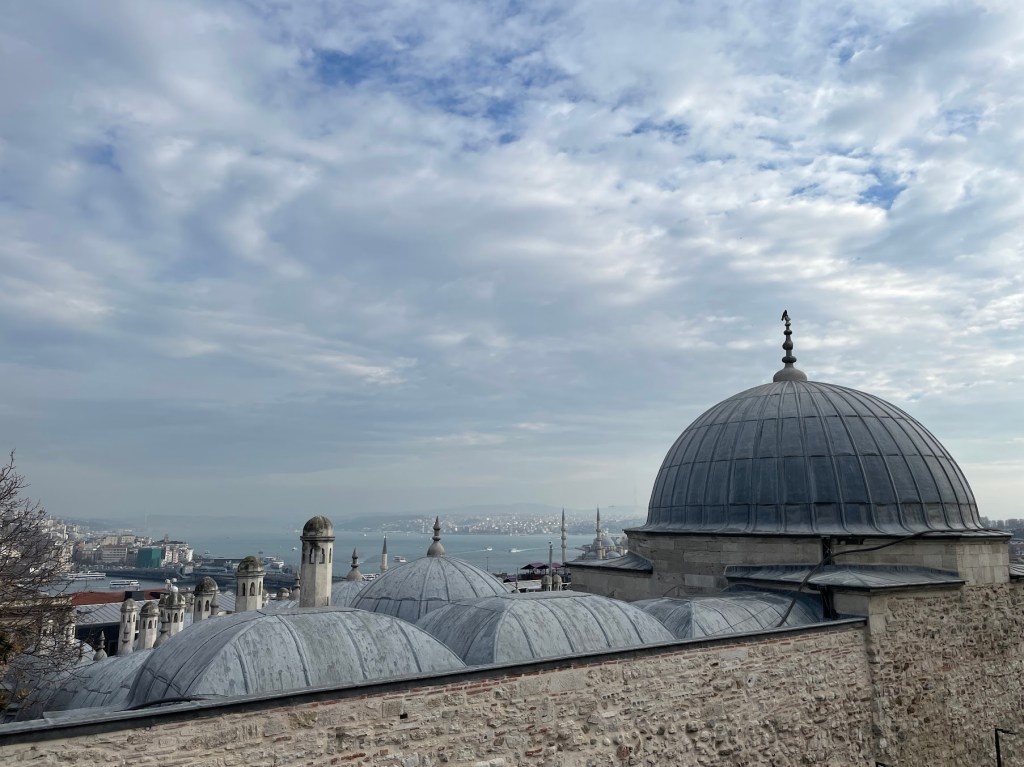
We walk around the courtyards and get good views of the Bosphorus. Ferries drift in its blue waters. The great divide between Europe and Asia. Look at the globe, and all you see is a channel of water that empties into the Mediterranean. But the crossing meant so much more.
In medieval times, it marked the end of the line for the caravanserais. The domes on the other side housed different gods, and no one called the pilgrim lodgings caravanserais.
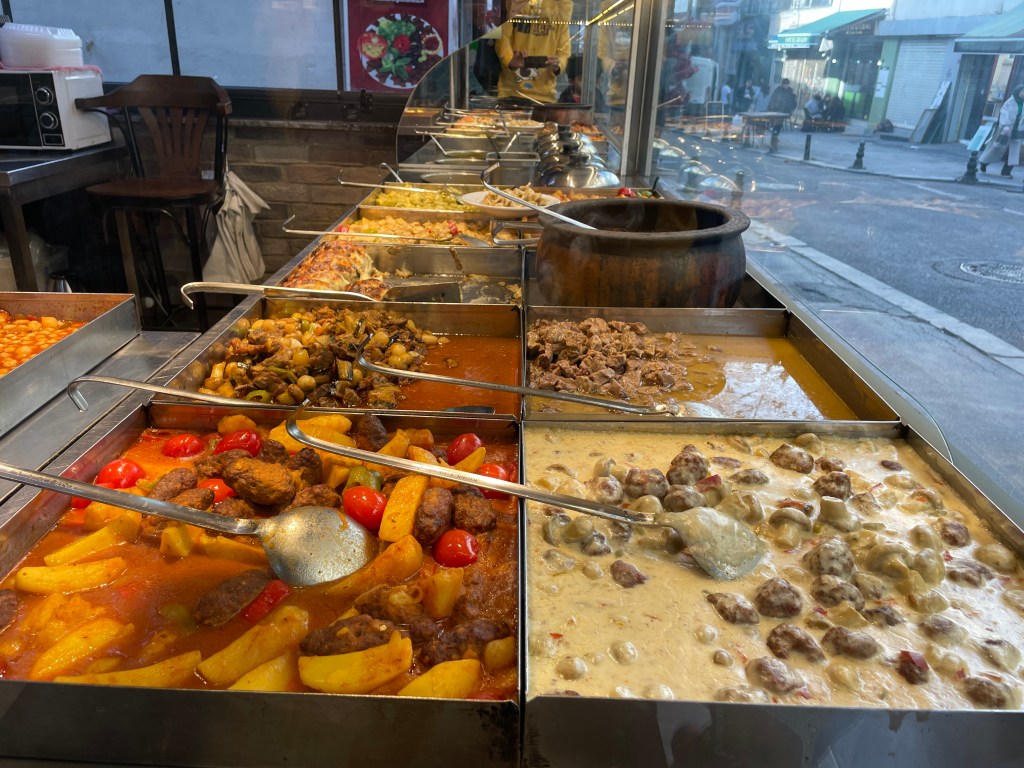
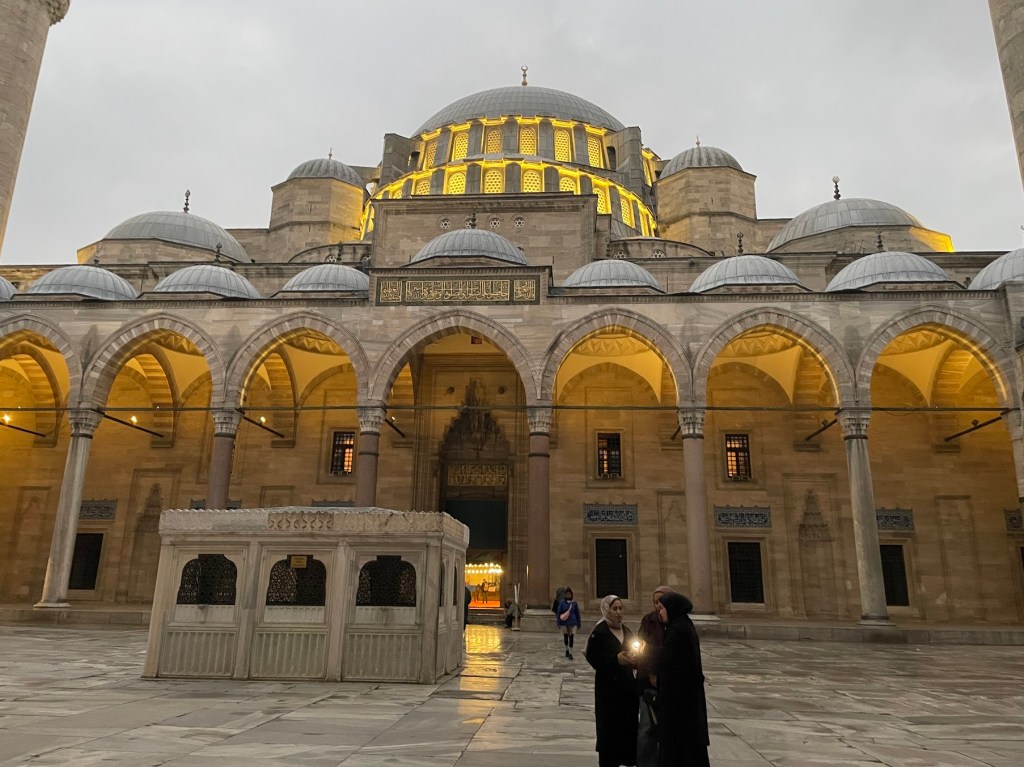
Once the business of prayer is done and the muezzin takes a break, we step inside the mosque. A large courtyard, with a wuzu khana to wash off your dirtyness sits in the centre. Even the taps have a faux golden sheen. Pillars of marble, granite, and porphyry hold up the whole thing. Blue tiles, with more caligraphy and niches with fractal stalactite hollows, fill up the space with geometric rhythm.
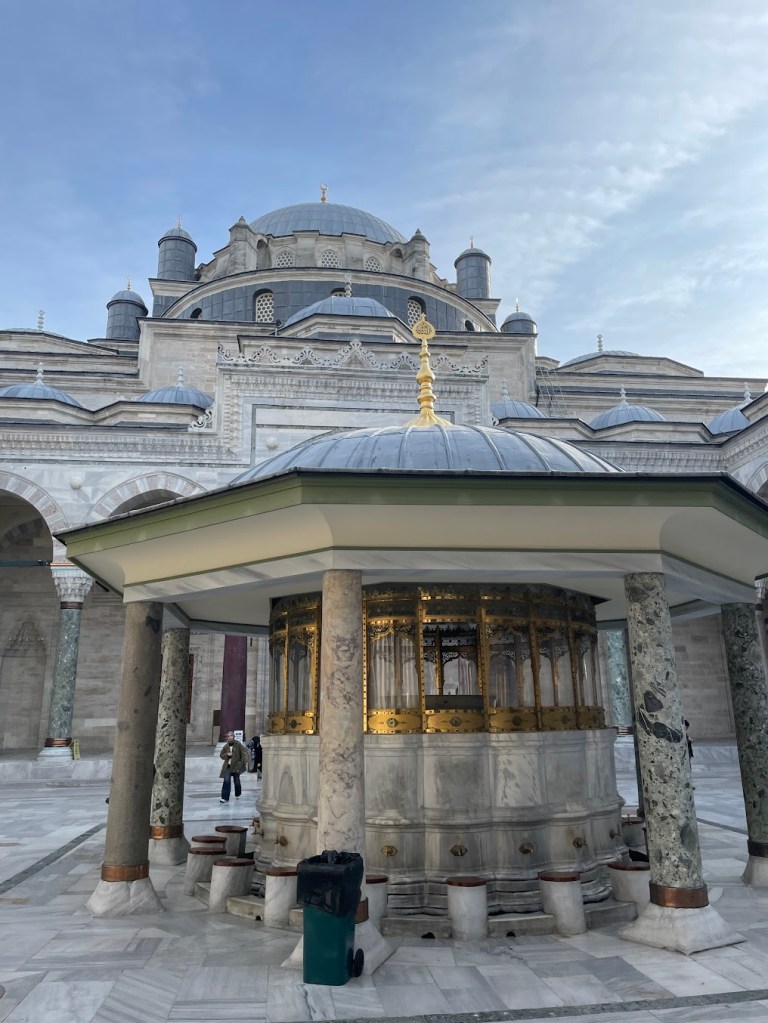
We take off our footwear and proceed into the actual praying area. We have recently escaped from freezing Berlin, and I ponder if Islam could really have spread to the bitter colds of northern Europe, if the faithful must part with their boots five times a day. Perhaps the weather creates religion.
The walls inside are simple and unadorned. The contrast with the decorative exterior is sharp. Yellow lights cast a warm glow, and the floor is acres of lush maroon carpet. It’s a pleasure to walk, and we wander around. Women and children have their own designated areas. In another similar masjid, Arjun had cultural exchanges with the young Turks. The kids’ area even had toys!
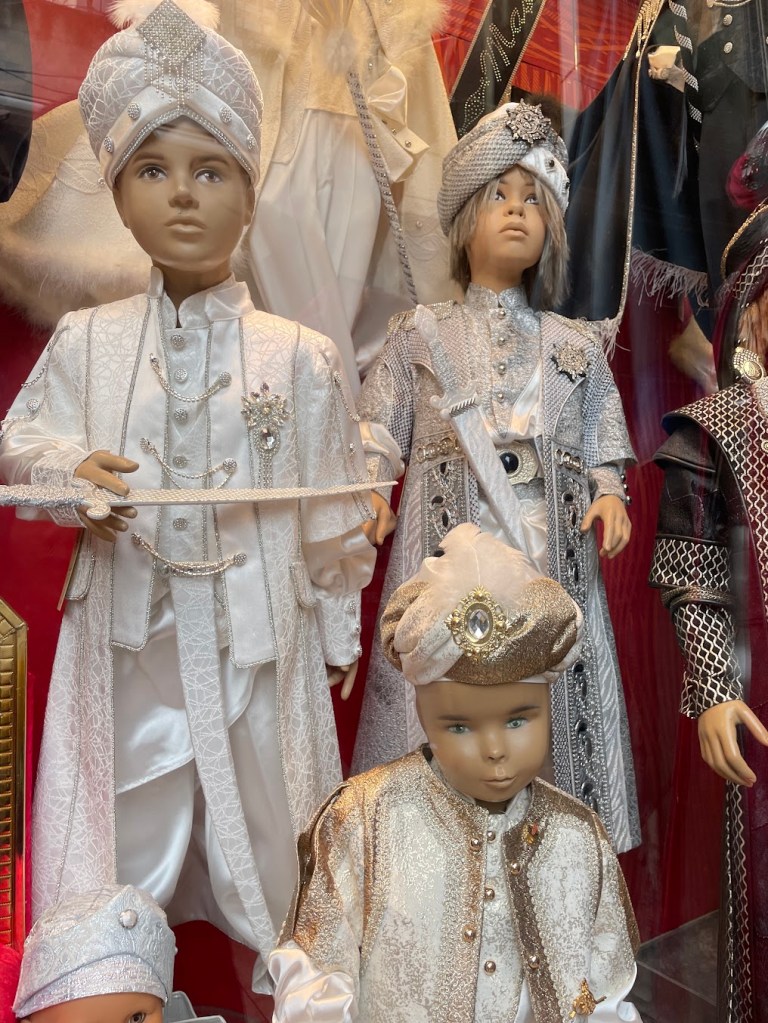
Wooden stairs lead to an upper level, with even more carpeting. There are no pictures on the walls or benches to sit and sing hymns. It’s just open carpeted spaces, beautiful domes, and a wall that faces the holiest of the holies.
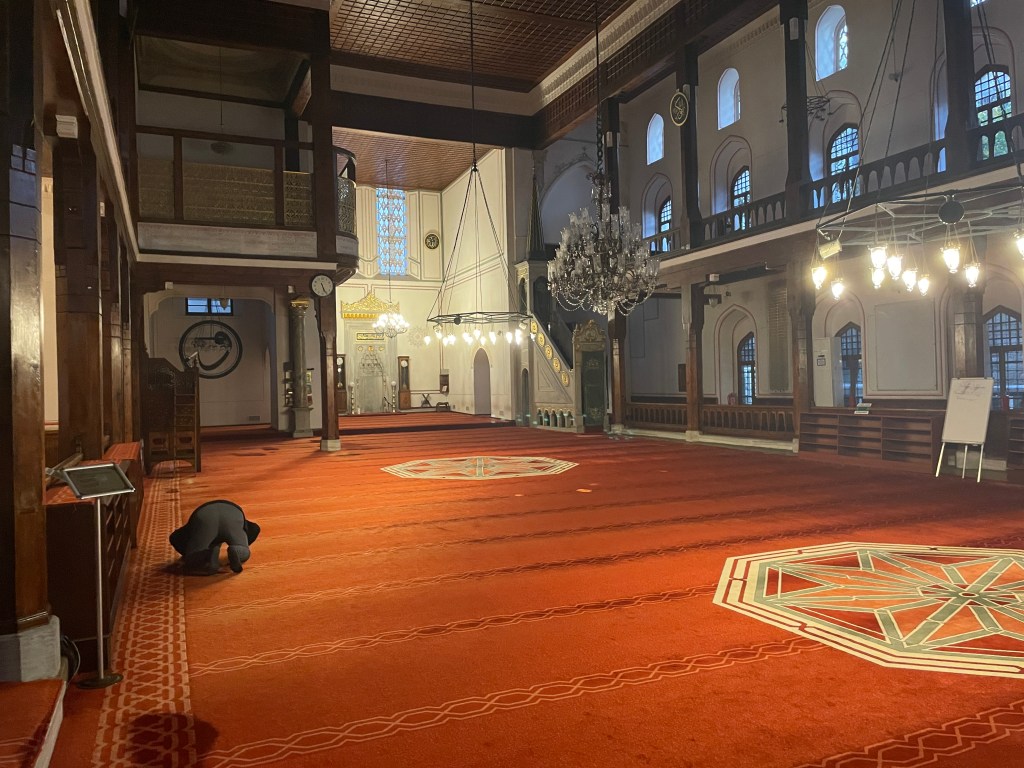
The tourist shops that line the streets outside sell an ornate chessboard, where the Christian crusader army is lined up against the Turbaned Islamic king and his veiled queen. One assumes that the king chose his least favourite wife to come to battle.
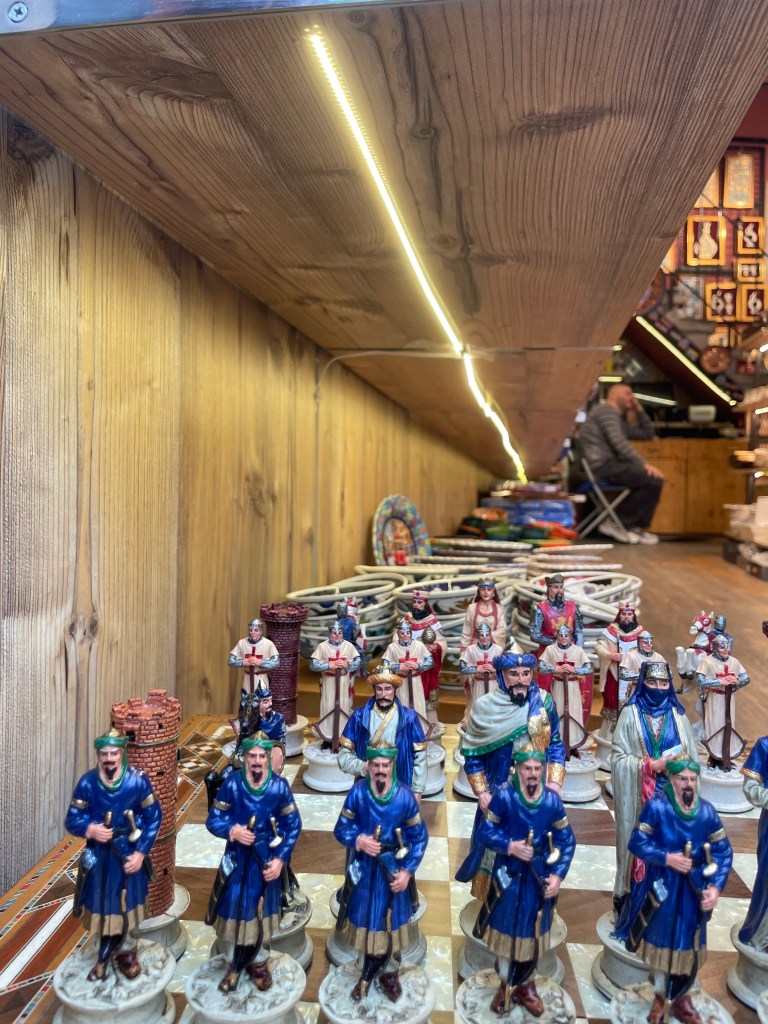
Istanbul has had many names and many pasts. Constantinople, until quite recently, or Byzantium in antiquity, and it all gets quite confusing to track. In Byzantium, things were Roman until the emperor Constantine had a dream and became a Christian 300 years after Jesus. There were not too many varieties of Christianity to choose from back then, and now we call the originals, the Orthodox Christians. Most notably, its priests are long-bearded and lovers of incense. Jesus was, after all, born in the Middle East.
Somehow, the Italian popes around the Vatican had vastly different ideas and split off to form the Latin Church. The Latin church did not like the Muslims in Jerusalem. So they banded together the early crusaders in an attempt to take the holy land. The crusaders apparently got lost, the maps back then full of fanciful beasts, and unable to find any muslims to massacre, decided to turn their ire on the Orthodox Christians in Constantinople. Yes, back then rules of the crusade, were differnent and allowed Christians to fight other Christians.
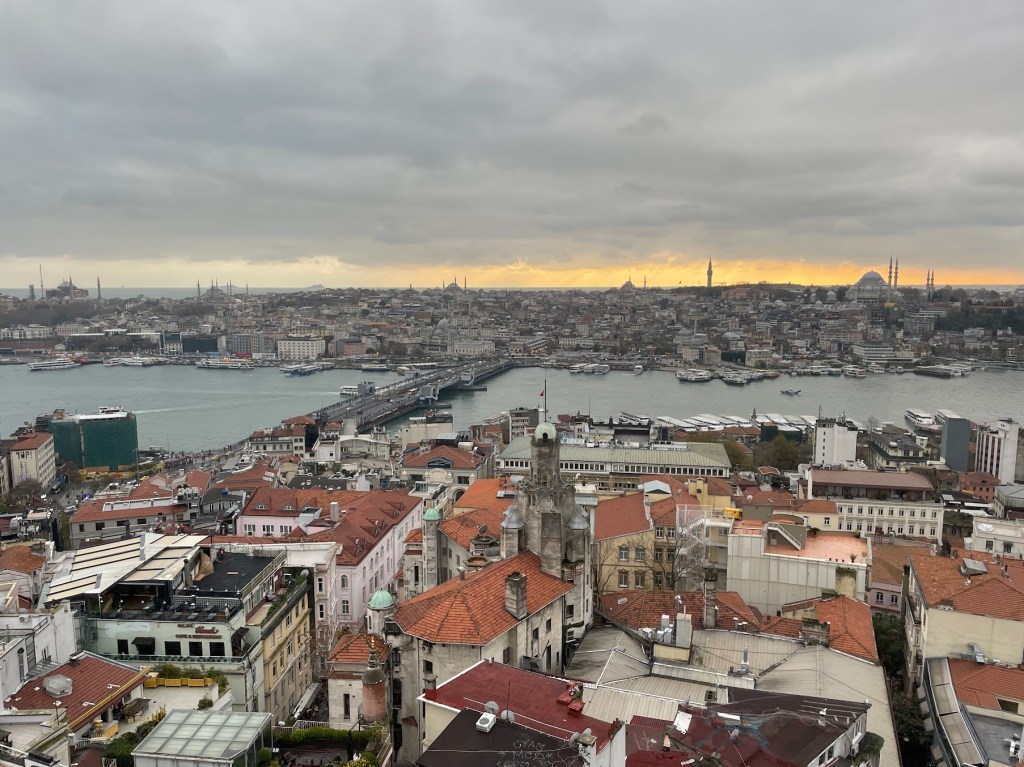
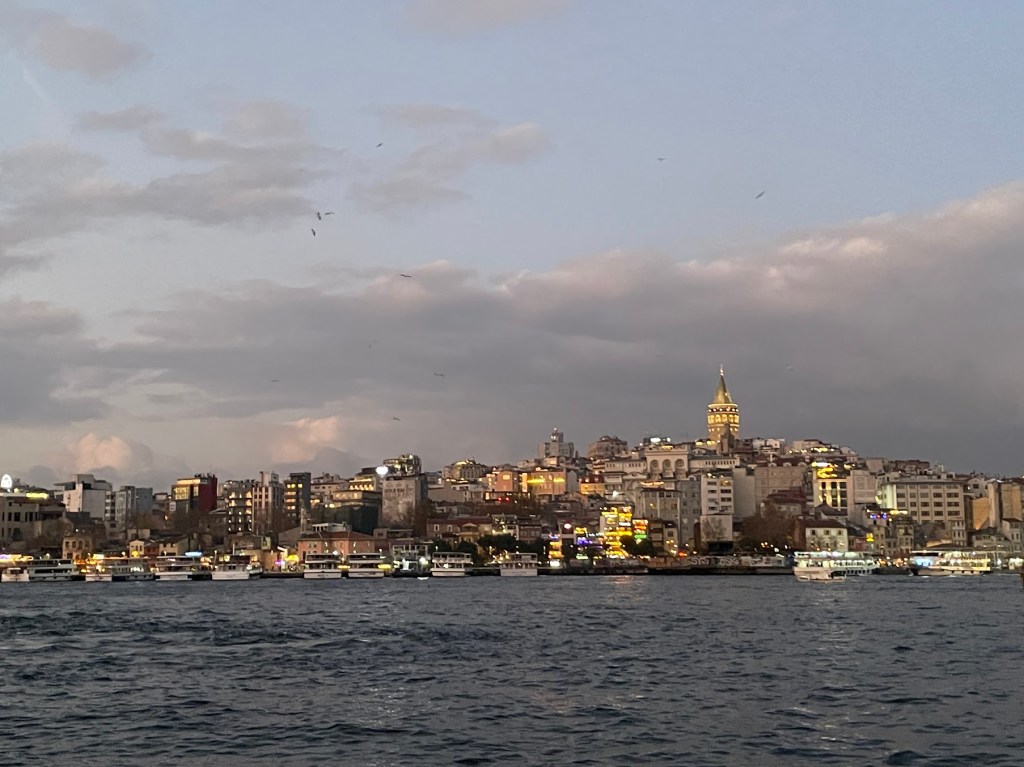
Two hundred years later, it was the turn of the muslim Ottomans to lay siege from the east. Sultan Mehmed employed an Italian canon-making genius to breach the walls, and after much chop chop, took Constantinople. The western christians, backed by the Vatican, did arrive to help their estranged eastern cousins, but their hearts were never really in it. The turbaned Sultan triumphed, and so the chessboards are not just black and white pieces here.
Just a hundred years ago, one mustafa kamal pasha donned an impeccable tuxedo, shaved off his beard, and founded modern Turkey. They called him the AtaTurk, the father of the Turks, for his efforts. He also banished the Persian script and used English letters, with a few oriental swirls added to create the Turkish alphabet.
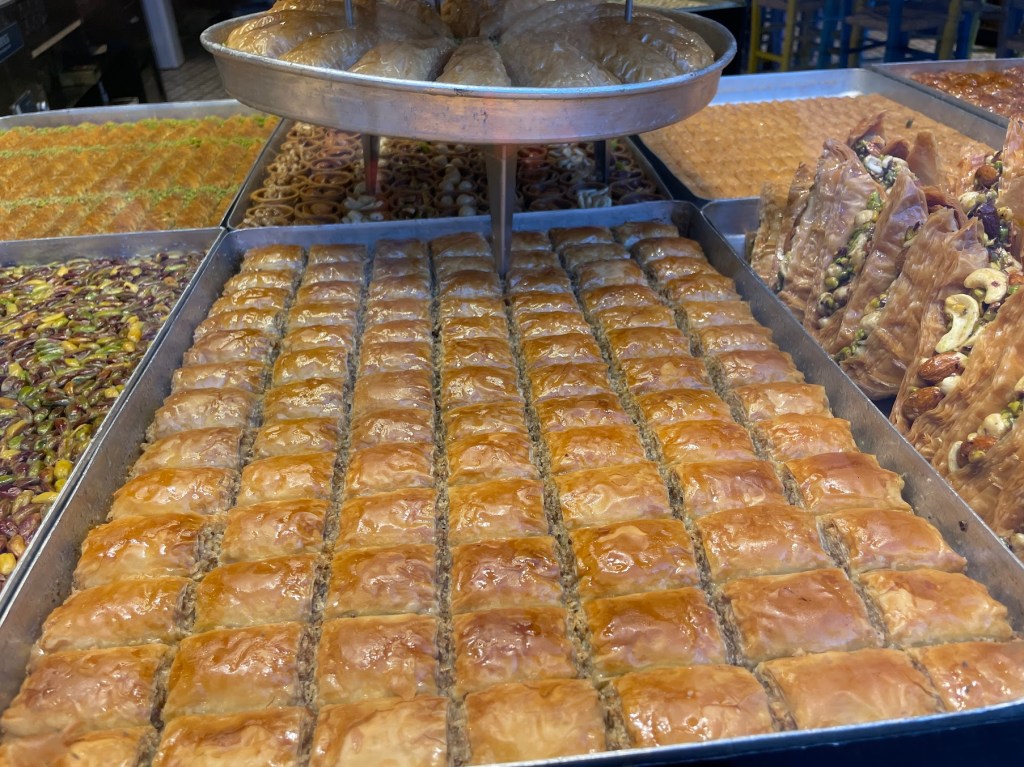
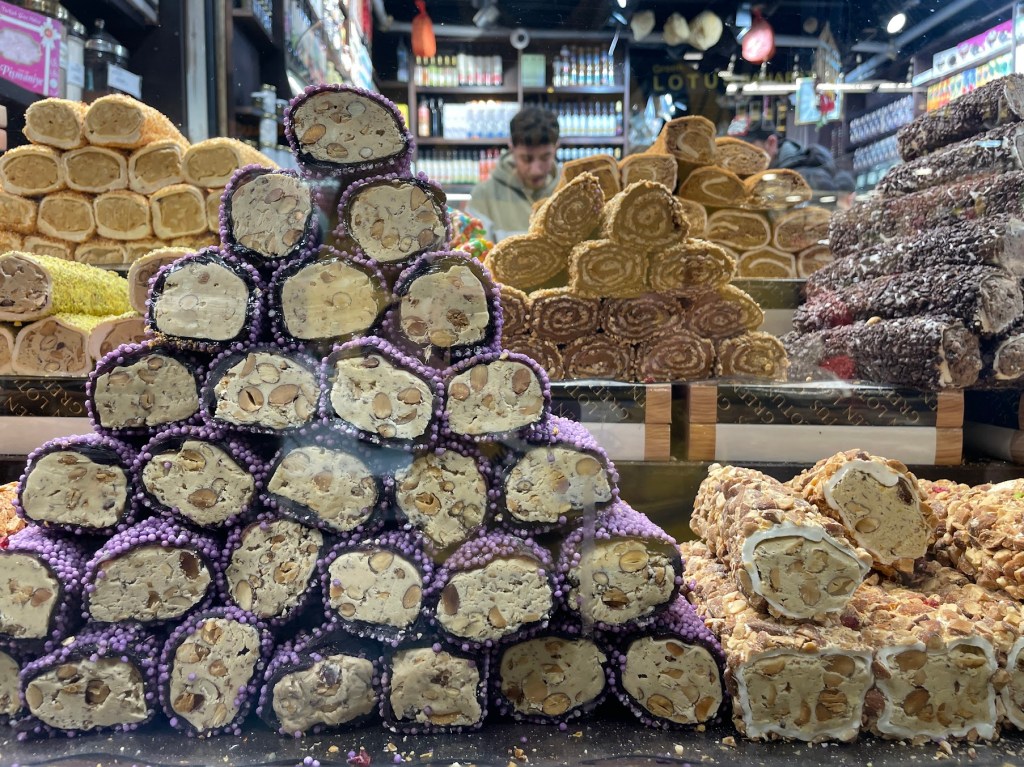
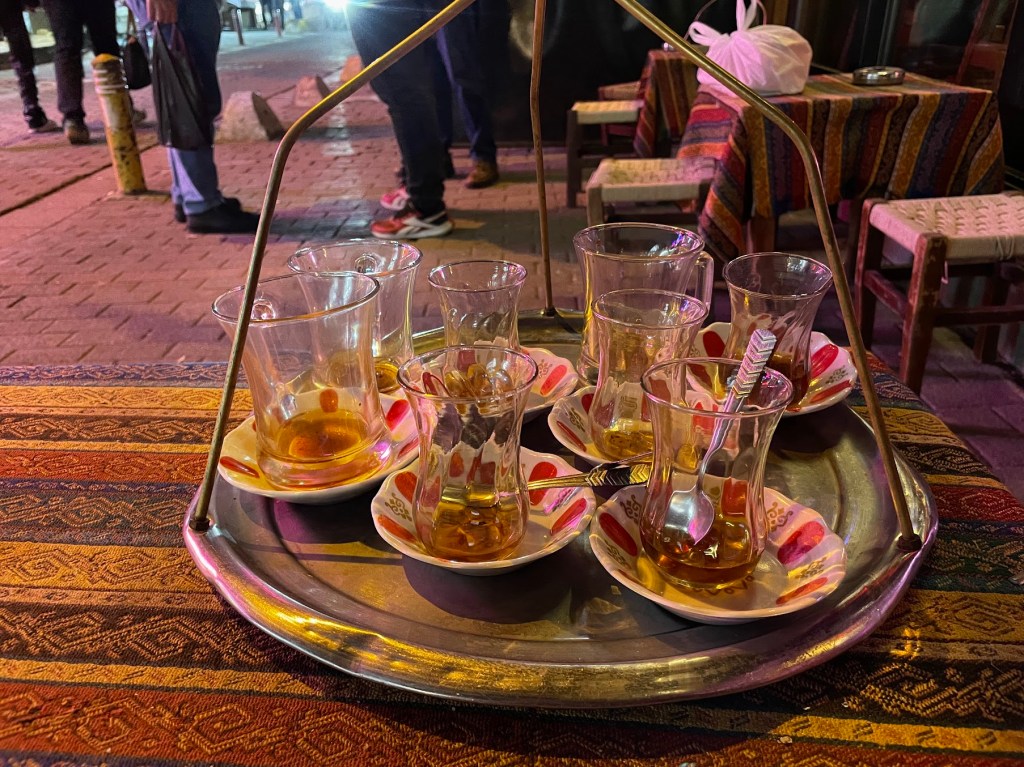
In honour of the great Ataturk, whose portrait adorns many walls, we feast on juicy baklava amidst the sweet glow of chandeliers and fake gold veneer. Dhanya converts to Turkish chai and answers the call to tea, five times a day, for the rest of our trip. I embrace the thickly brewed kahwa. The Ottoman style is to brew the coffee over sand in a golden yellow brass conical pot, heated with charcoals.
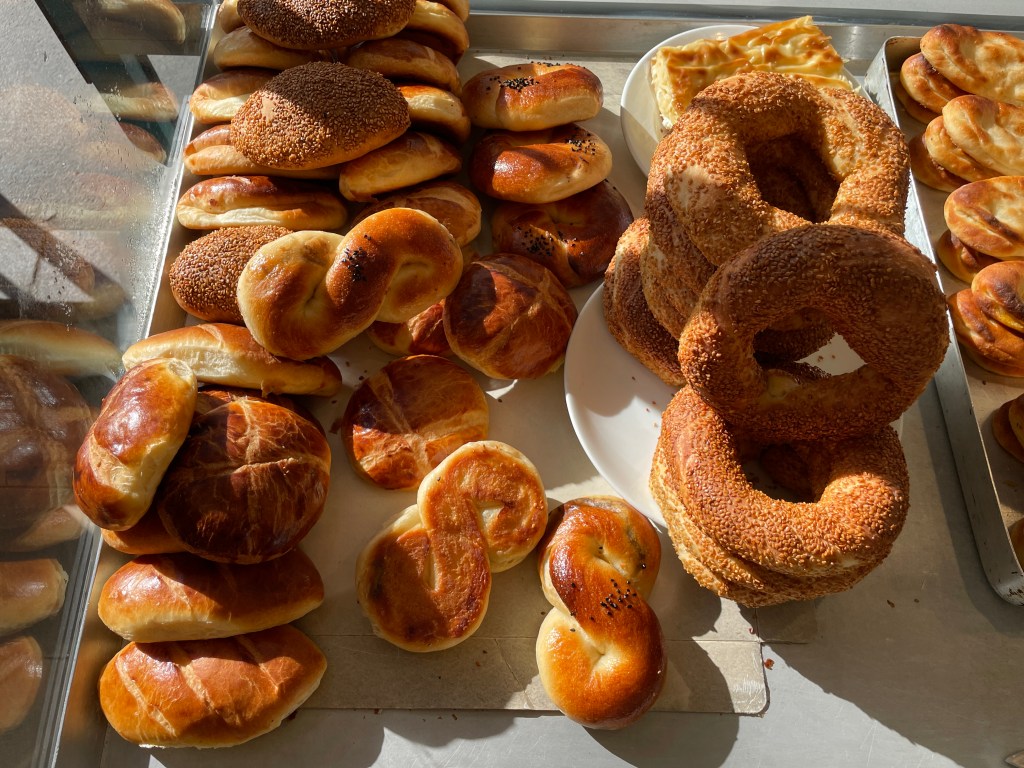
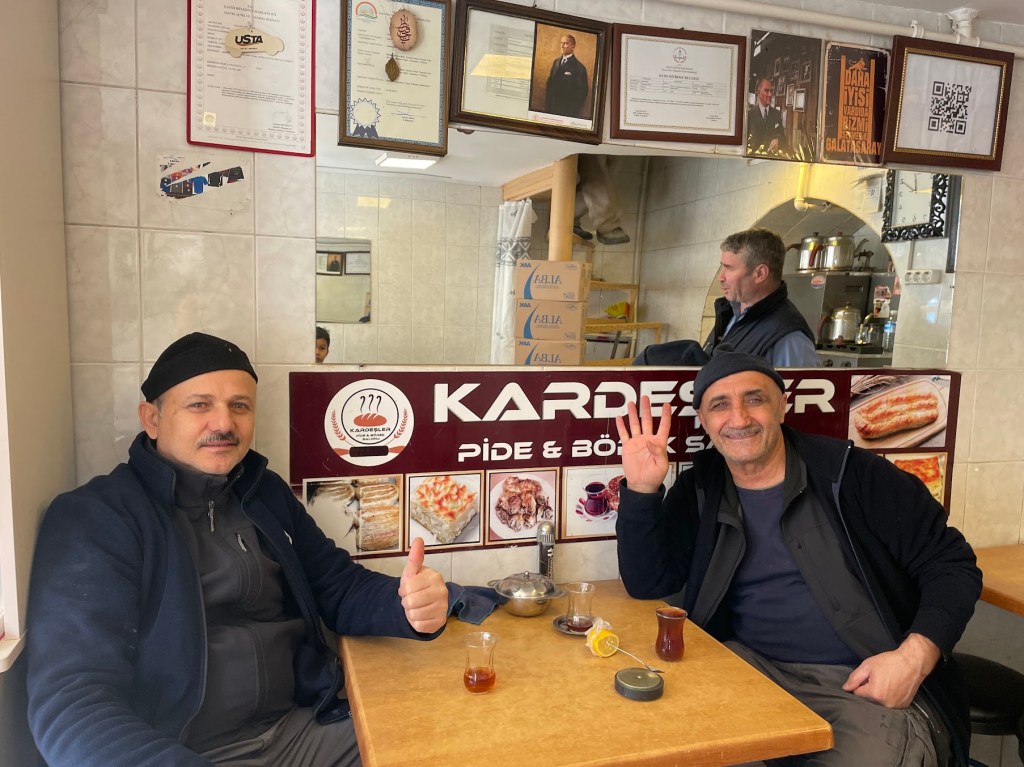
On one such early morning foray for kahwa, I enter a bakery, where the sun shines on freshly baked Pide and Simit. My hilariously garbled request for one Turkish coffee without sugar elicits much laughter, and I get to exchanging Google Translate voice memos with Emre and his friend, who are sipping chai after loading sacks of flour. They want to know what I do for a living and how many wives I have. We all have a good laugh.
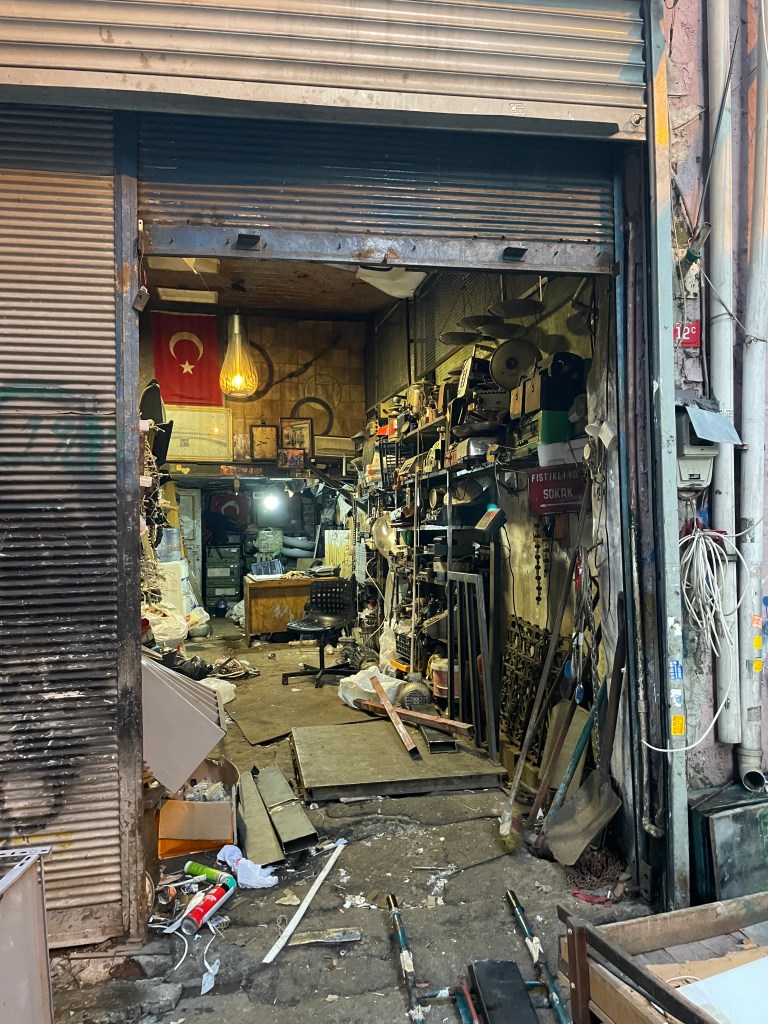
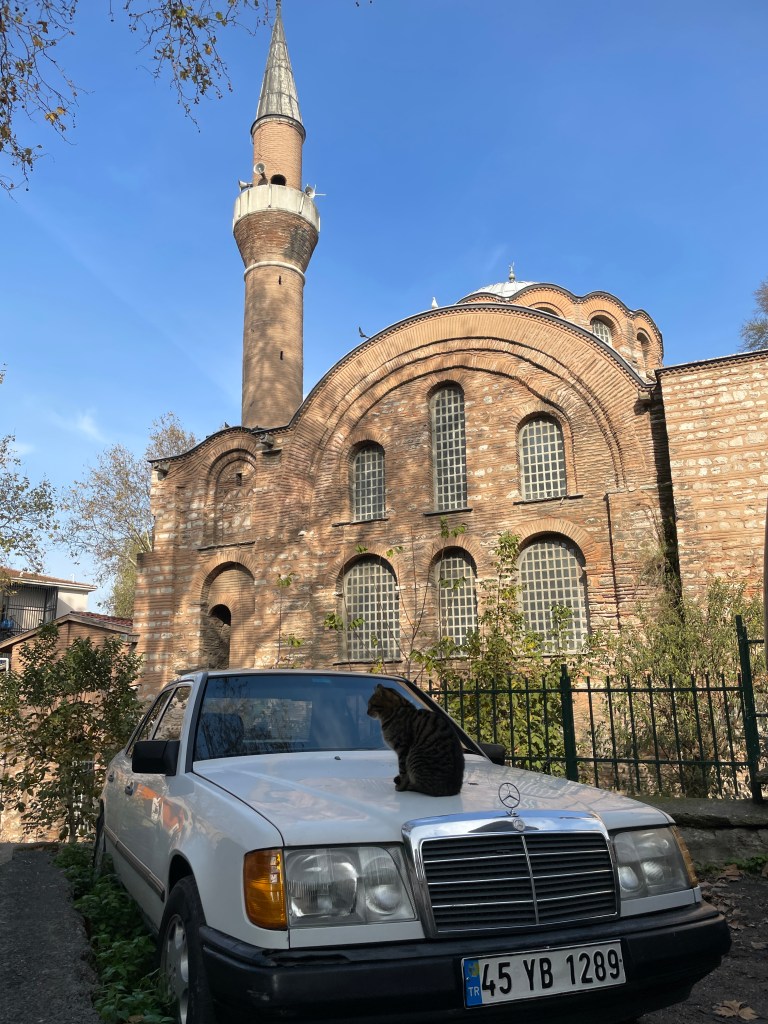
From the Galata Tower, we walk down towards the Bosphorus. Once the tourist cafes are behind, the lanes start narrowing in a distinctly oriental fashion. Young men, push handwagons, heavy with boxes, swoosh downhill and brake expertly using only their scraping footwear. Furry cats recline on Mercedes sedans that are thirty years old. Bits of unoffensive trash line the shopfronts. Men drink tea, and women smoke. And everywhere there are Turkish flags. They love their red and white crescent.
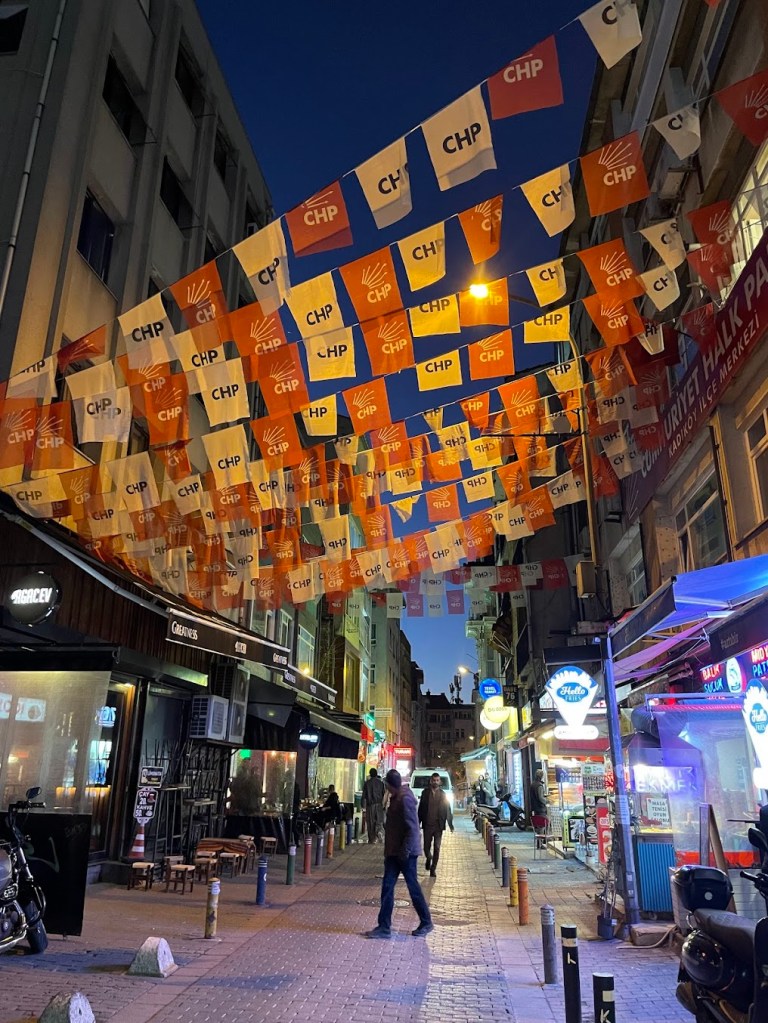
Modernity means descending deep into the hills, on stairways that never end, and catching a crowded subway that goes through a tunnel, under the Bosphorus, and connects the Asian and European sides. I am going to meet a Turkish friend, and we while away the time having even more tea and exploring the little shops that sell tailoring knick-knacks. We walk by the office of the CHP, a political party, founded by the Ataturk, that has been on a losing streak for two decades. Being liberals, they atleast they get to fly their little flags. The religious conservatives get to rule, much to the chagrin of my young friend, who only maintains a 2mm beard.
Istanbul is also the promised land for ugly balding men and hideous women with hooked noses. They come here from all over the world to be scalped and injected. Men with bandaged heads and women with nose splints walk around clicking selfies in front of the many touristy sights.
While picking the best of figs and truly divine cinnamon from the bazaar, I meet George, a Syrian-German who is recovering from having hair follicles drilled into his scalp. The sight of a bandaged head sipping Turkish chai in the great bazaar is mesmerising. From George, I learn that although the rates have increased, it’s still a great all-inclusive deal, with plasma, bandages, boarding, and all the Turkish delights you need to recover.
After several days of meandering around and eating the tastiest lunches, we finally visit the Hagia Sofia, the most famous of all of Istanbul’s sights. Roman temple, church, and now a mosque, it’s one of those important things that are meant to be seen. Frankly, aesthetically at least, it’s a bit of a let-down. A mosaic with a stern and droopy-looking Jesus is the big draw. Perhaps, he’s none too pleased with his flock.
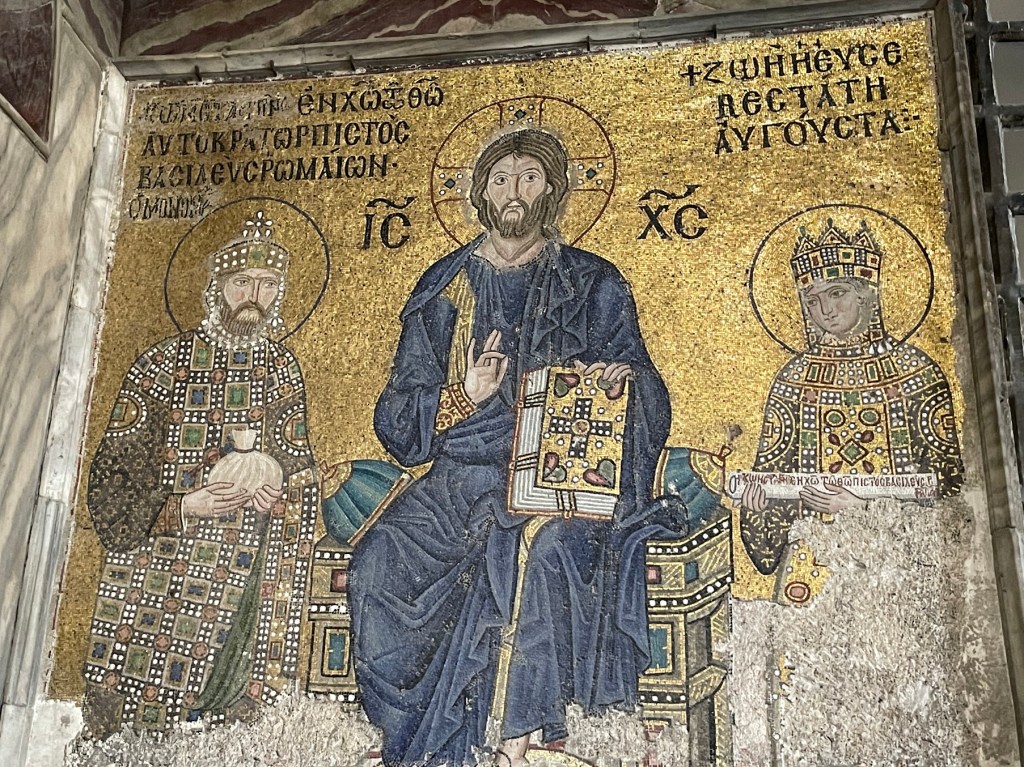
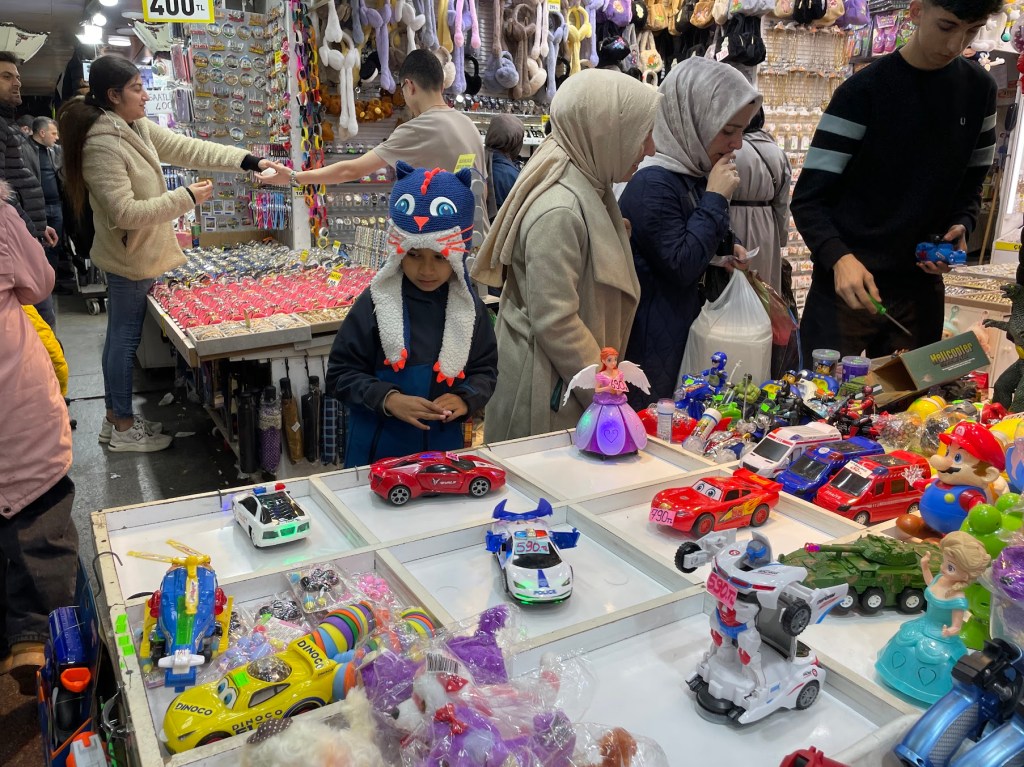
We get over the mild disappointment by buying truckloads of stringy cheese and eating more baklava in the spice bazaar. Nearby, along the bridge, all of Istanbul is fishing on the Bosphorus, and shoals of mullets are hauled out. I eat figs and tread on scattered dry fruits. The bazaar is overflowing, and I find myself peeling away the sticky dates and pista mush from the soles of my sneakers. The east is fun that way.
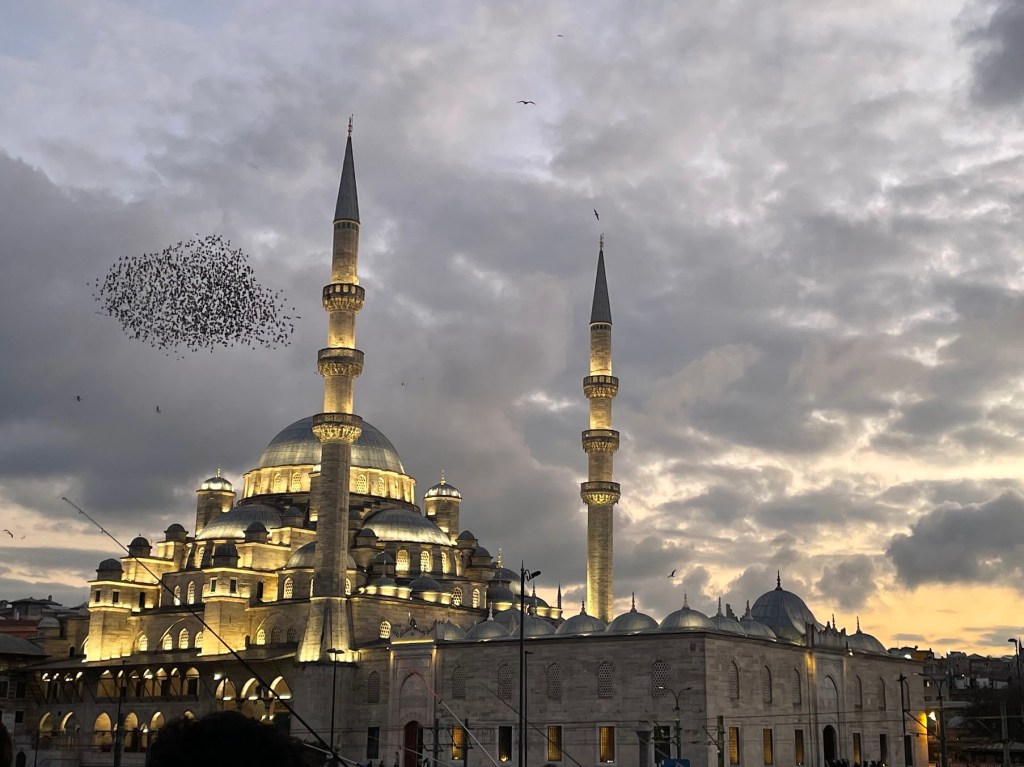
The sun sets, and a nearby mosque lights up. Starlings, swirls, and whirl in a black swarm. They probably bed down on the dome for the night. Truly, I learn that pigeons and minarets are an overused stereotype.