Sand swirls in short bursts. Little light brown spirals of dust barely take off and die down. We are on a high brown plateau, littered with sandstone blocks, dug out thousands of years ago. Not a blade of grass grows. In the distance below the plateau is the haze of Cairo. The giant orange gas flares of last night that burn in high metal towers nearby have not yet sparked to life. The sky is blue, without the exhaust and dust of those gas fumes. Or maybe it’s just that the wind is blowing the right way today.
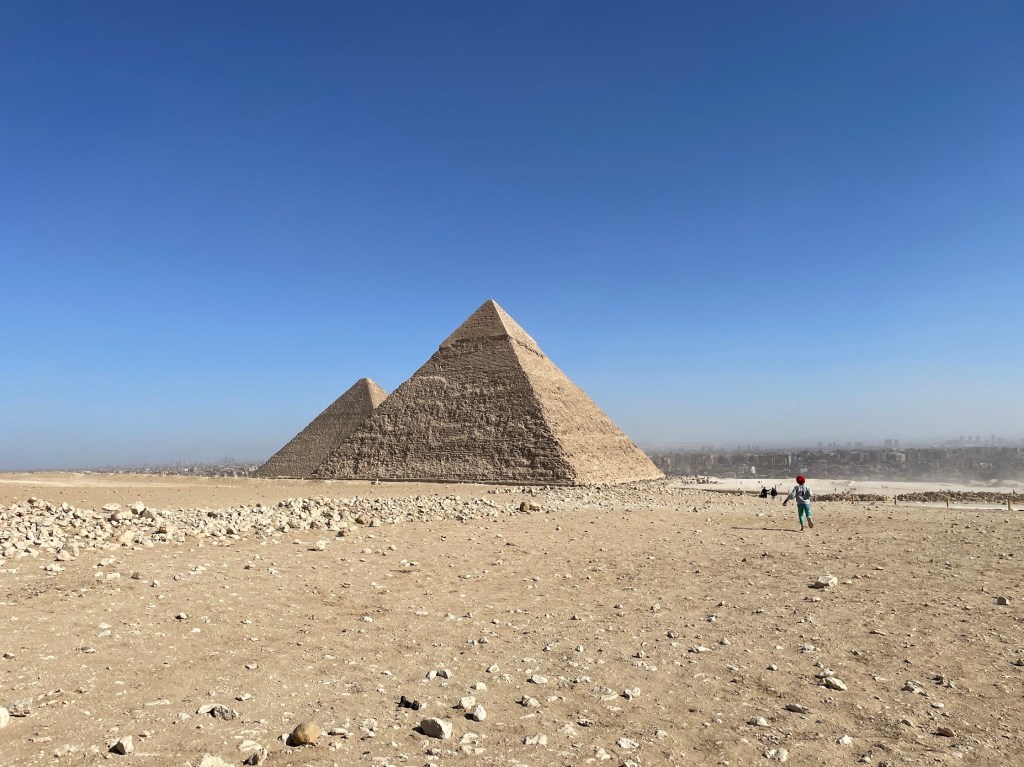
I see the famous three pyramids. Of course, they are large and magnificent. Tourists have been getting impressed for four thousand years for good reason. There is an aura of tranquility about the silent and sharp peaks. Perhaps it’s all just geometry implemented mechanically with a bunch of wooden protractors and good old whipping. School kids these days are able to bisect any angle with a bit of gentle motivation too.
Magic does arise from these angles, though. The ridge line rises at precisely 51.84 degrees. Why was it just this number? Why is the speed of light just one particular long sequence of just those digits? Why is it that dividing the perimeter at the base of the pyramids by (twice the) height yields the ethereal constant Pi?
Goddamn those grey aliens. Always meddling with us earthlings and leaving behind giant sandstone laser-cut mountains that might or might not contain the answers to all our questions.
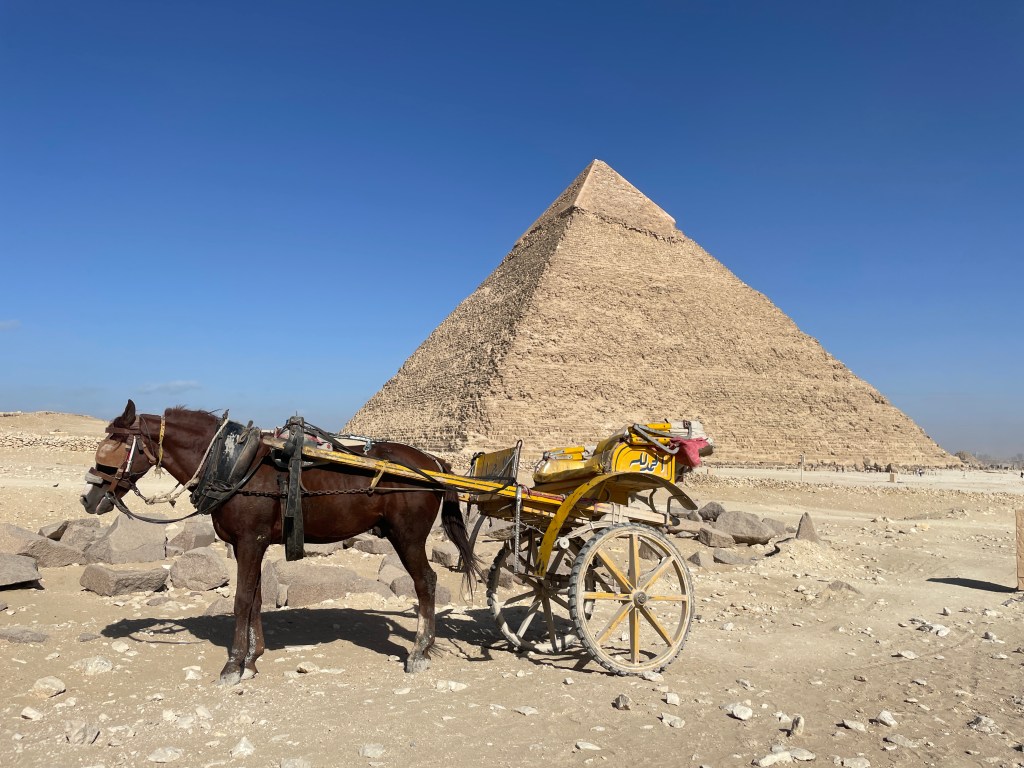
The sight in front of us deserves a lot of thought. So we sit under the shade of the largest pyramid, built by grand old Khufu, and bring out the khubz (Arabic bread, not to be confused with any dead Pharaoh), and divine tahina. I squeeze ungodly amounts of tahina and savor the flavor. A lanky white female dog makes a nervous appearance, with an overgrown puppy, and we feed her scraps. A decked-out horse hangs out quietly with its carriage, with the serene boredom of a soon-to-be-used photo prop. A patriarchally minded man-dog quickly appears and establishes strict gender roles.
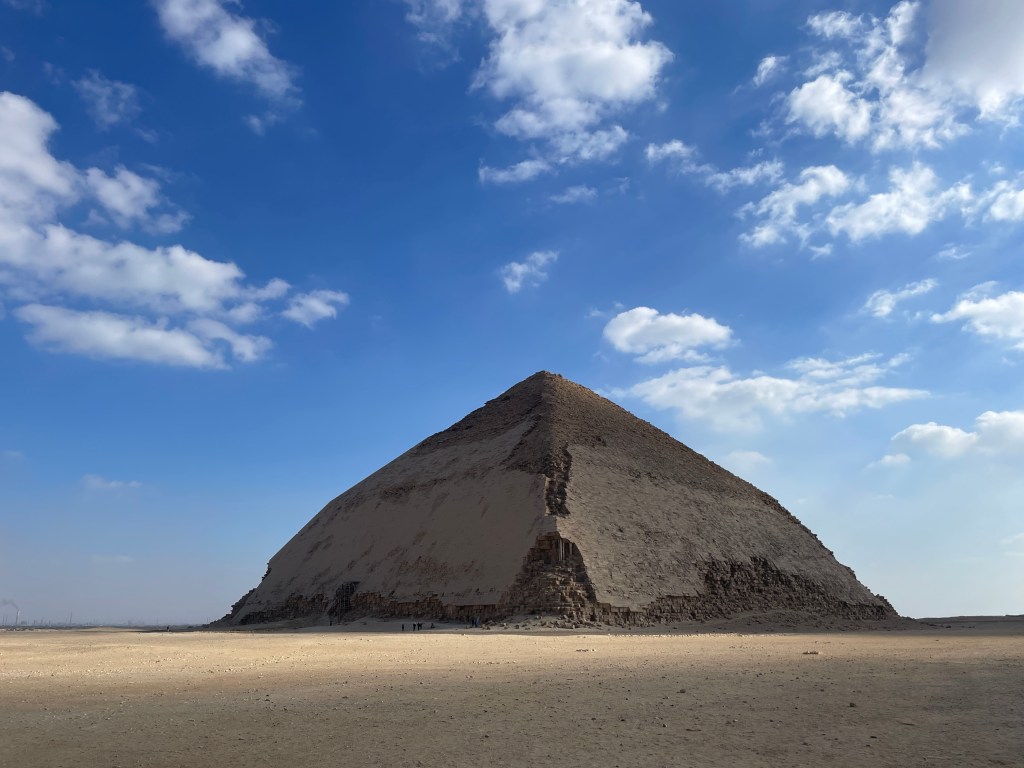
Khufu was the real man, though. He came from a long line of triers. His dad had tried building his own pyramid, but the resultant mess was all bent up, and one look at it was enough to drive away any hopes for extraterrestrial life. At least of the intelligent type. The dad was a stoic though. He followed up the botched-up attempt at divinity with another one that rose at an unflattering angle. It did manage to stand up in straight lines, but not being the requisite 51.84 degrees, it was merely human, without the aura of supernatural tranquility.
In the olden days, the white limestone would have been polished to a mirror finish. Some red granite cladding at the joints and a shimmering gold-plated pyramidion to top it off. Imagine being a tourist in those days and looking at the whole thing on a bright day. The sheer dazzle of it all.
I look closer at the weathered sandstone blocks, and some have mushrooming overhangs sculptured by the winds of all these centuries. Feral rock pigeons rest on the ledges high overhead. The sandstone blocks are properly huge, and only the Greys can answer how they were hauled up. Time flows slowly, and I know it is noon when one of the guards prostrates for the Dhuhr prayer and rests his forehead on the sand. He faces away from the pyramid, though. Khufu does not have too many believers anymore.
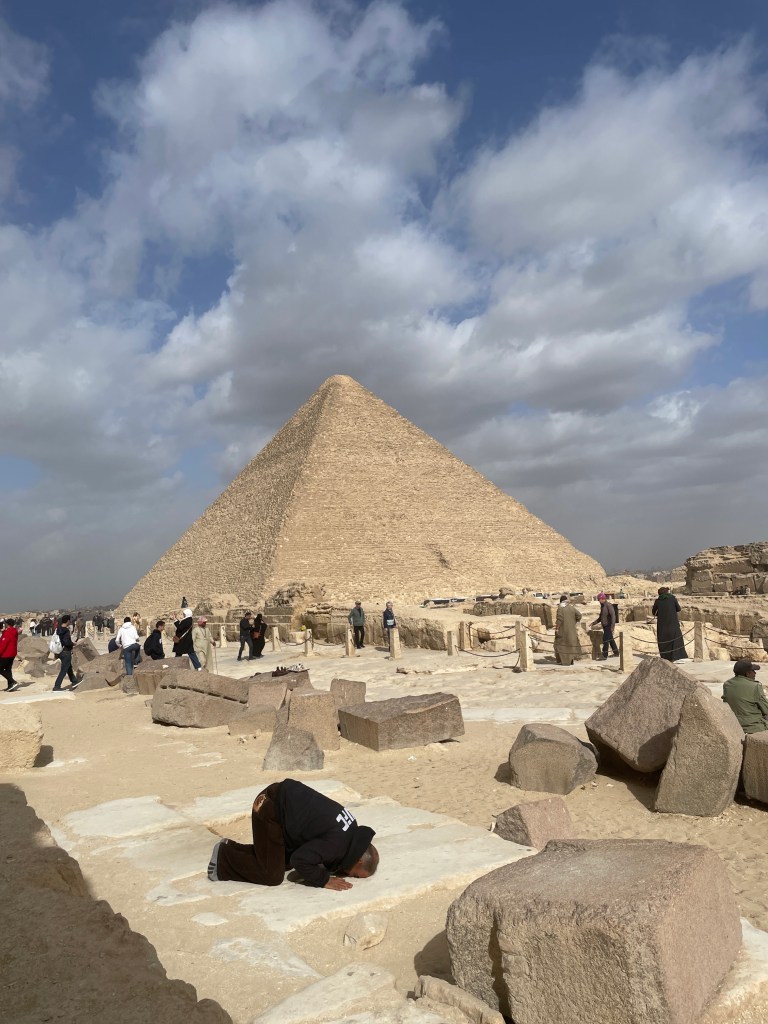
Khufu’s son turned out to be pretty clever, too. Perhaps inbreeding isn’t all that bad. Khafre built a slightly smaller pyramid but placed it on higher ground. It looks like the taller one now, fooling everyone.
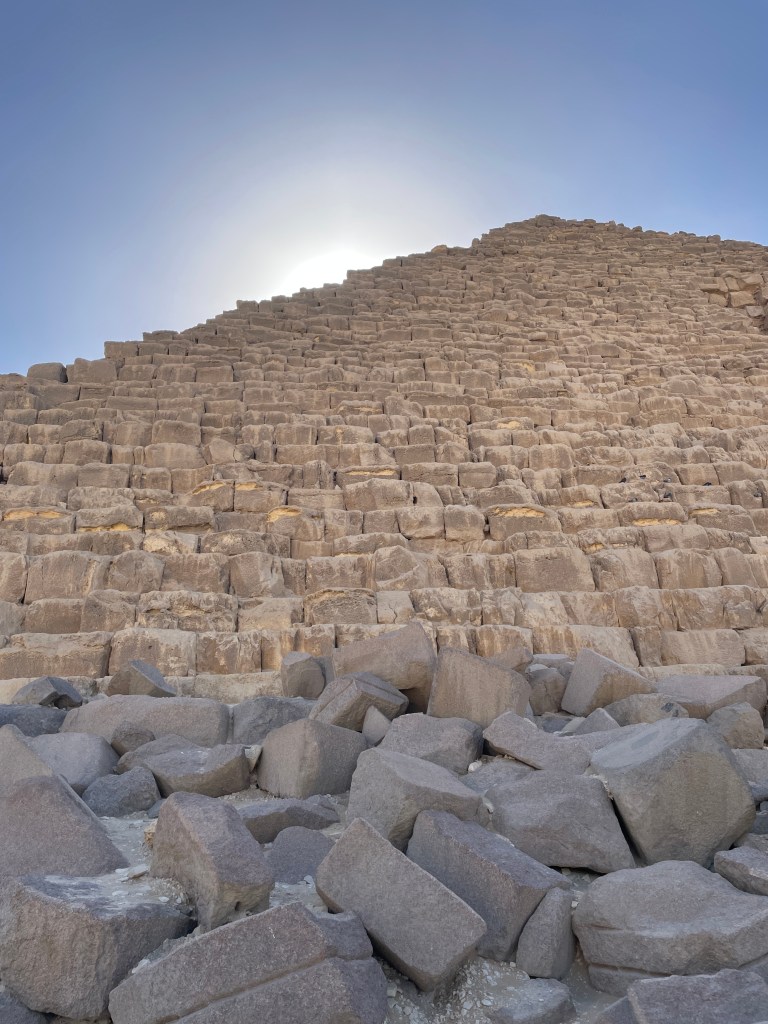
We go down into the tomb of Menkaure (Khafre’s son or Khufu’s grandson, if you have been following the genealogy closely). Menkaure’s pyramid, being the smallest of the three, is free to enter, and we go take a look at the bare and uninspiring interiors. Clearly, the aliens who built the pyramid had different tastes from the aliens that showed up in two thousand years to paint the tombs of Ramesses & Sons.
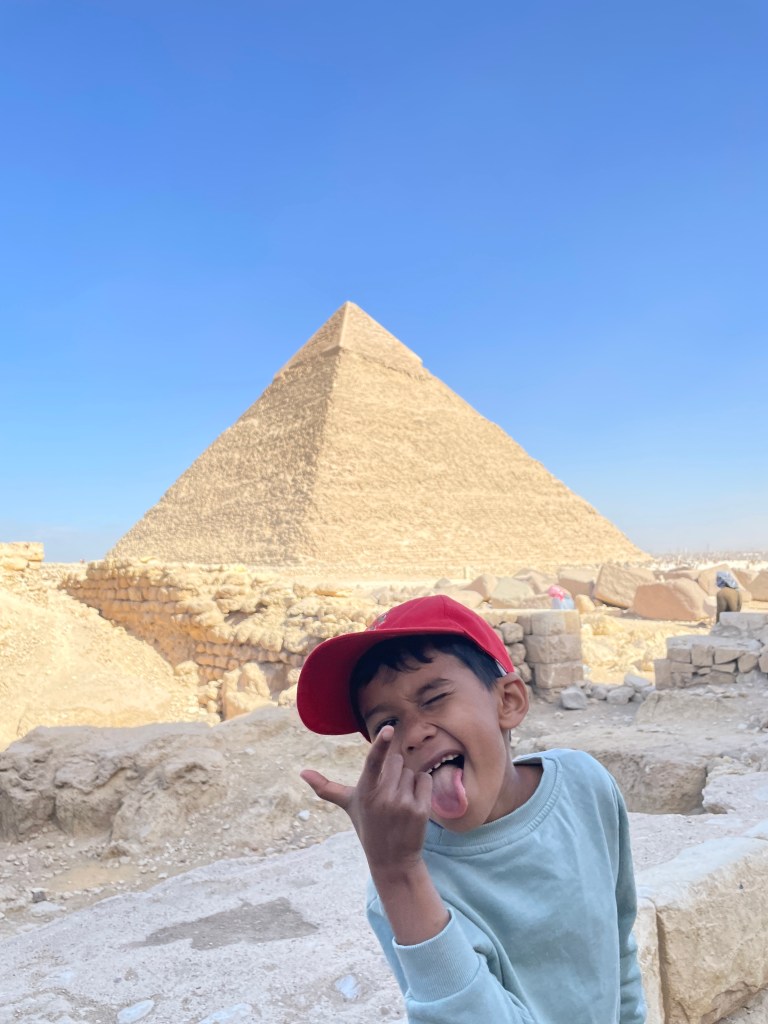
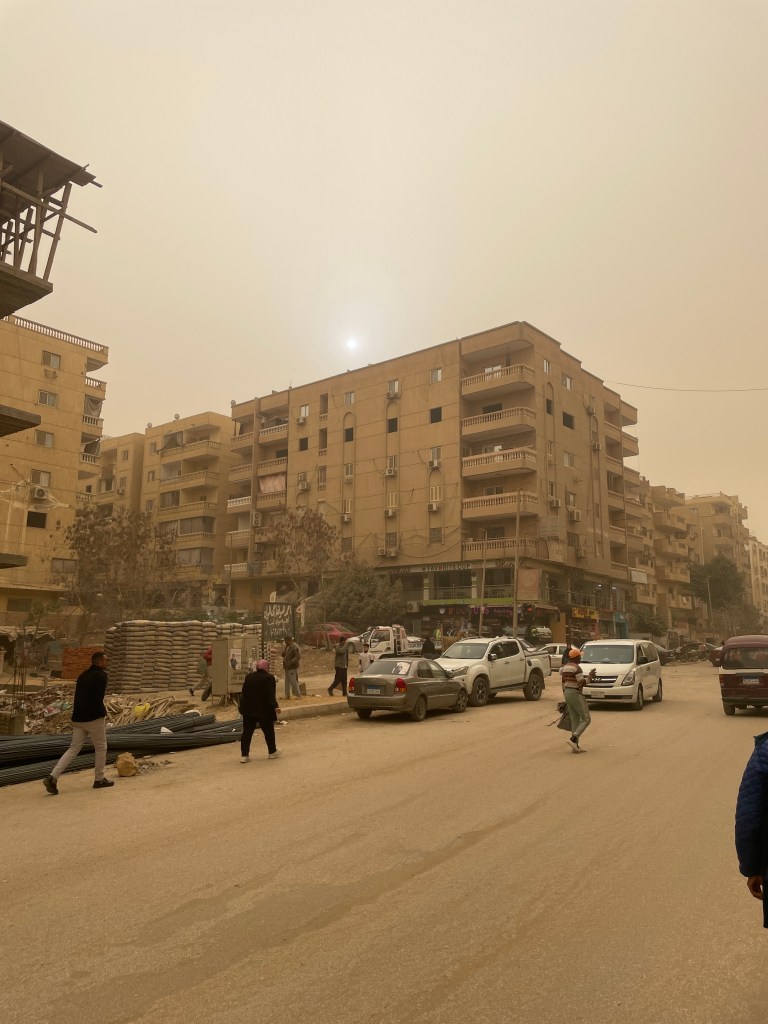
On a particularly dusty day, I set out to do some rough surveying. I have a little tape measure and some high school trigonometry. Standing a good distance away I extend my arms and line up the top of Khafre with the tip of the vertical tape. The rest is all steady, even pacing and carefully counting your steps. As Arjun feasts on juicy oranges, I scribble some numbers on paper. It’s been decades since I divided long numbers by hand, but I am up to the task. My estimate is 135 meters; I am off by only a meter. It’s enough to impress the kid. I bring out the extra tahini.
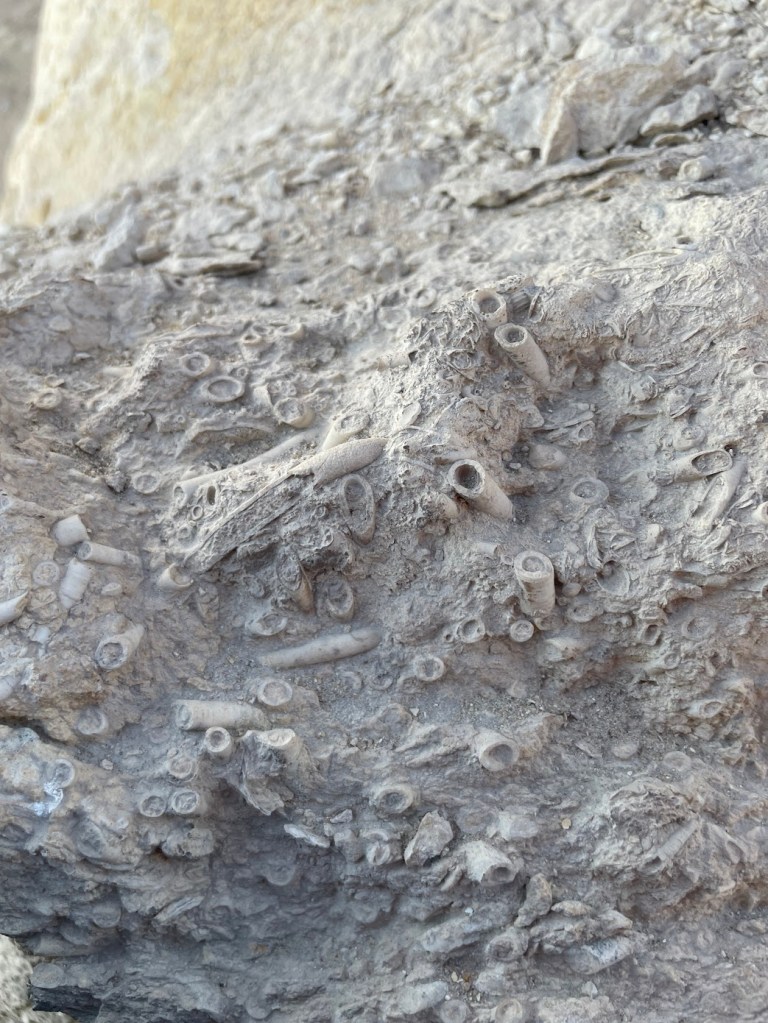
On another day, a little bit of unsanctioned field archaeology around the plateau yields marine fossils from the Late Cretaceous. Crinoids, feathered and branching in tubes, thrived in the warm shallow seas all those millions of years ago. Turned to stone, and dug out by bare-chested Egyptians, who would have cursed them for disfiguring the smooth limestone. Some amateur attempts, and we have our fossils all bagged up.
We ride camels and arrive at a giant seated lion. It’s older than the pyramids and conspiracy theory types froth at the sight of the Sphinx. They say it’s a Pharaoh’s head; the mane of the African lion must have inspired the flared headdress. Giant elongated paws and a nose that’s been chipped off. We survey the Sphinx from many angles. I watch it through my Nubian-tinted glasses and imagine a mighty Negro emperor. Perhaps civilization started in Sudan.
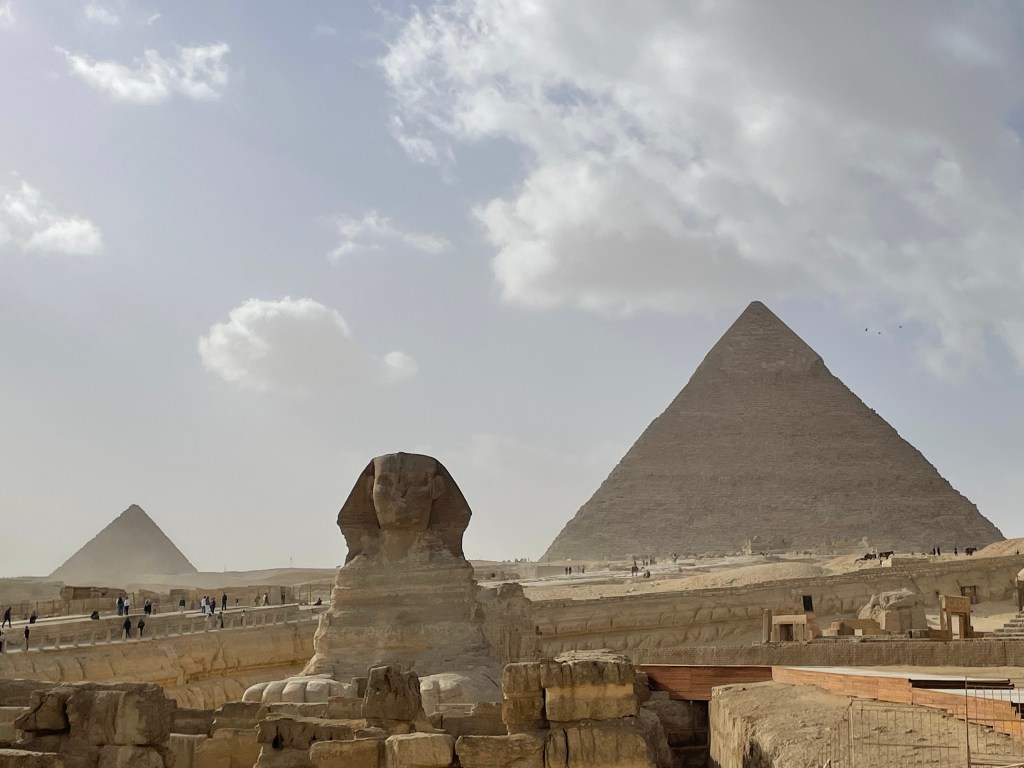
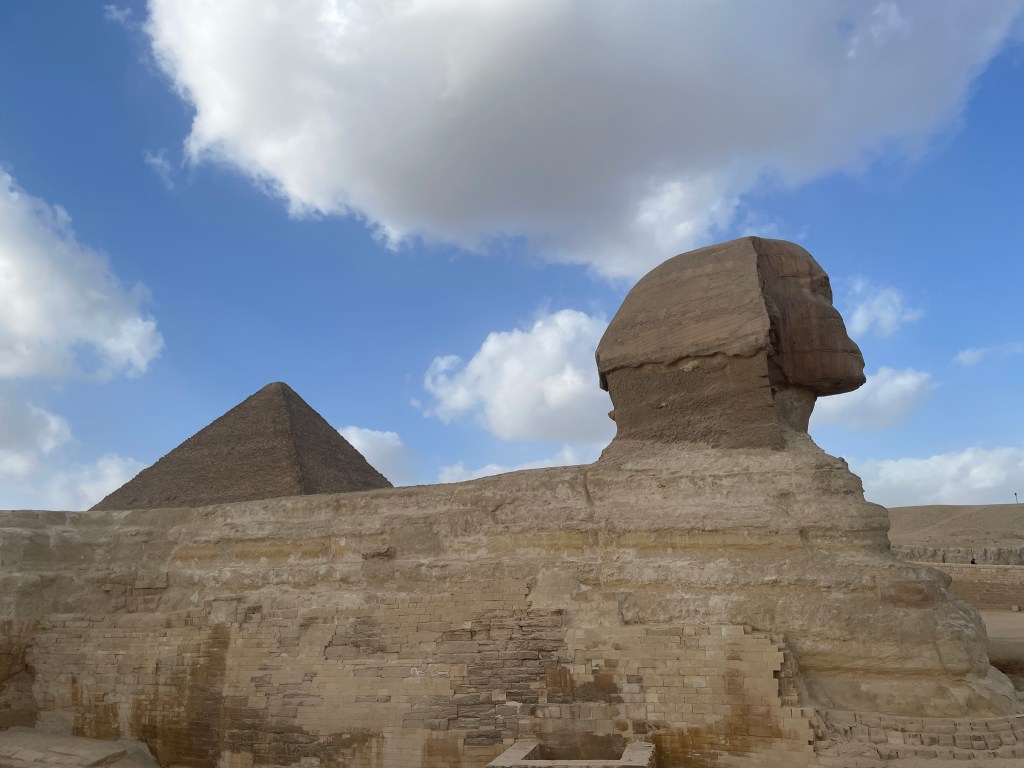
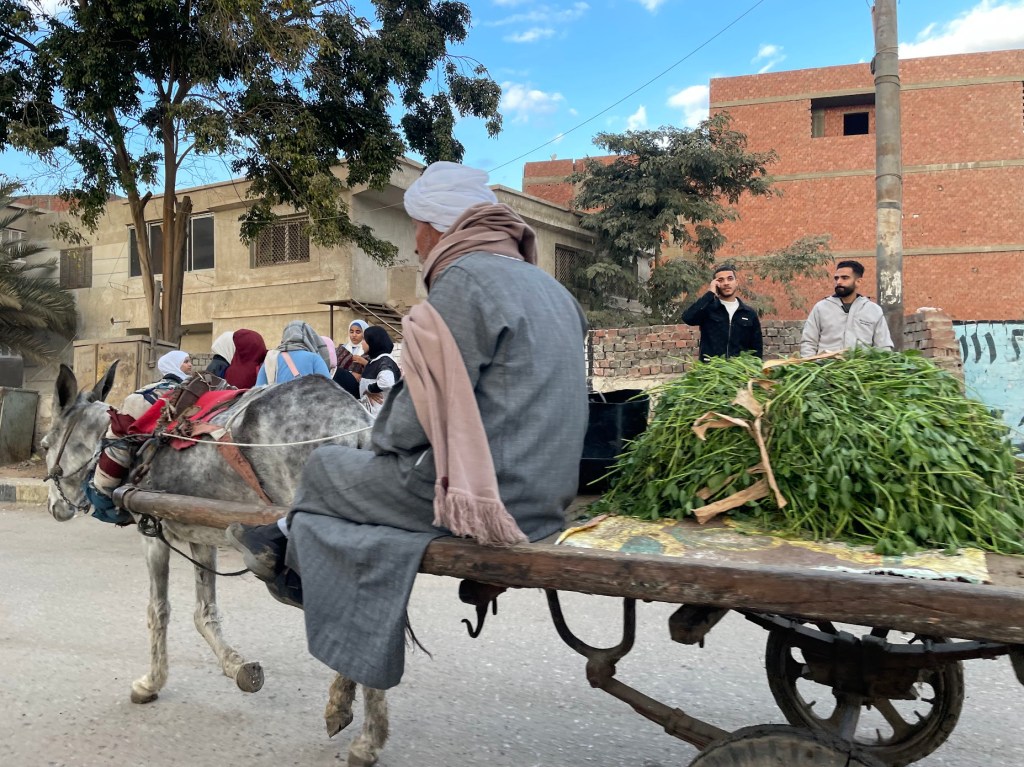
To put to rest our fanciful theories, we take a taxi one day to see the earlier attempts at pyramid sorcery. A donkey cart gallops at full speed, powered by the smooth rubber of an abandoned tire. Date palms grow in linear orchards, where once the Nile flowed. Our driver is an electrical engineer who maintains medical equipment and claims that the pyramids were giant batteries. Granite is, after all, piezoelectric. Water flowed from the Nile and hydrogen gas flared from the tops. Electricity in those days must have been used to power their clay tablets and papyrus computers, I assume.
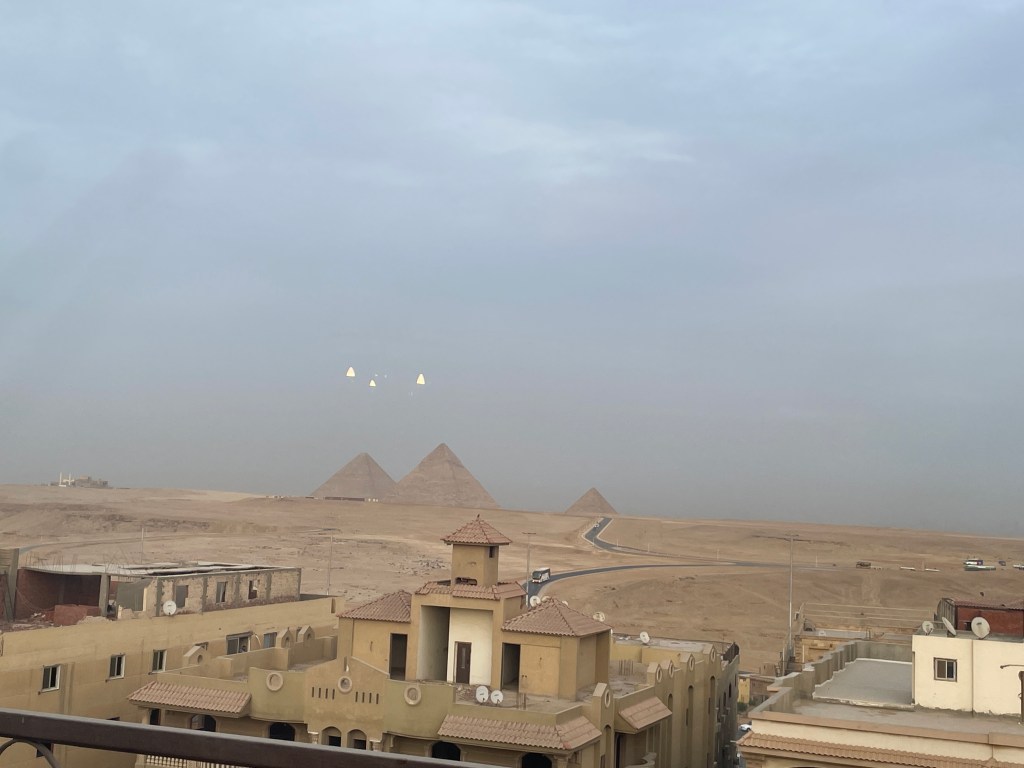
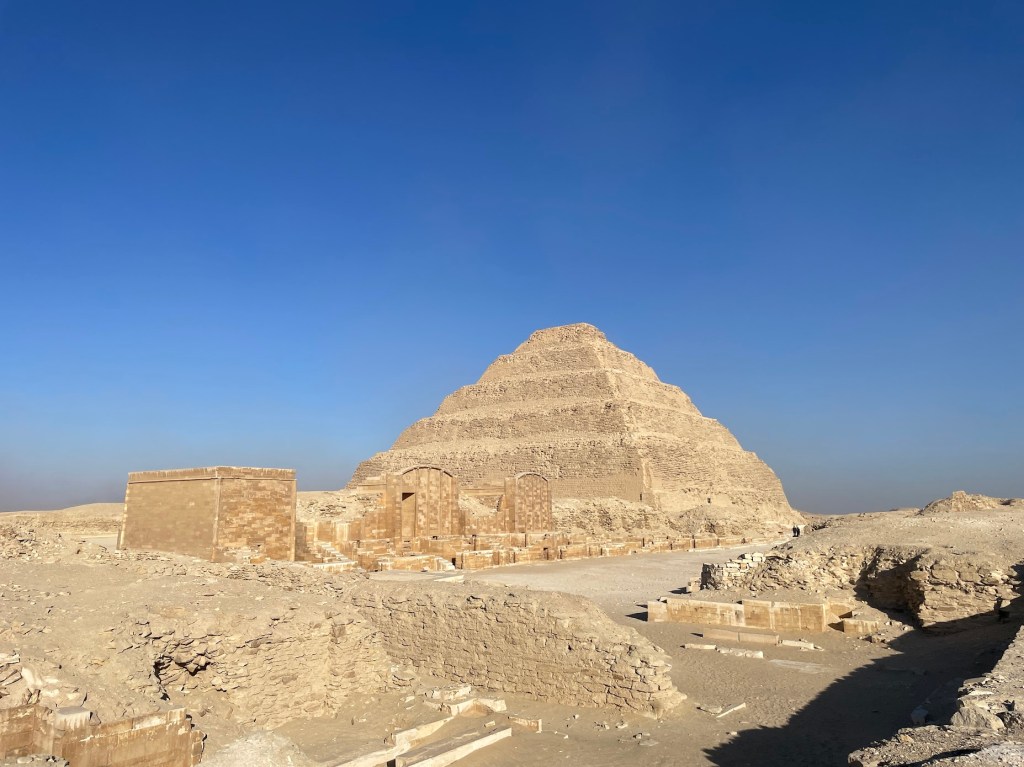
The Bent Pyramid is so obviously crooked that it’s easy to forget that it was actually an improvement over the smaller Step Pyramid. The Egyptians didn’t arrive at the golden magic of Pi on a bright white day. They stumbled and fumbled with squat ugliness just like the rest of us. The trick appears to be sheer bloody-minded obsession over death and grand plans for the afterlife.
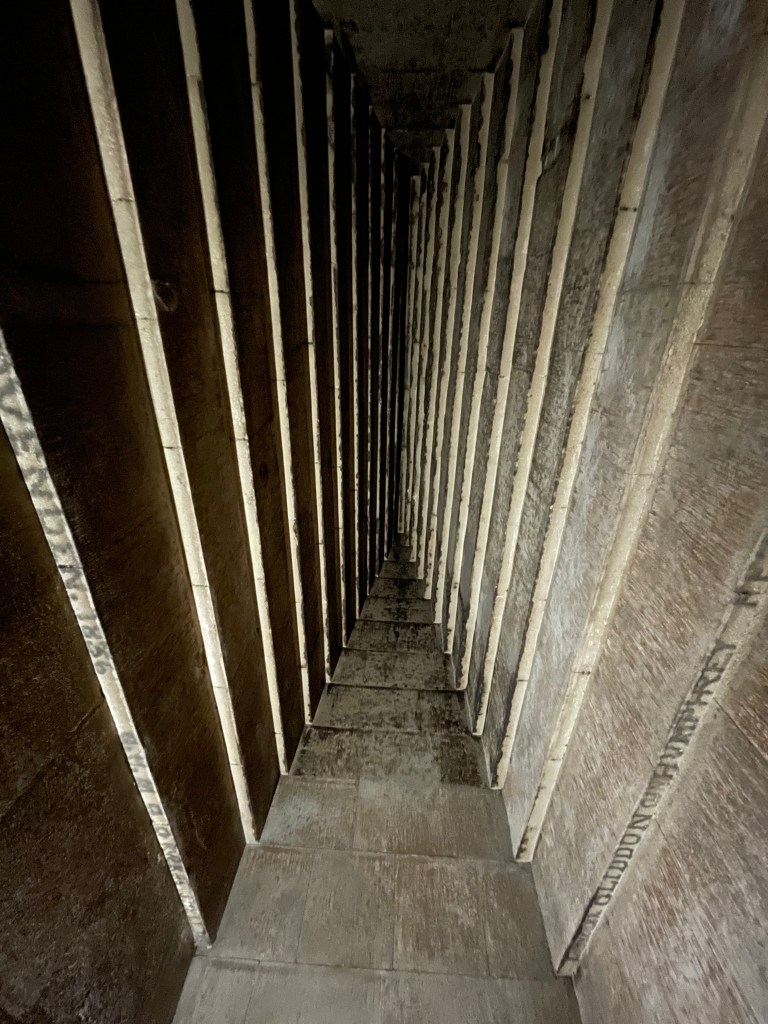
The descent into the secrets of the Bent Pyramid is truly frightening. I am glad Arjun and Dhanya stayed up in the air. I am constantly in fear of the whole thing crumbling in a ton of old stone. The sloping, makeshift wooden ramp descends into a dark, dark chamber. The authorities have provided a ladder up some of the nasty bits. Then I have to crawl on all fours and enter the holiest of holies. It smells of bat piss and housed a sarcophagus, where apparently Khufu’s old man was entombed. The sheer pointlessness of hiding your dead bodies with such ritual obsession does wonders for your modern nervous cynicism.
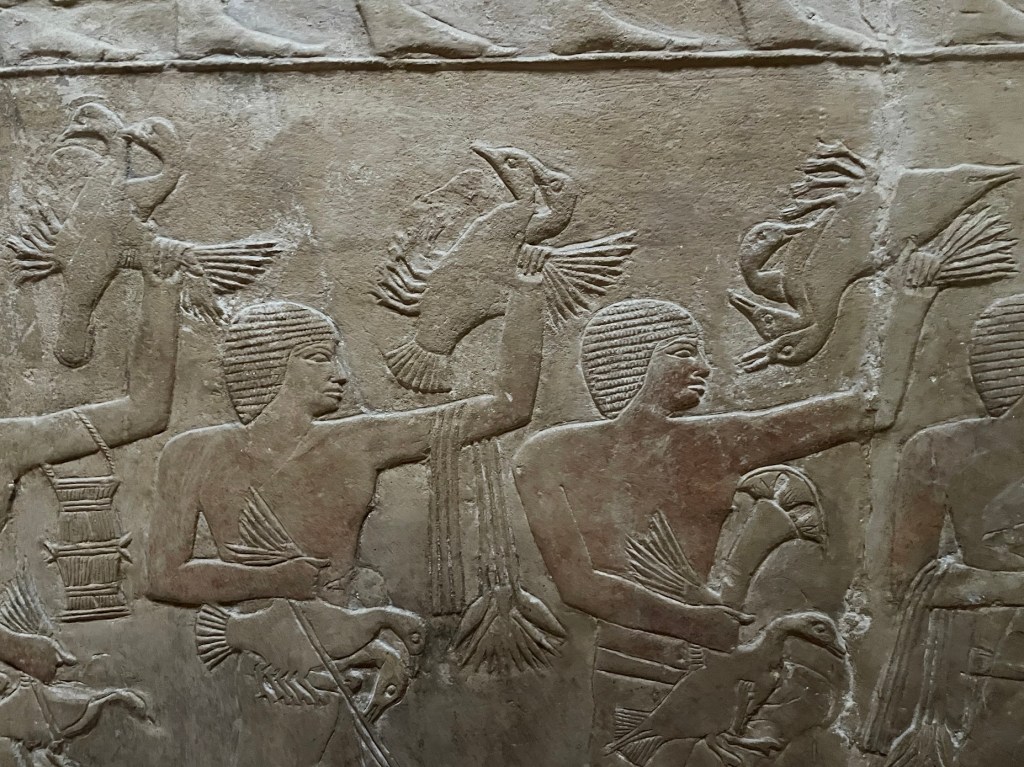
Everyday life along the Nile was cheery and good-spirited, though. They trapped a lot of ducks, ate a lot of fish, combed their hair meticulously, and fought off hippos with spears. Even their cows were blessed with long, curving horns and their monkeys were furry enough to cuddle after a hard day’s work.
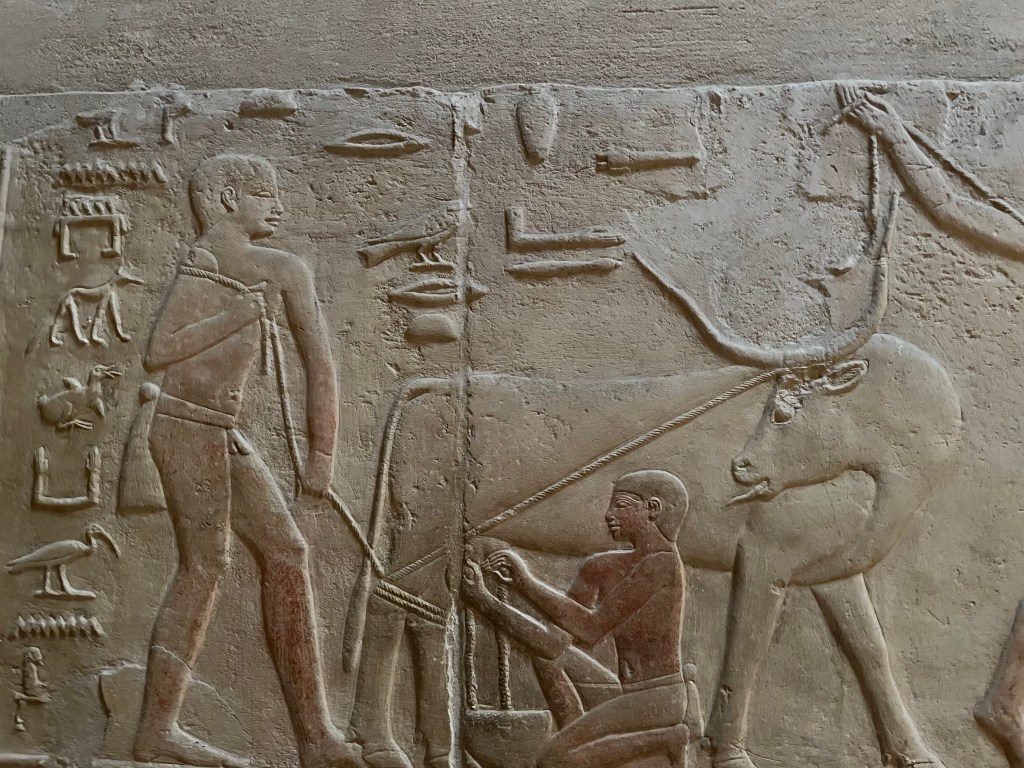
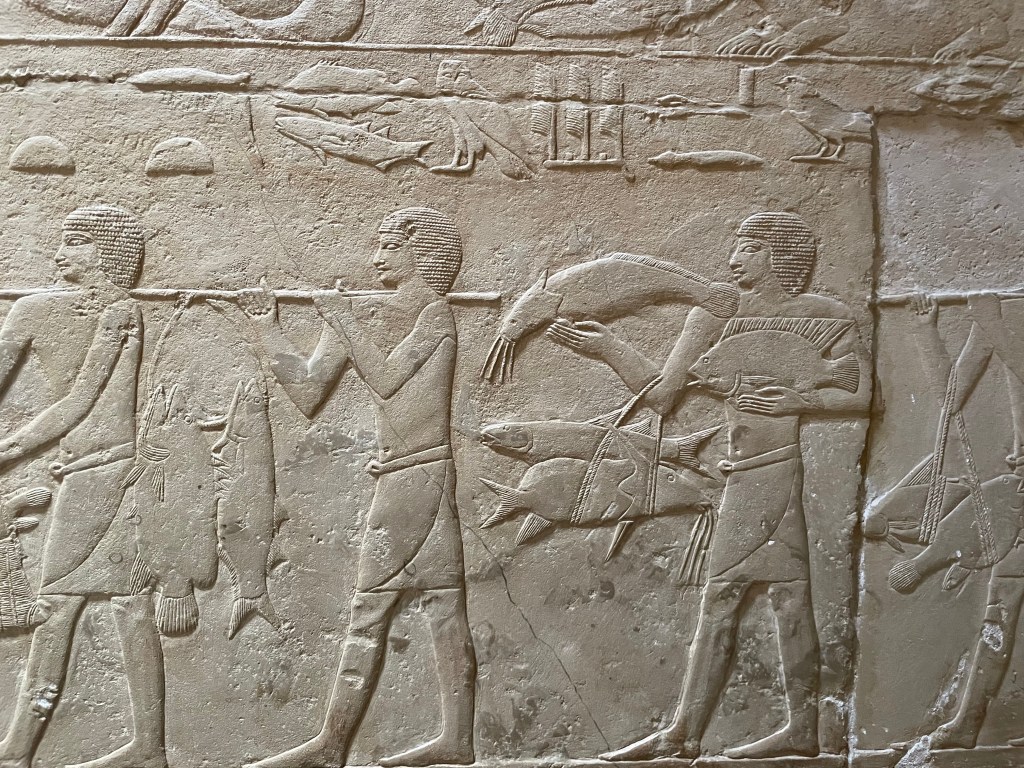
The “Keeper of the Ducks” was an important title in those days. They even made a little pyramid for the best amongst them, Neferherptah. He was a red-skinned, little extraterrestrial who managed the farms, conjured up all the grain and had the best feather-pluckers on solid retainer contracts. Anyone can keep a few hens, but keeping a flock of fiendish geese requires real skill.
 Three Bears Travel