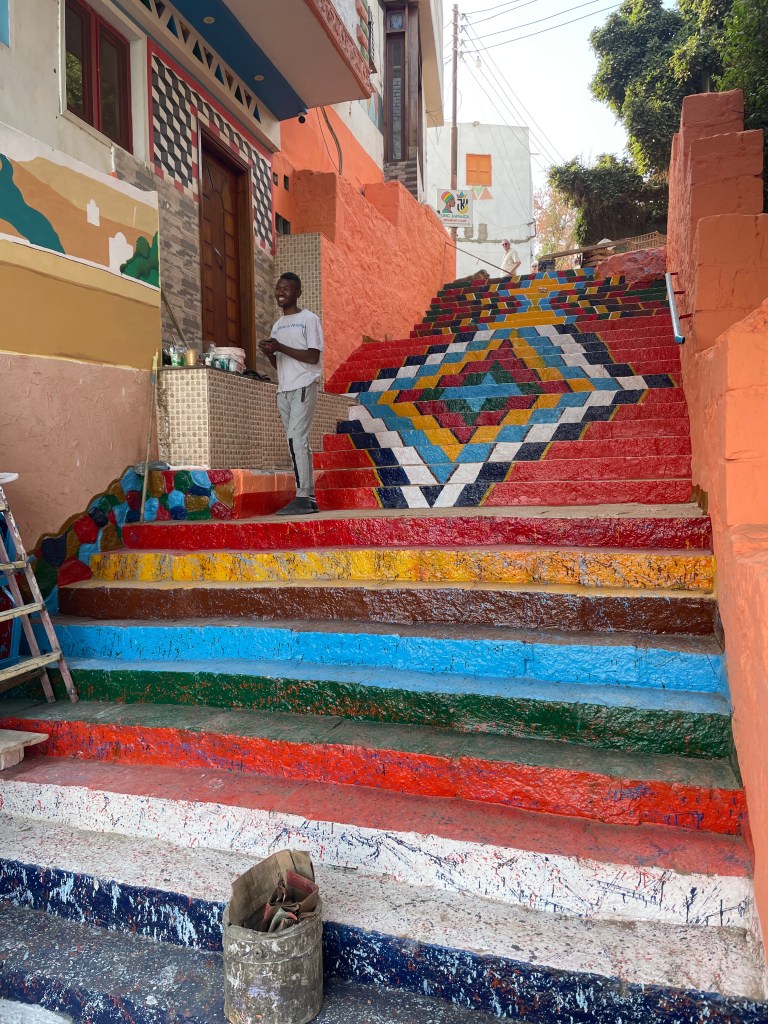
We stare intently at a blue wall. There is a red, blue, and yellow geometric pattern that frames the doorway. The door itself is an unromantic brown metal thing. There is a little masjid indoors and some days a squeaky-voiced kid calls for prayer from the rickety minaret.
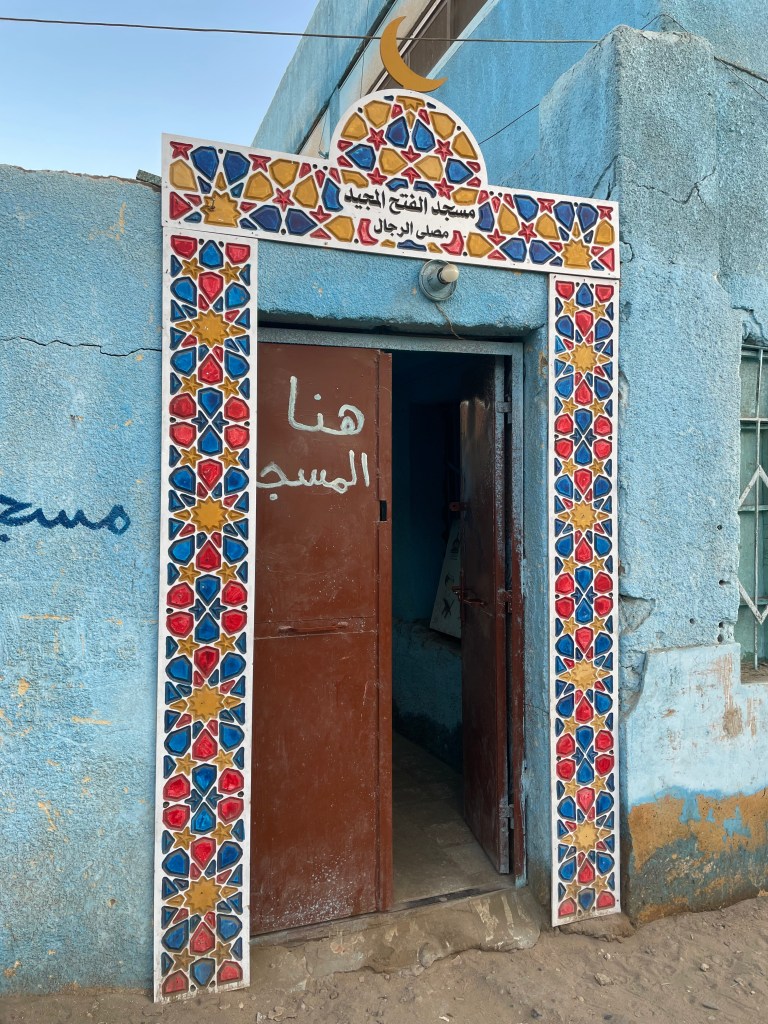
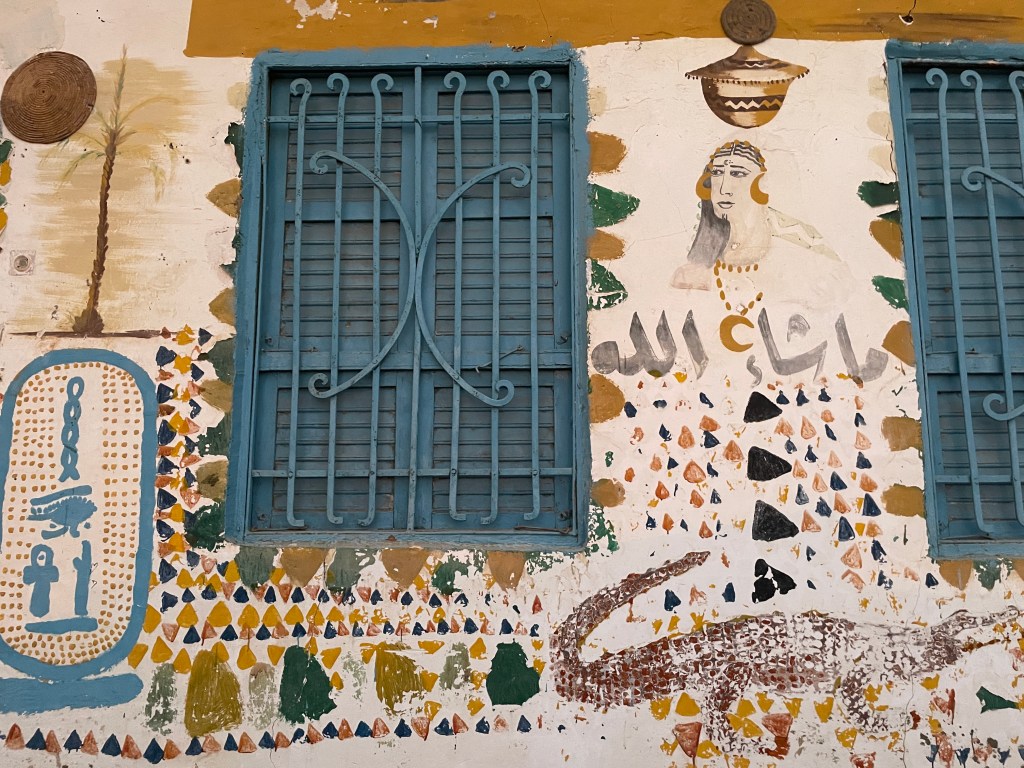
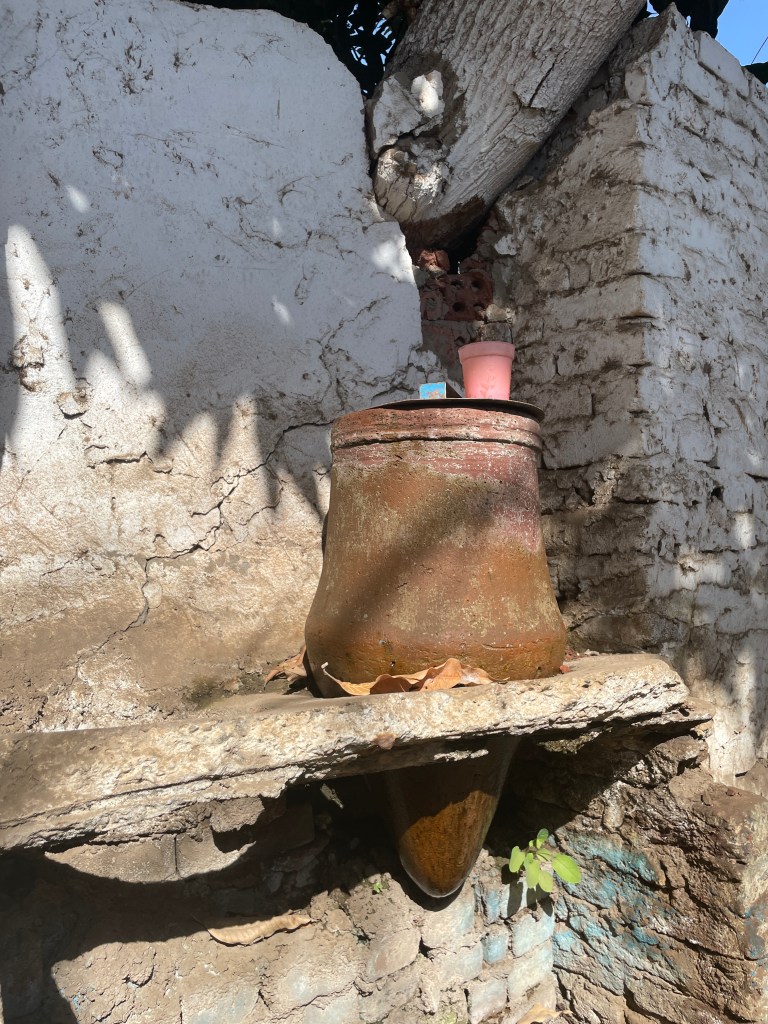
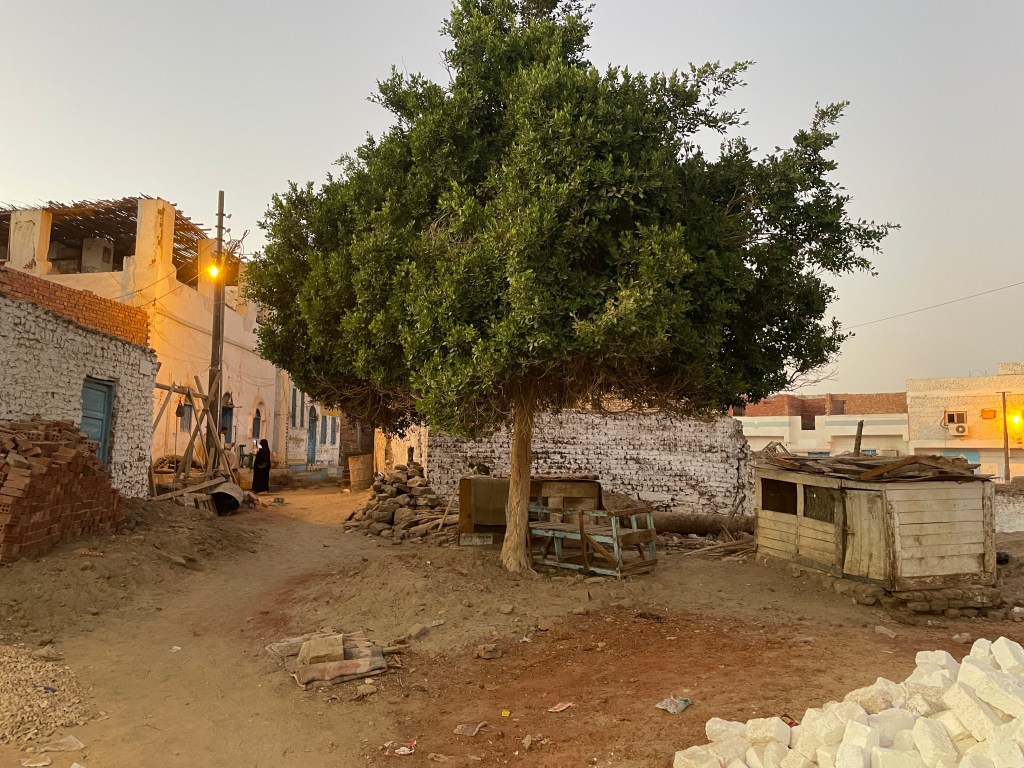
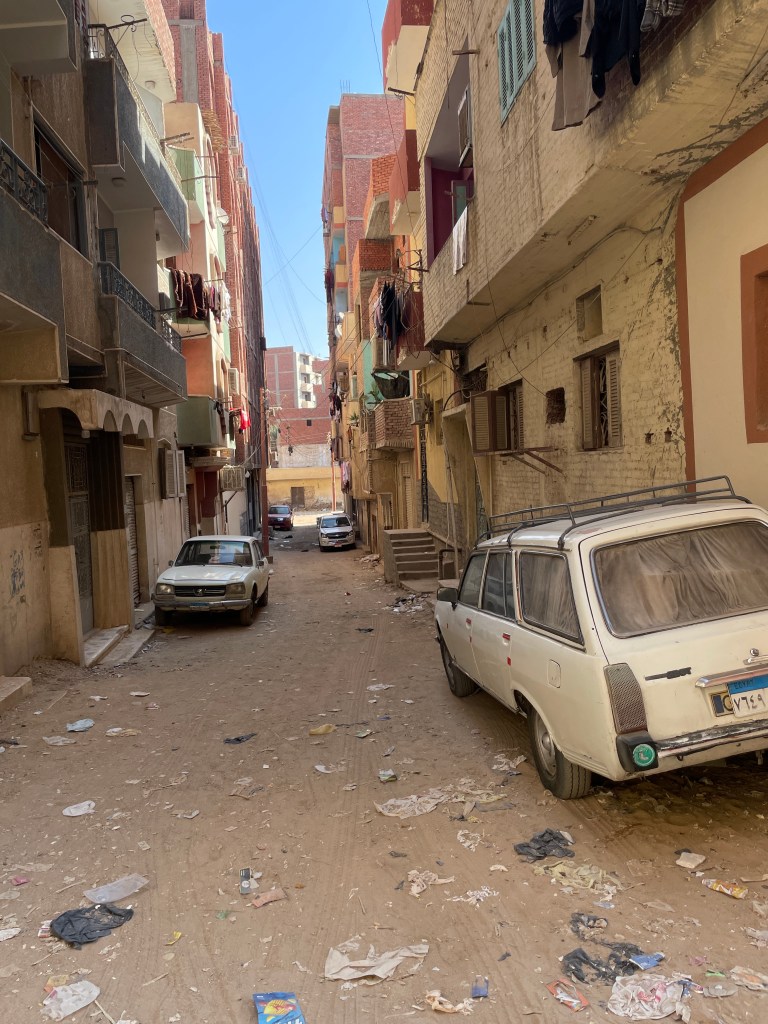
We are on a little island in the middle of the Nile. The island’s trash is collected within more blue walls next door. It’s definitely one of the prettier walls that line a garbage dump. Wandering through the mud-brick tiny alleys that crisscross the island reveals yet more picturesque walls. There is a mud water cistern, where dripping water from the clay pores offers a cool drink on a hot day. All are free to quench their thirst.
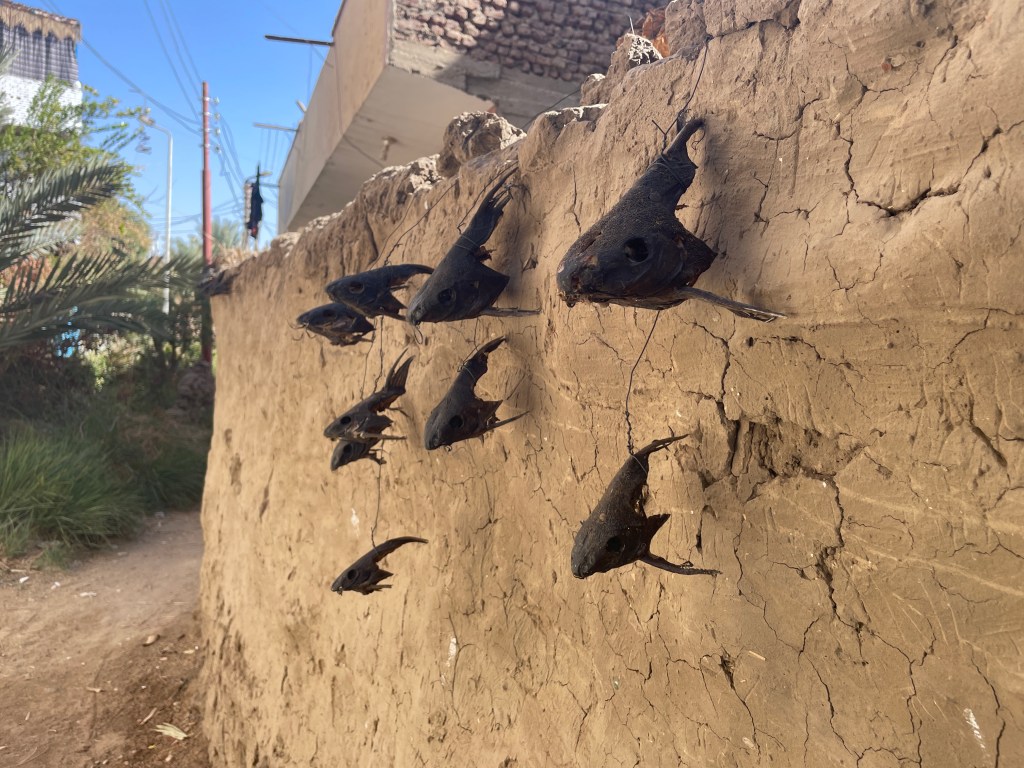
Catfish heads, dry and hang onto little hooks on a mud wall. A kid cradles a live baby crocodile. In the dusk one evening, I am admiring some more walls, when my heart quickens as I see a large crocodile lounging on the portico. Closer inspection reveals that the reptile has departed the world of the living and is only a well-formed mummy.
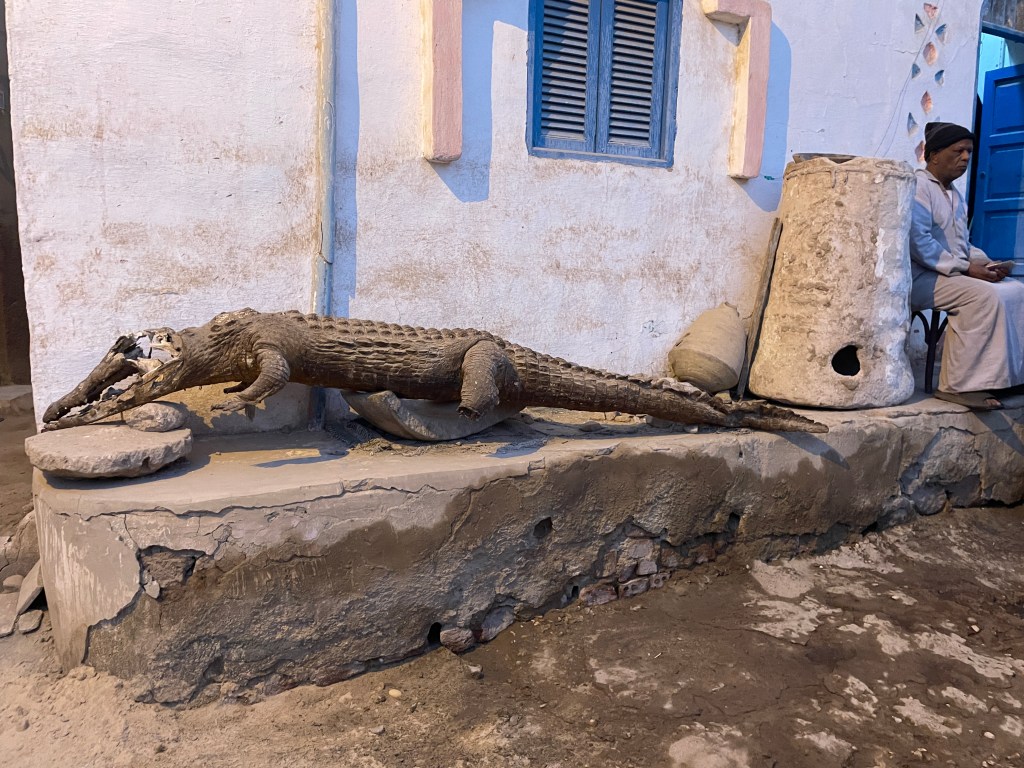
Anubis has carved out the intestines and a wee bit more. Poor Sobek, the Egyptian crocodile-god of the Nile, has a foot missing. The Nubians think it’s a lucky charm.
They take pride in their dark skin, paint their walls in splendid colors, and speak a language entirely different from Arabic. Dhanya and Arjun are also apparently Nubian names. Seeing the dead crocodile relaxing like that, I realize that we are all Nubians.
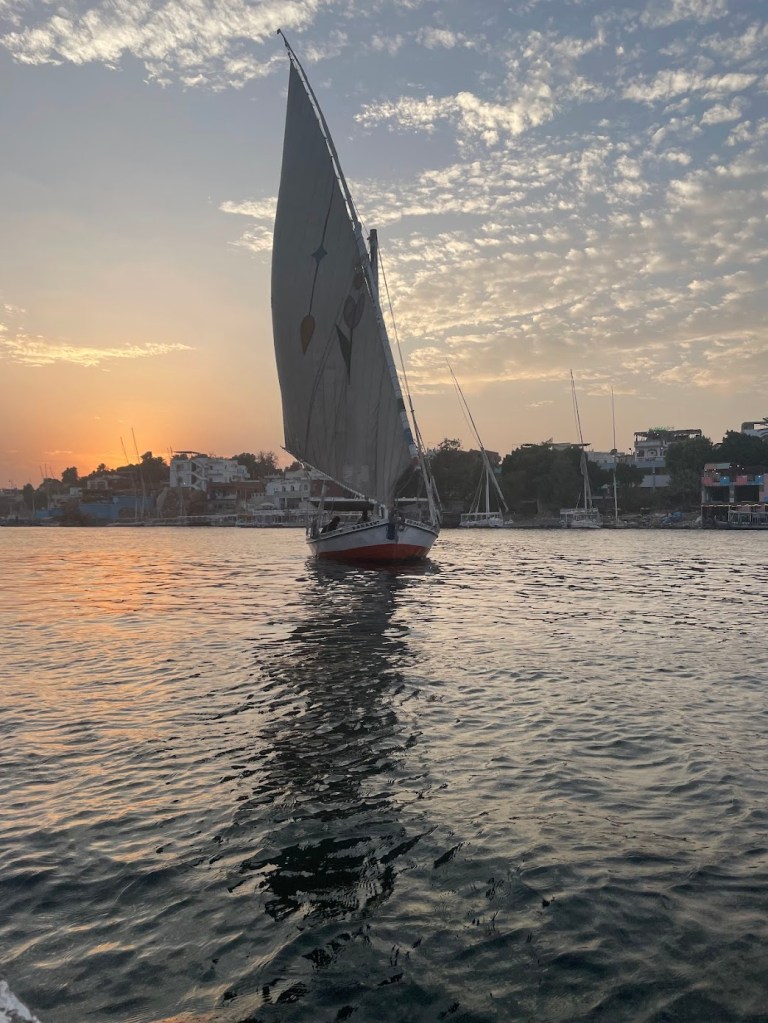
Aswan lies on the eastern bank of the Nile. The river here is fresh and clean. We are, after all, closer to Sudan, where the Blue and White Niles converge to create the grand river. The ancient Egyptians would fetch their exotic trinkets from the South, and Aswan was where they loaded their barges. We take felucca rides in the sunset. The wind usually blows from the North, and the river flows from the South. We go down the river in a lazy stream with the broad white sail providing enough thrust to cancel the current. Our felucca captain, Zico, takes us close to the banks, where there are herons and Egyptian geese underneath hieroglyphs carved deep into the low cliffs. I dip my hands into the cool waters and watch a pied kingfisher dive bomb into the river for snacks.
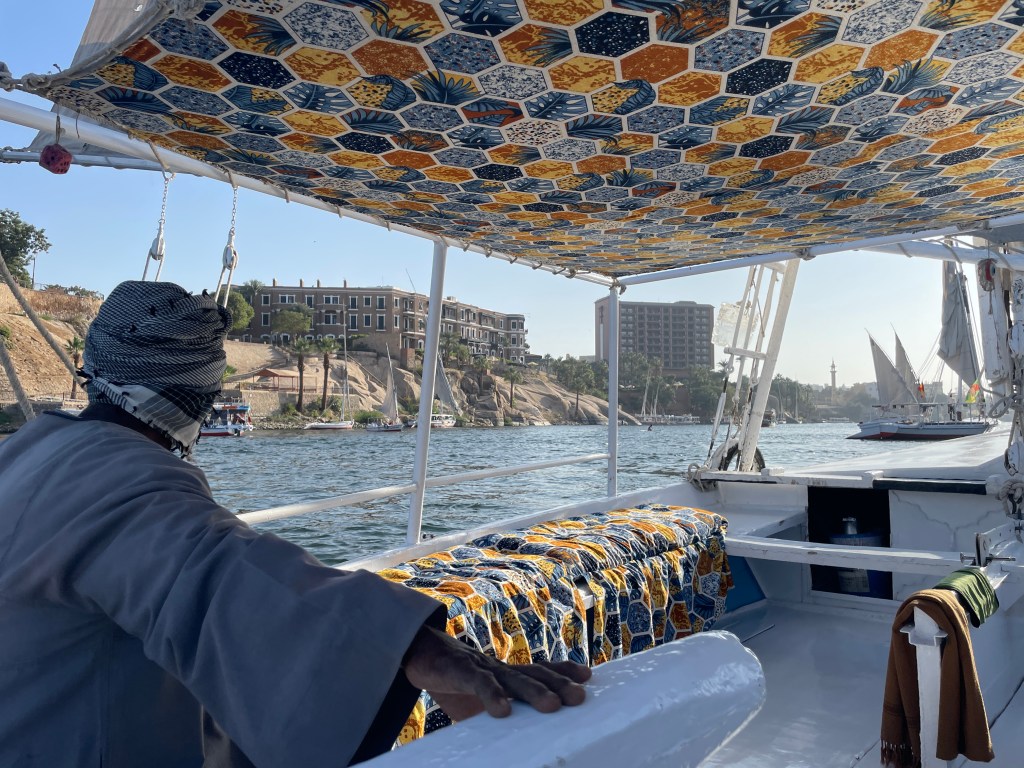
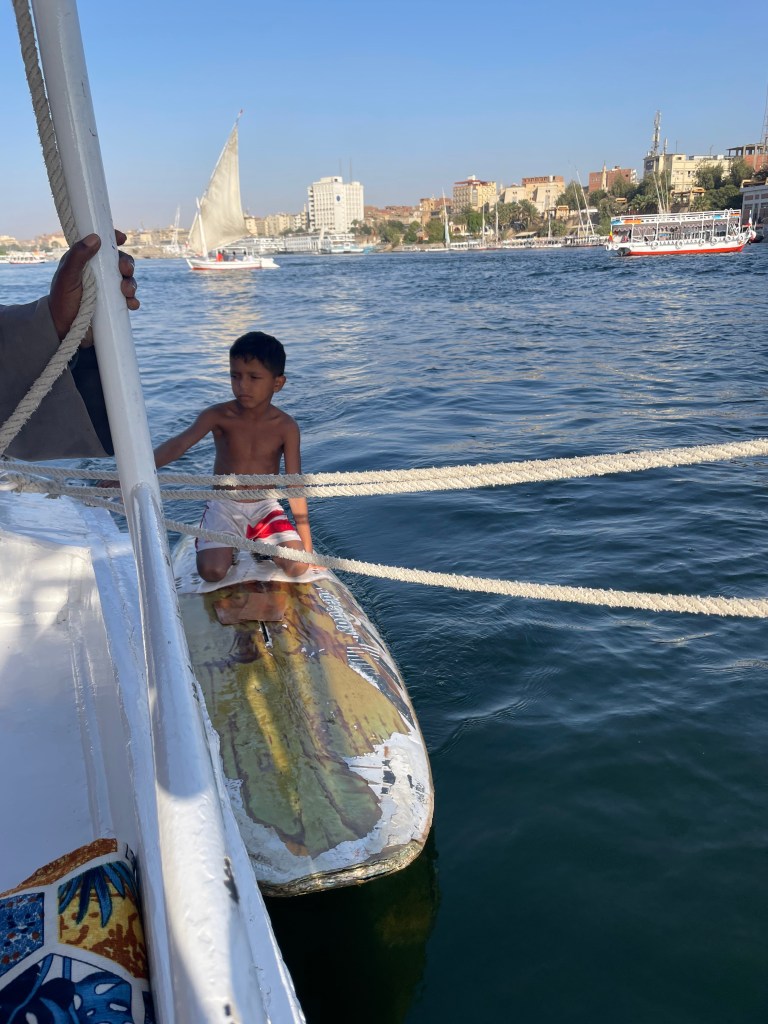
In the old days, before the mega-dams, there were cataracts here and many a romantic European explorer floundered in the foamy rapids. Today it’s all gentle and idyllic. A few kids paddle up on busted boards, using plywood squares as oars. Cleverly, they hang onto the felucca and sing snatches of song that we recognize to be from the accursed American pop genre after a few long minutes. They want a few Egyptian pounds or dollars. The Egyptian pound inflates like a hydrogen-powered Horus, and the American dollar is preferred. Only a few days back in Luxor, they were chanting unkind slogans about the land of the free (and brave). Money is weird.
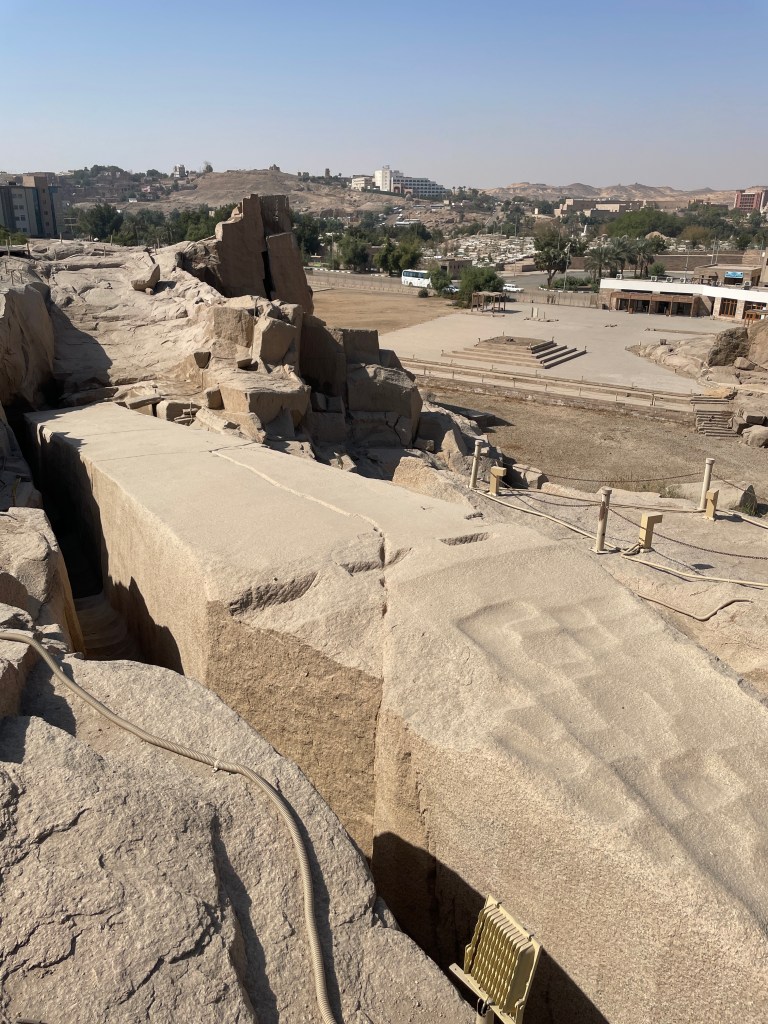
In Aswan, on a hot day, we inspect the old granite quarries, where war prisoners and ordinary citizens chiseled away on bare rock using blunt dolerite tools to pay their taxes. Remember, the Iron Age was still a few thousand years into the future. A giant obelisk lies unfinished in the bed of granite. It cracked while being worked on, and which Pharaoh would raise an imperfect obelisk?
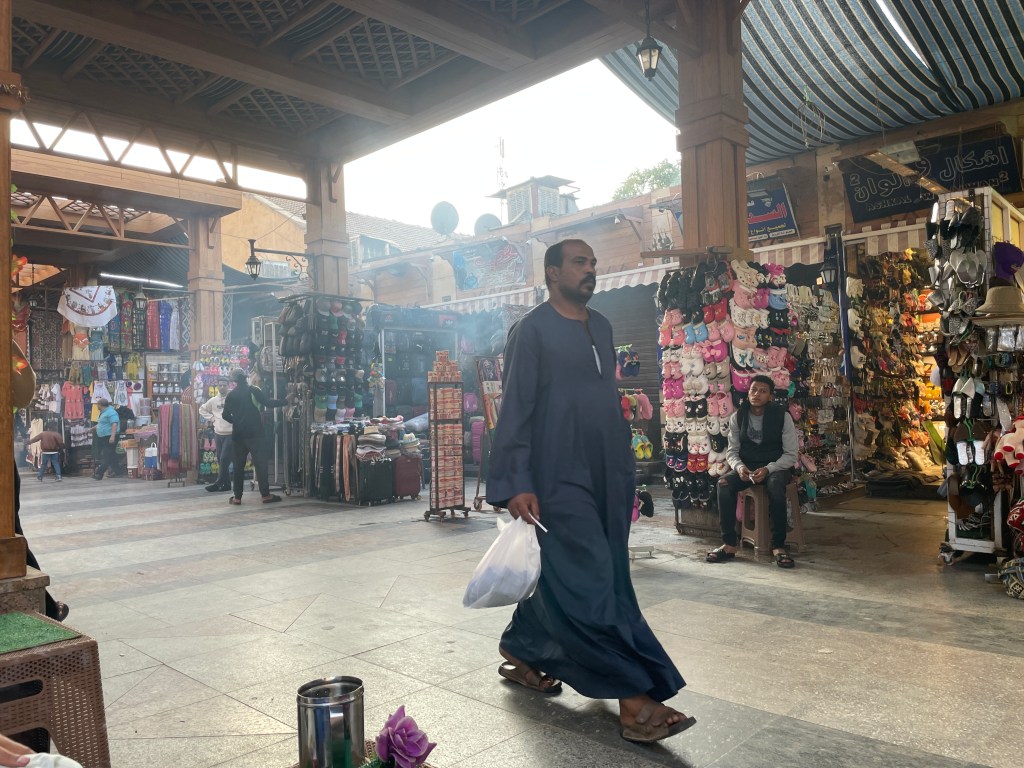
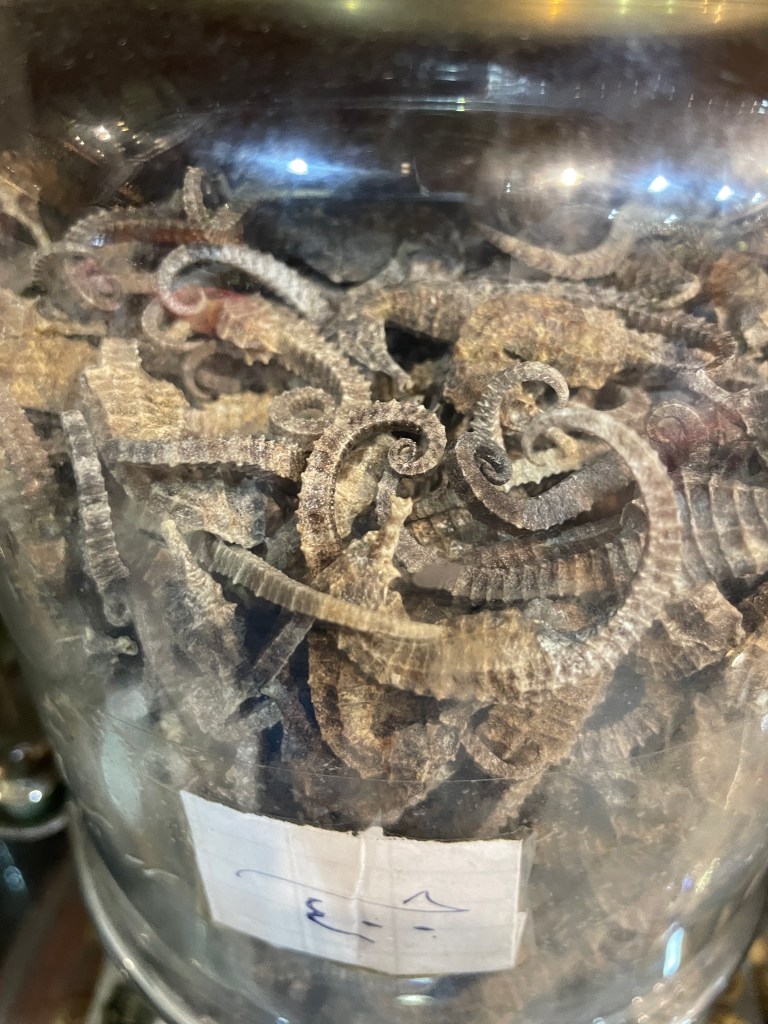
We cool off in the covered old market. I have sips of qahwa and watch as a trader whirls burning incense in a bronze cup using his arm and a bit of string. A shop next door has hundreds of seahorses, dried and potent. Thankfully, Dhanya has discovered a Lidl supermarket with tamer meats.
 Three Bears Travel