Death has always been an inconvenience. All the messy details of biology create a stink when cells stop multiplying. And so the ancients innovated and found thorny trees, whose gummy sap makes everything fragrant and pleasant again. The best of these thorny trees is the myrrh. A tree for whom the pharaoh kings would pine for when they lived and soak in when they die. Even the famously divine son, Jesus, was a devotee of the myrrh.
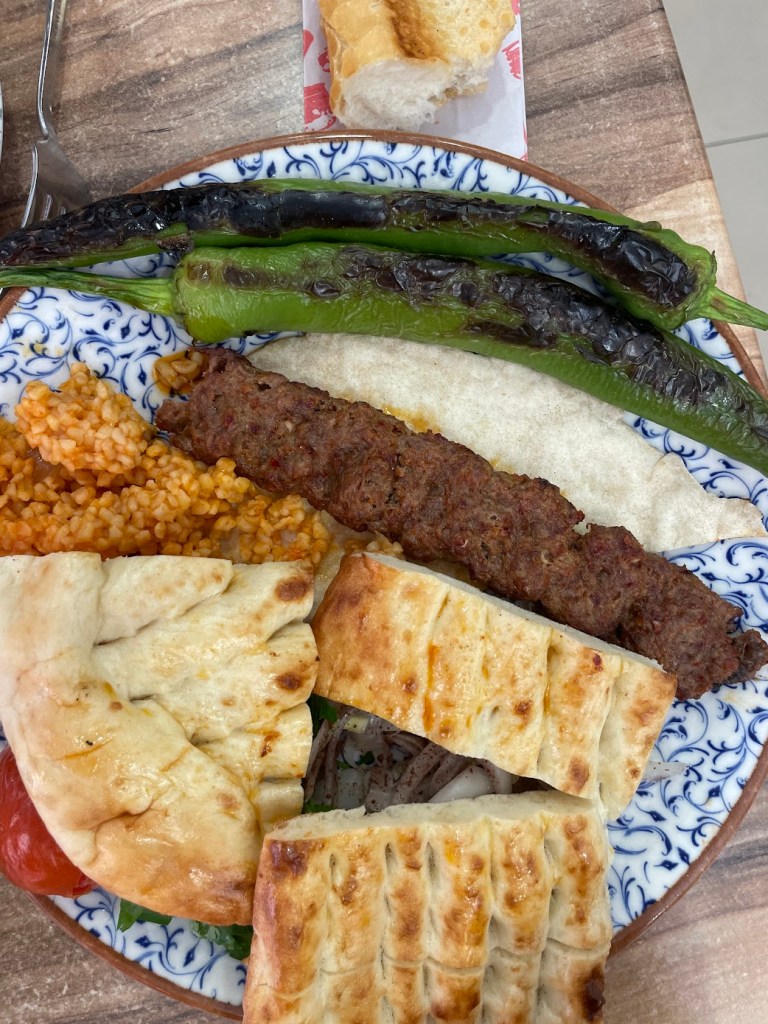
Here in Demre, a small town with magnificent kebabs, frothy Ayran (a fermented milk drink), and the best chickpeas, the ancient Lycians in a clever business move, decided to establish a factory to process the myrrh tree and bottle fragrant oils.
They called the town Myras in honour of the myrrh tree. The myrrh oil business apparently boomed, and the city even got three votes in the Lyican league. The more money you make, the more votes you got. The ancients figured out democracy and capitalism quite well.
The Lycians cut tombs into rocky mountains and embalmed the important dead. Being pragmatic businessmen, I’m sure they had a few sweet-smelling corpses in their demo tombs to better market their myrrh oil.
I wash down the kebabs with strong Turkish qahwa, and Dhanya must have another chai cicegi before we start wandering around. The tombs are appropriately carved into the hills. The brown sandstone has been hollowed and chiselled. To get the elegant Greek look, they spent considerable effort and fashioned totally unnecessary lintels, pediments and recessed door frames in the stone. The richer corpses probably got the higher levels with better views. The fertile valley and the sea must have made for good viewing when their descendants climbed up to these sky graves, once a year.
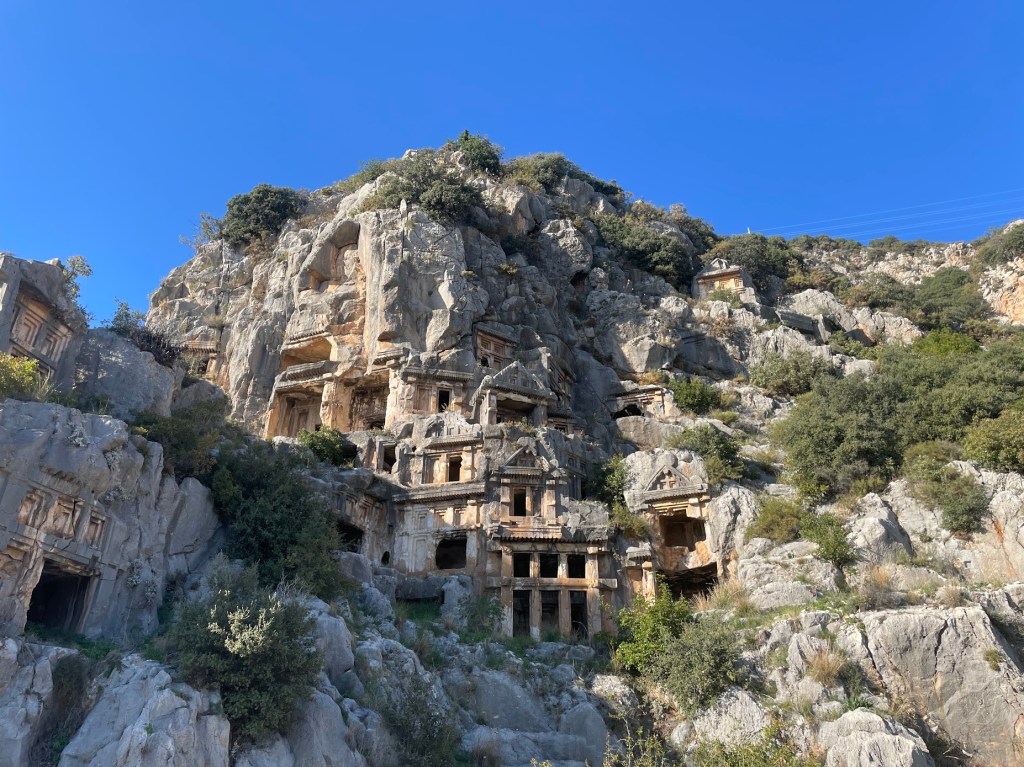
The actual tombs are now out of bounds for the casual visitor, so we must imagine their interiors from below. I imagine them all to have a sombre sarcophagus and red wall paint. I am only an amateur, though I believe the professional archaeologists have similar ideas.
The Lycians finally submitted to the Romans, and learned to sing and dance and not worry so much about the dead. They built a sturdy amphitheater which is excellently intact and has great acoustics. We descend on giant steps and sit on limestone sofas. Dhanya performs “Yesterday” by the Beatles, and old Bill and his wife (from Scotland) insist on making a recording. Even a Roman general would have been moved.
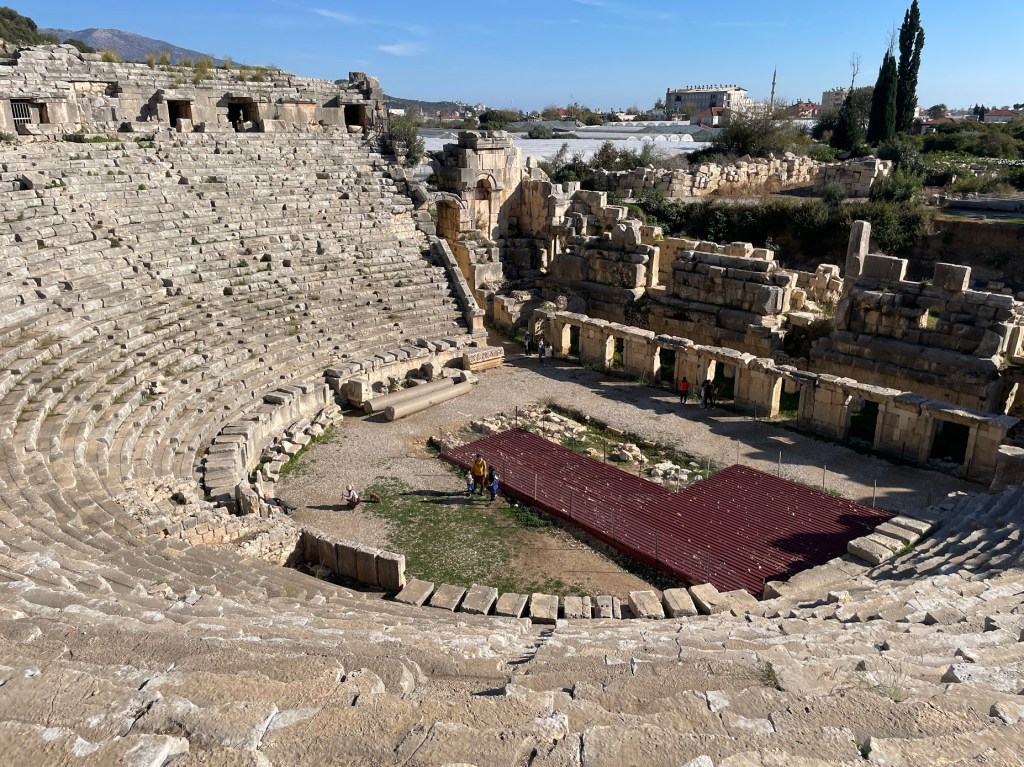
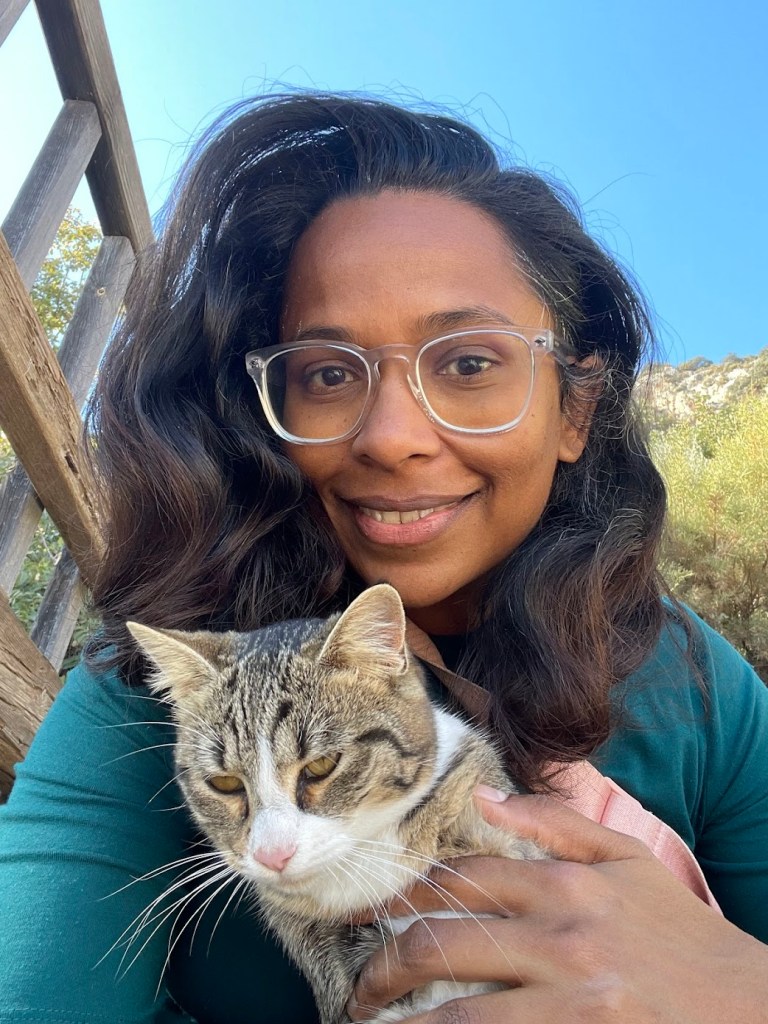
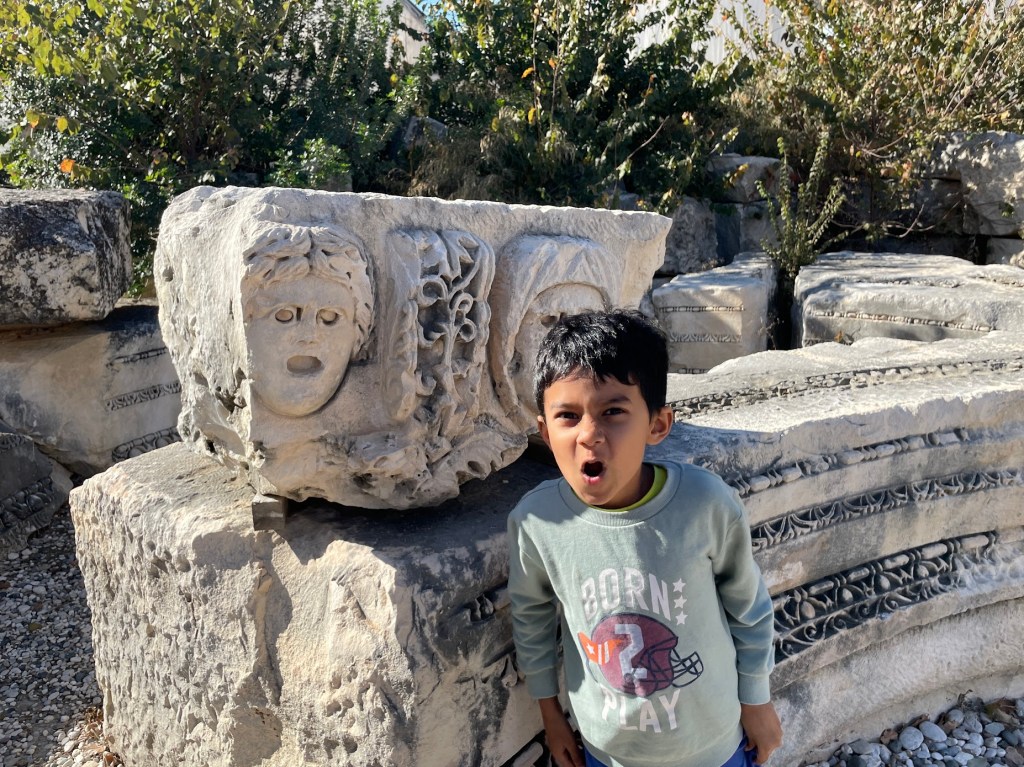
The amphitheatre has faces carved into what must have been the gallery. Their mouths are wide and gaping, the singers of yesteryear having to work hard to entertain. We spend a pleasant afternoon relaxing on the upper benches of the amphitheatre, eating oranges and petting cats. I jump over a fence and find a little cave with crumbling rock. No doubt a tomb for the failed business magnate.
As the sun sinks lower, Dhanya sits to sketch the tombs in the golden light as Arjun and I head out for some refreshments. Wild mountain goats descend onto the tombs from the hills and graze on the faux lintels.
We have the freshest of orange juices, pulpy and sweet, and I learn from the man who runs the orchard that his childhood was pretty rough, and the only food they had was oranges and onions. Perhaps only in Turkey do the poor fill their bellies with oranges.
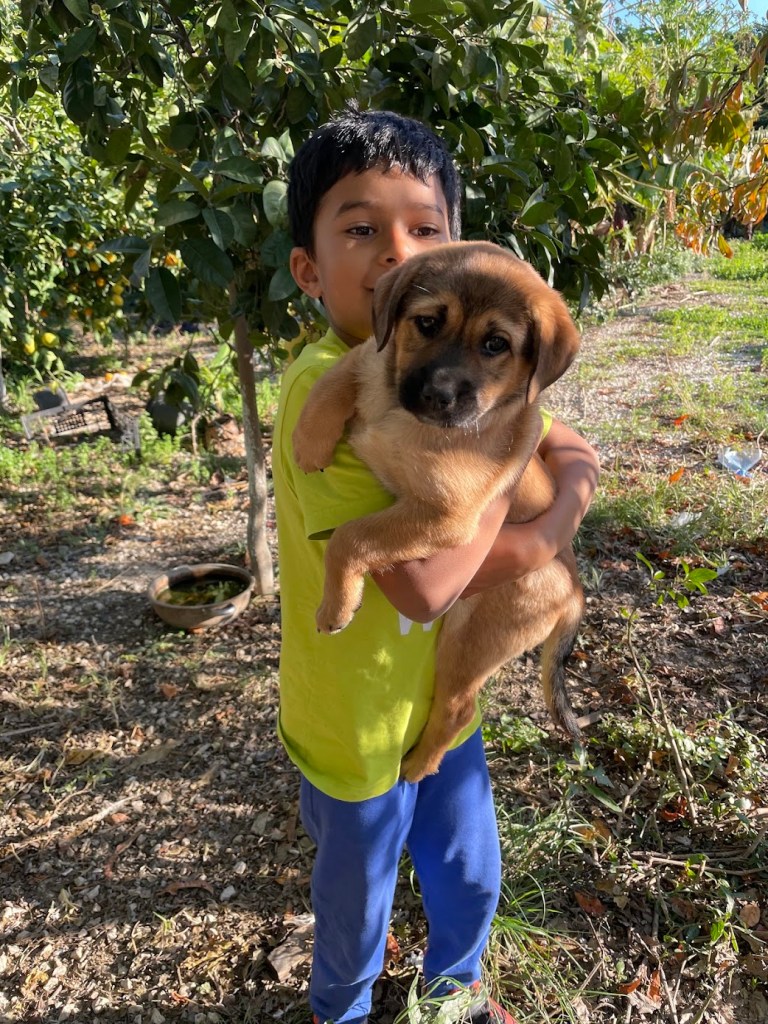
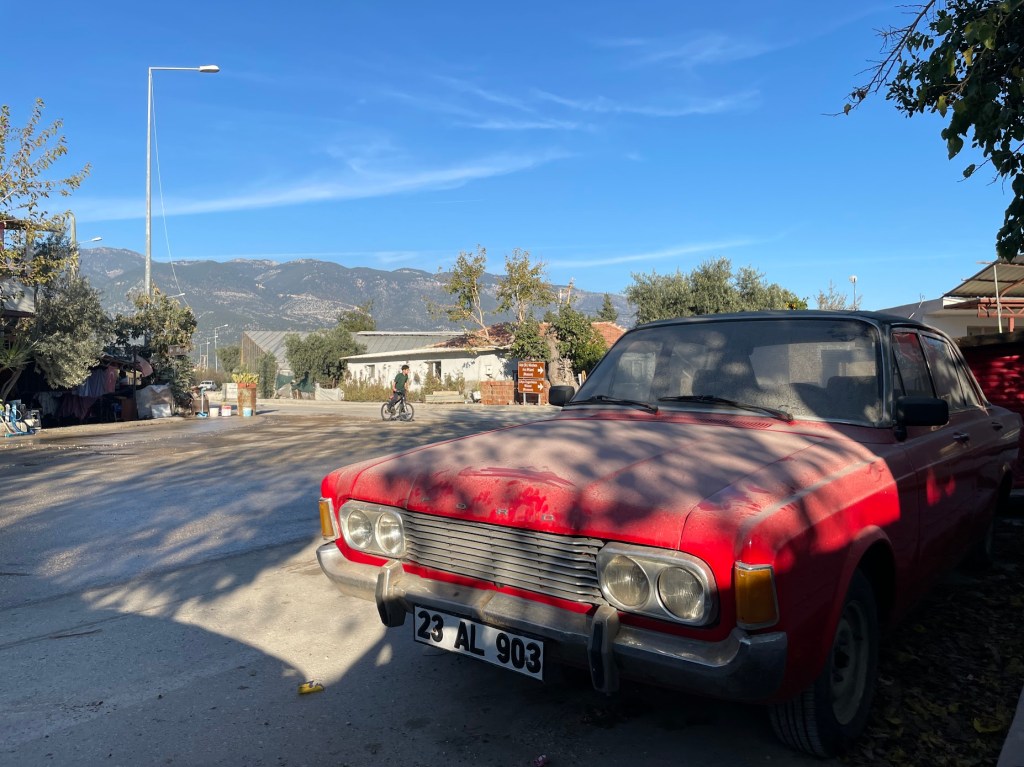
The land is fertile, and fruits and vegetables flourish easily. Pickup trucks laden with produce drive around the small provincial town of Demre, a few miles away from Myra. Dhanya decides to go the local markets to pick up groceries, while Arjun and I try to get a haircut.
It’s always exciting to imagine what a barber in some strange land might do to you. I find the top-rated barber and get my hopes high. Handsomeness beckons. But alas, the Turks are the most detail-oriented barbers. Each head takes a good half an hour of work. The barbers obsess over their work and sweep their clippers in slow arcs, making great fades. And then they do the beards.
We wait patiently on soft leather sofas and watch life go by. A kid blows rings into his dad’s cigarette smoke, and fat teenagers watch their phones. Men come inside, salaam the barber, look into the mirror and brush their hair before stepping out for more smokes.
When I learn that there are still five people ahead of us, I give up and we walk out, looking just as bedraggled as when we entered. Perhaps I was never meant to be handsome.
Dhanya has had much better luck. She walked into a cafe and had three teas, without paying a single Turkish lira. An old man was so enamoured that he even gave up half his sandwich.
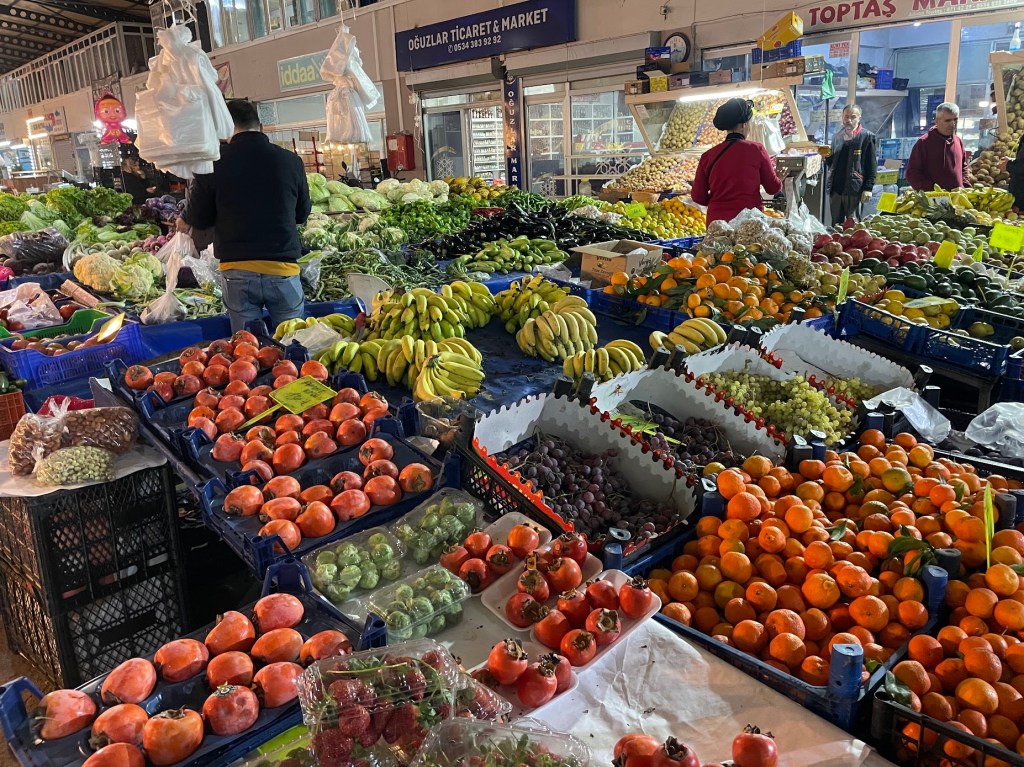
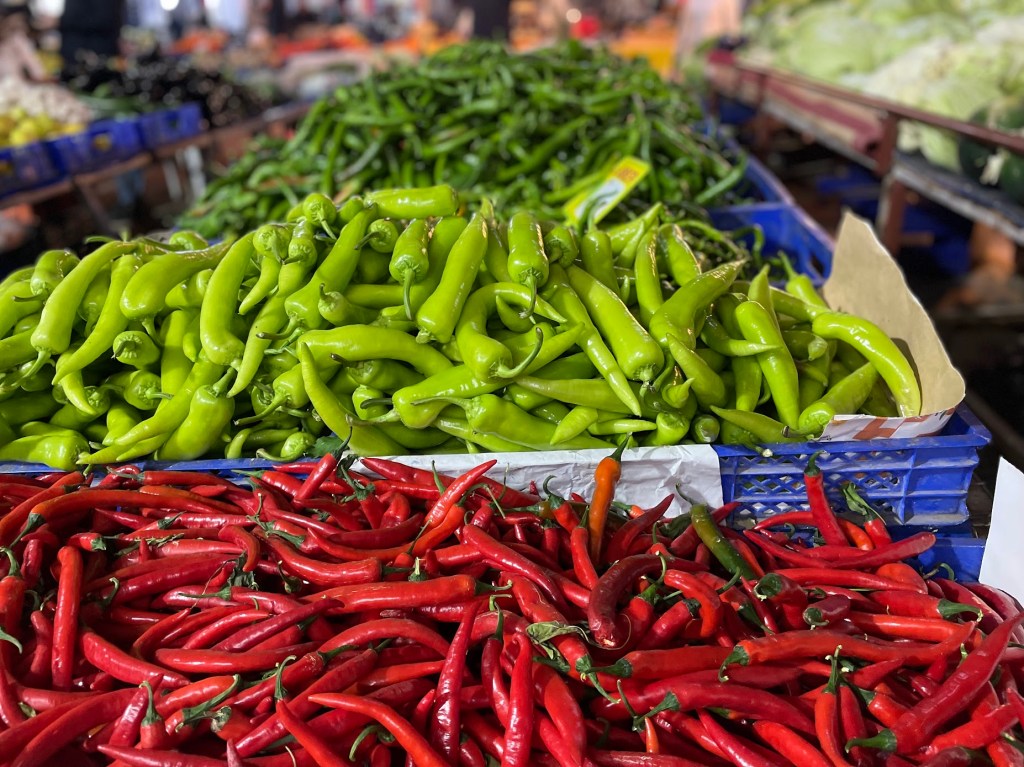
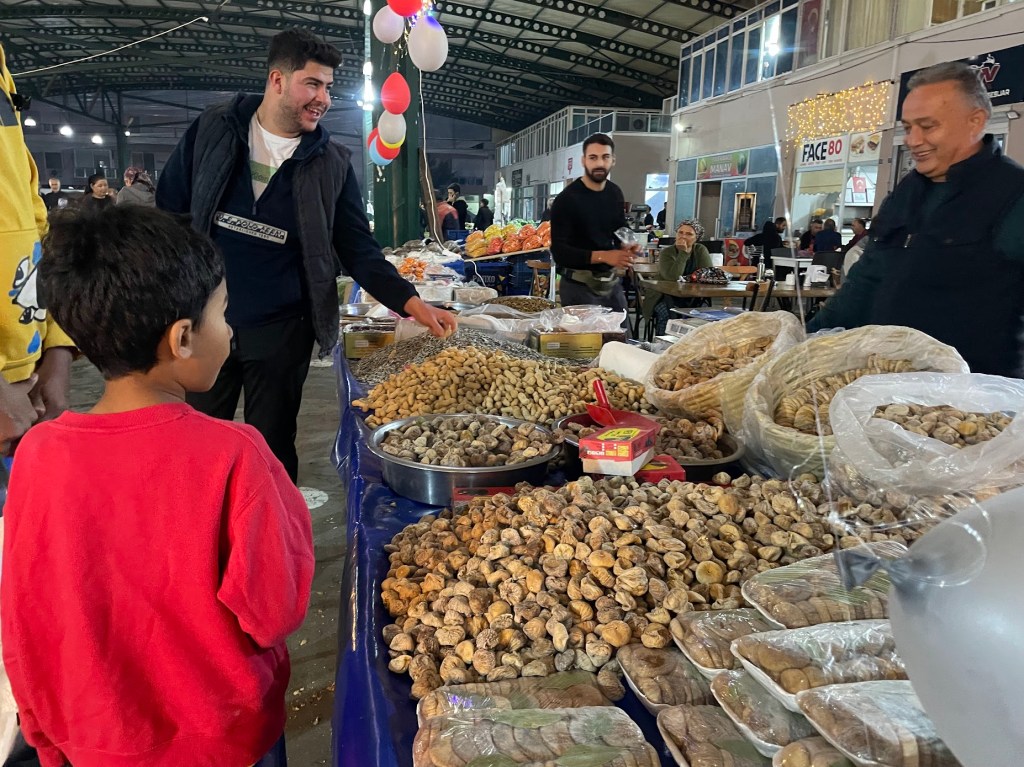
The local market is a riot of figs, dates, pumpkins and potatoes. We walk around the stalls piled high with the freshest of produce. Everything is ridiculously cheap and plump. Arjun is gifted a bagful of raisins. We get some carob, the magical bean that is crisply chocolatey and grows in the mediterranean. For dinner, I get a large, open-mouthed red grouper from the fishmonger lady.
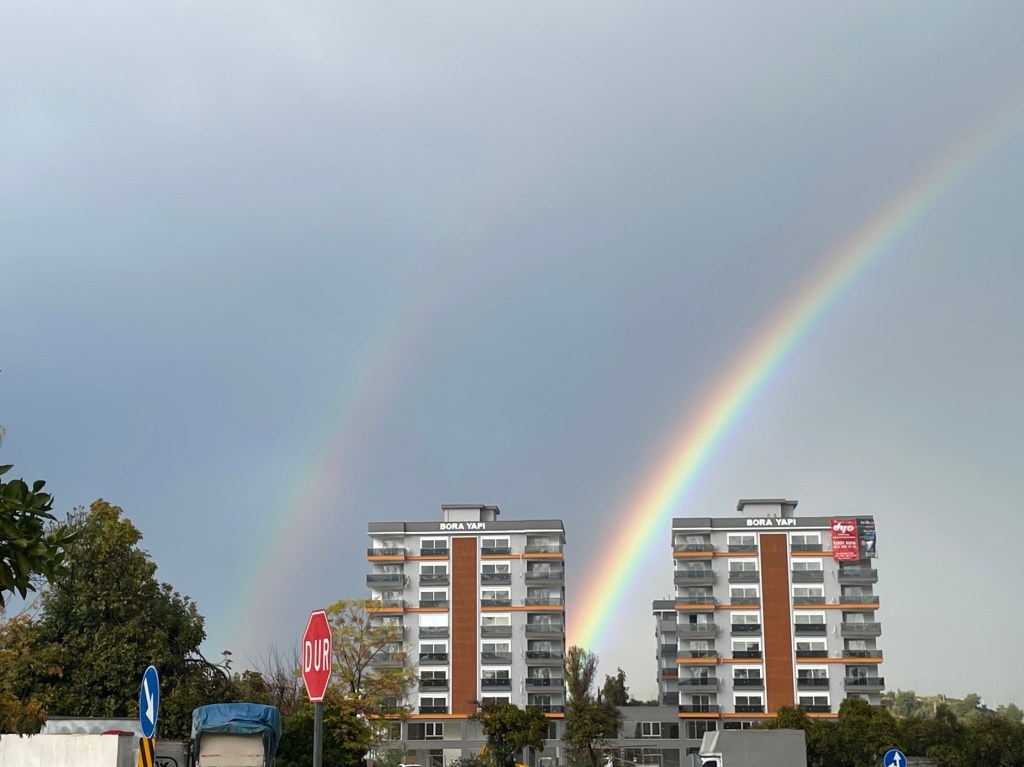
A few days later, we drive to another small town, Kumluca, in search of haircuts. There is a bit of rain in the air, and we see an incredible double rainbow. The colors are intense, and the rainbow arcs over the town. We have better luck with the barber, too. A large bellied man, with a shining bald head welcomes us with a smile and free tea. Arjun goes first. A TV plays an emotional Turkish soap, where a generously botoxed woman with red lips cries and smashes furniture. It must have been something rather bad.
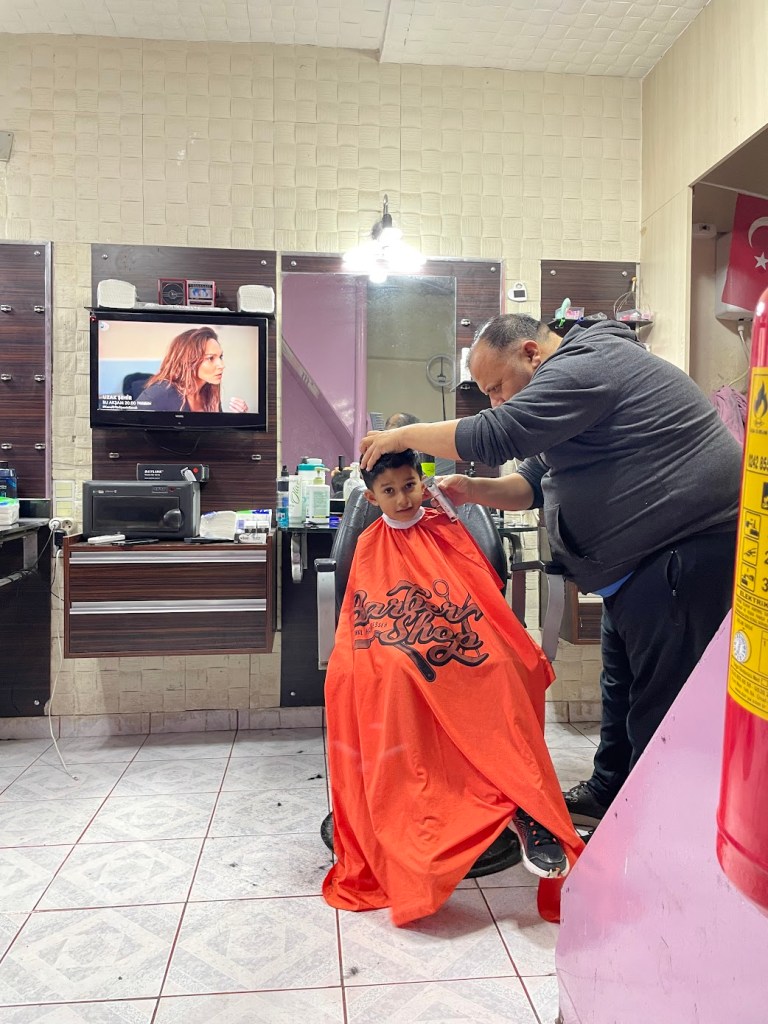
The barber fusses over Arjun, and the kid gets a great haircut. When my turn comes, I submit myself wholeheartedly. I am all tucked in when, in a rather bizarre turn of events, he gets some sort of flaming stick and moves it all over my face and ears. The hot flame moves quickly, and I smell burning hair. For several weeks, my ears will remain soft and smooth. The haircut itself is rewarding. Then he insists on rubbing some sort of pink cream on my face. It burns and stings, but I emerge handsome and radiant.
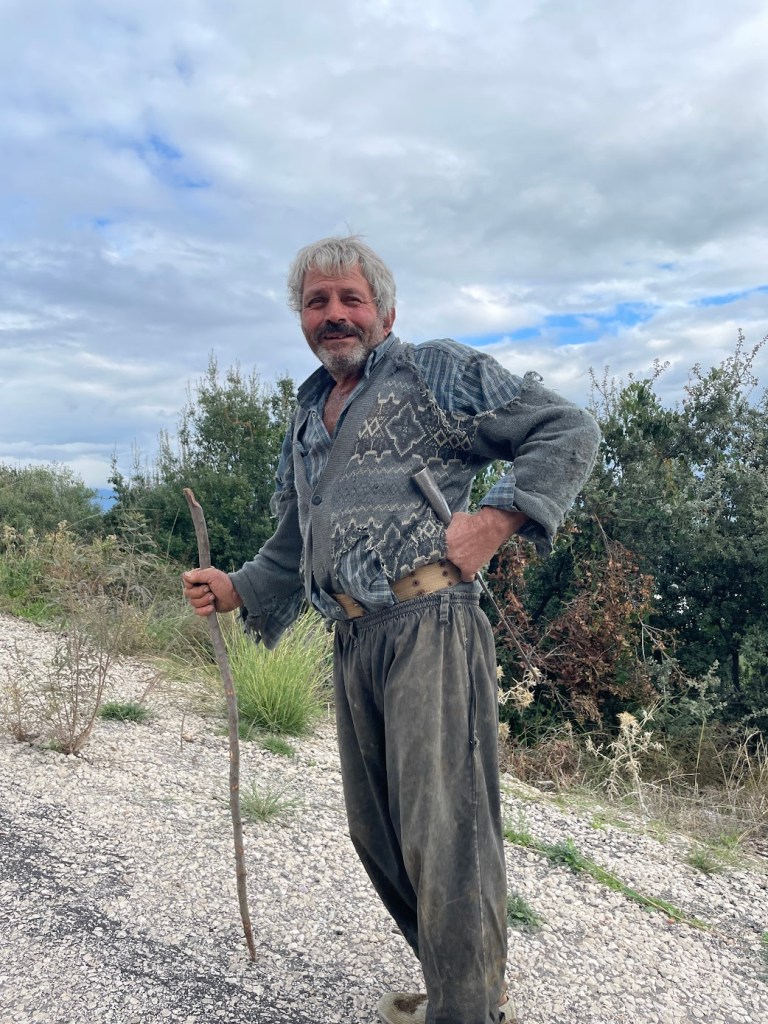
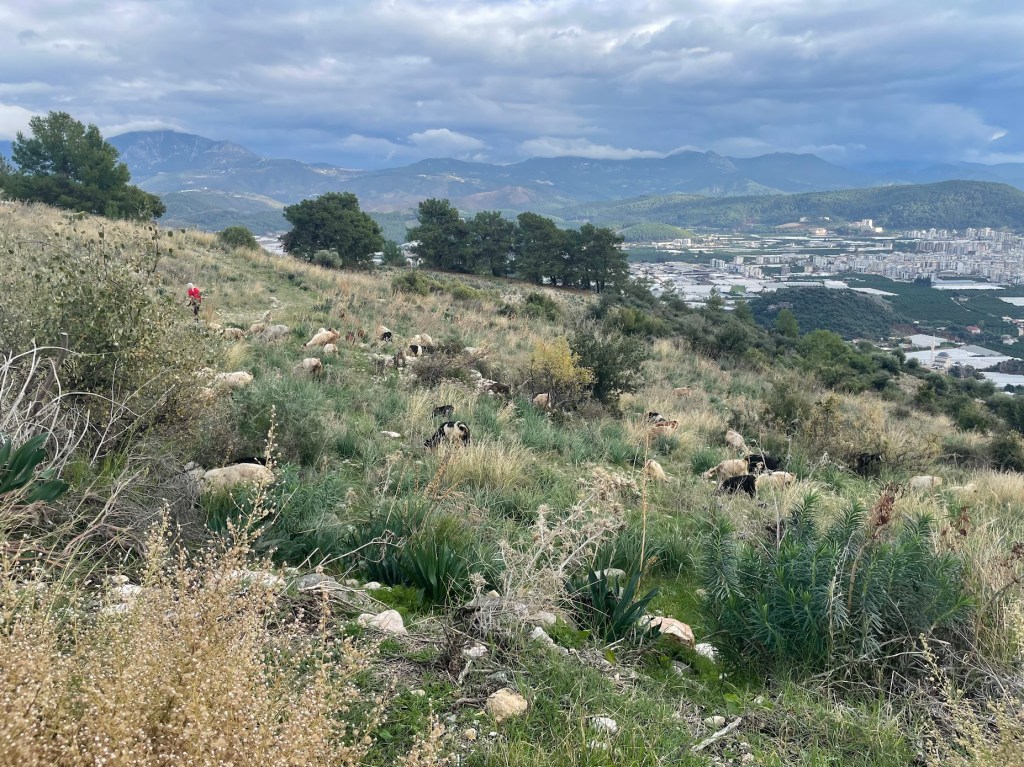
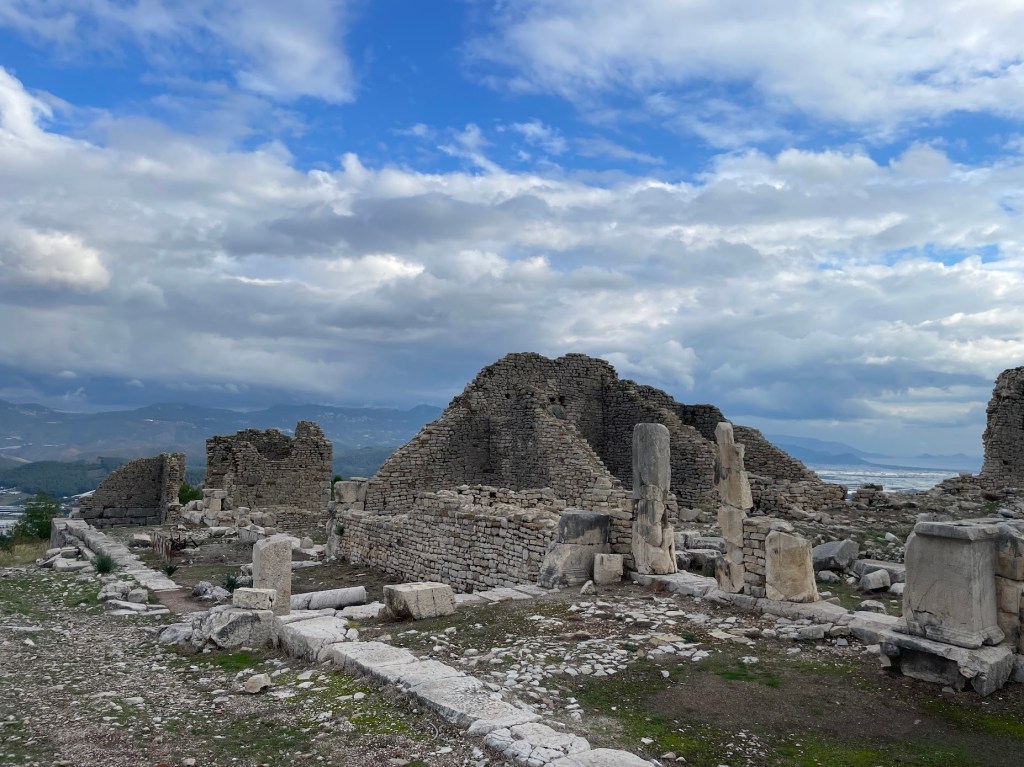
The next day, we go to another of those ancient Roman towns that are sprinkled all over this land. This one is called Rhodiapolis, and it sits atop a hill. I meet the most handsome man in all of Turkey. He is a shepherd with a dagger, staff, and he barks in a baritone grunt to herd his flock of sheep. A “wife” type forages in the slopes below. Crimson poppies grow in the grass.
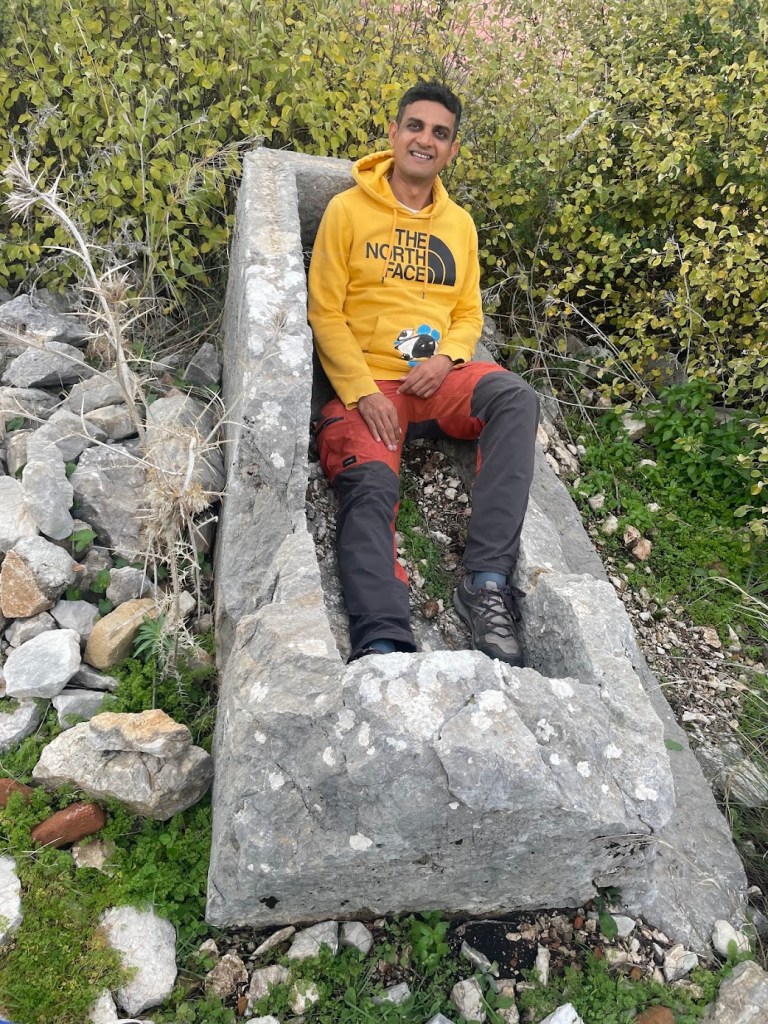
We are the only visitors, and I have a free run. I get into a cracked sacrophagus and relax on the hard stone. My feet jut out as I take in the scenery. Perhaps this is the coffin for the dwarves.
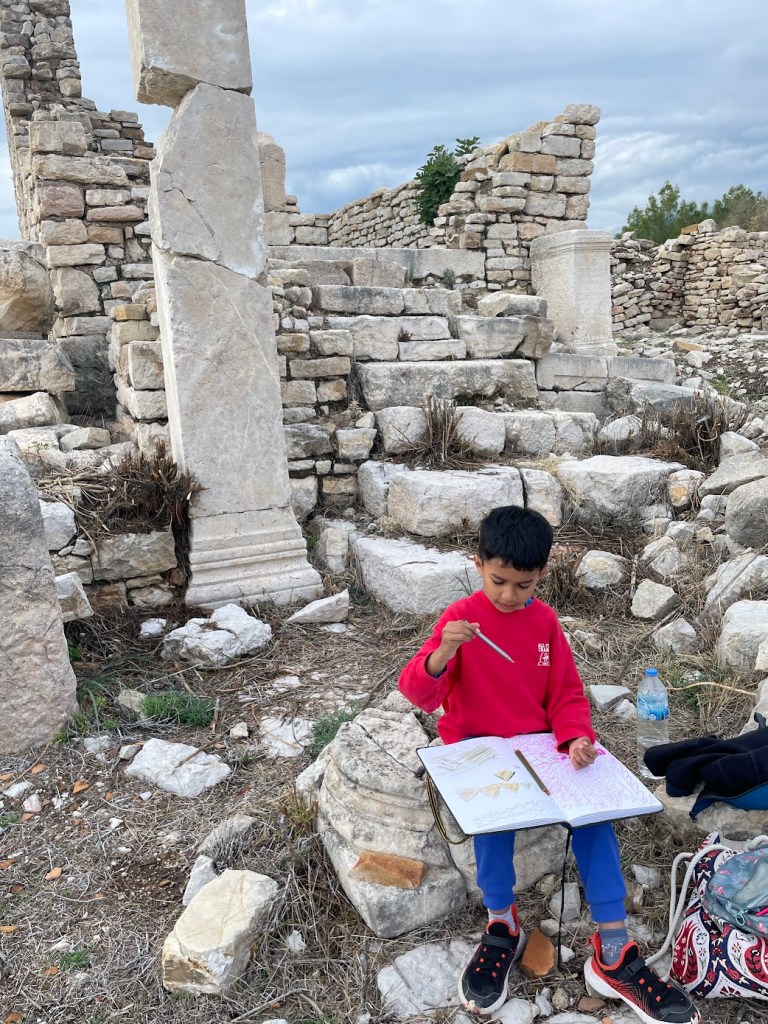
I read some Greek inscriptions, and Arjun catches up on some homeschooling in the midst of fallen pillars. Another great amphitheatre lies abandoned. We run around the stage and put on a performance for the sole spectator. I am a lame monster, and Arjun is the brave warrior. Our sticks clash, I am mortally wounded and collapse in a heap. They will find me a sarcophagus and myrrh. I look handsome, with smooth ears, and my hair has been recently trimmed.
 Three Bears Travel