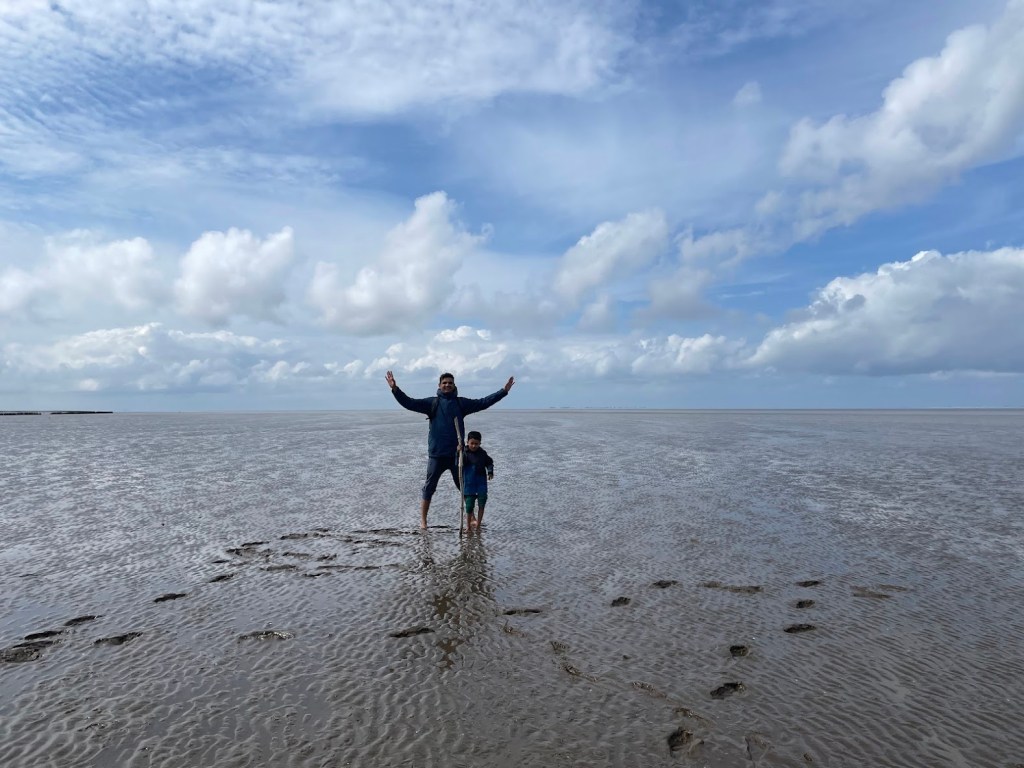
Wet, cool clay oozes through our toes as we make our way across the squishy mud. The land extends far and flat into a distant blue blend of the horizon and the sea. The wind is relentless and tries its damndest to make sails out of our backs.
Arjun has very sensibly abandoned his rubber boots and makes his way forward with a log picked up from the marshes. My “aquatic shoes” get mired in this gooey clay, and we leave them behind on a bit of furry seaweed.

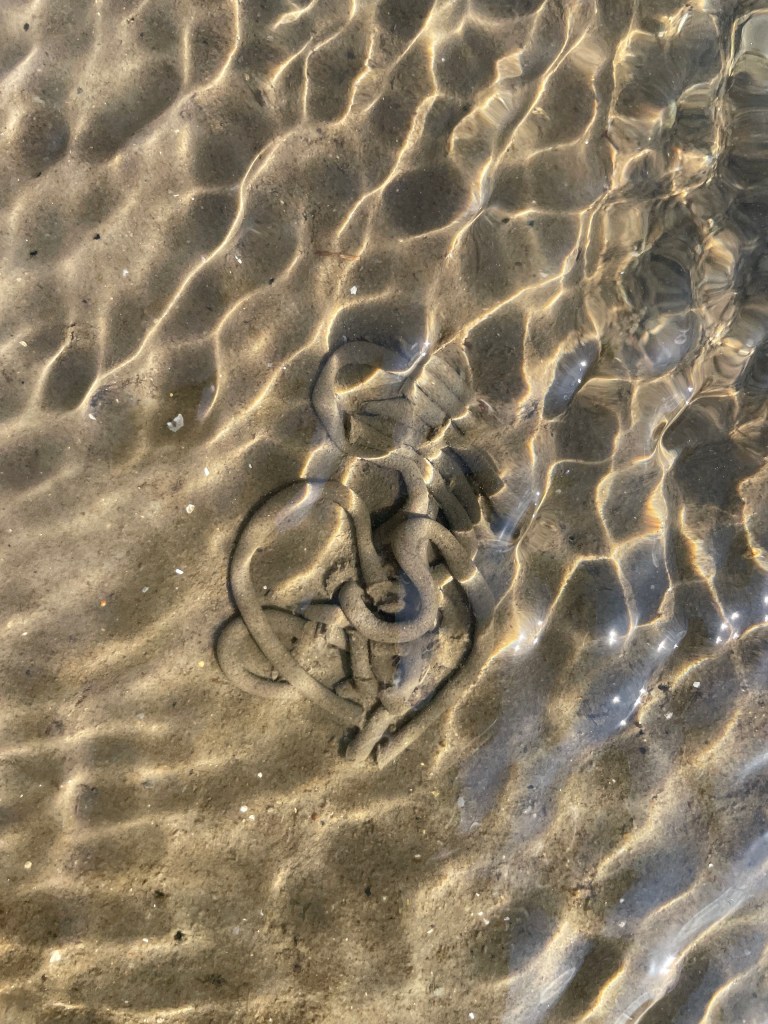
I spot a crab and am quick to demonstrate the fine art of holding crustaceans firmly by their backside. After ensuring that Arjun is impressed, we release the critter, and it scurries away with animosity in its blue crabby heart. A lugworm’s coiled poop shimmers under the ripples. I don’t pester it. A curlew with its downcurved scythe-shaped beak is, anyway, better suited for the task.
We have timed our arrival to catch the tide at its lowest. The Wadden Sea has completely drained out and is now a distant haze through my binoculars. I am scanning for the gigantic flock of sandpipers and allies that were probing these mudflats yesterday. Scores of lanky-legged Godwits with chopstick-like yellow beaks, red Shanks in their spotted summer dress, and shifty black bellied dunlins made merry, probing and snapping up crabs, worms, and clams. Today, the tide is probably lower, and most of the flock has flown away elsewhere. They have left behind plenty of footprints and wet feathers, though.

A great black backed gull rests solitarily on the mud. His size stands out amidst the smaller black headed gulls that fly buoyantly in the wind. This large gull has flown in from a cold Scandinavian coast, perhaps from Sweden, and now deserves a rest.
Millions of other birds are on this moving caravan. They lay eggs and breed in the north, under long days where the Sun shines on and on. When the seasons change, they sensibly fly south. The Wadden Sea is located just right, midway between their summer and winter homes.
On these mudflats and marshes, they will fatten up and resume their journeys. It is only late July, and the Sun still shines up north, but the impatient ones have already arrived. Spain or northern Africa is where they will bed down for the winter. A good paella for a change from presumably bland Scandinavian fare.

In about a month, every last sandpiper would have left. The white tailed eagle will account for a few. Those who make it through the Moorish lands of Spain and Barbary will be back to their European habits in Spring. And so it goes on.
We have had our fill of the wet clay, and we make our way back to mossy and firmer ground. I pick up a Pacific oyster, a nice tasty clam that is classified as an Invasive species, simply because it hitched a ride on some long rusted ship across the oceans. Now they take over these parts and make the tuxedoed Oystercatchers happy.
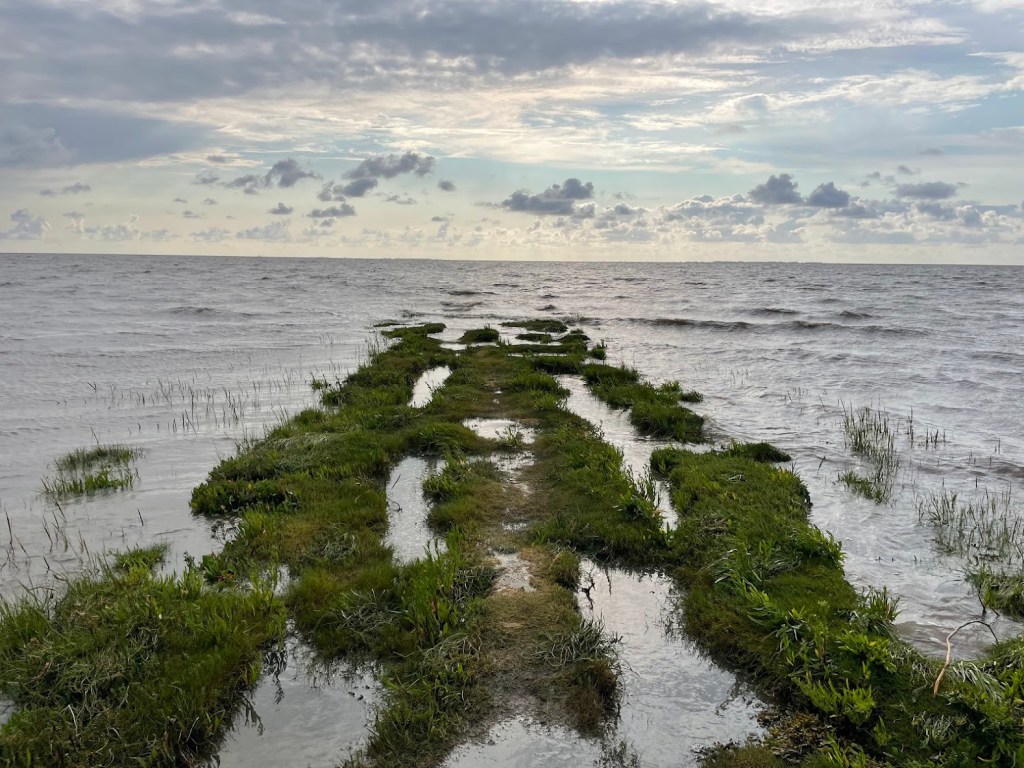
House martins fly over the sluice gates that are open. Under the concrete slab, these birds have their nests, made from sticky globules of clay. The Danes are good engineers first and foremost, and this entire land is handcrafted. Before the dikes and sluice gates that open and close in rhythm with the lunar pull of tides were built, the Wadden Seas swept all the way inland to the town of Hojer.
With the tides tamed and the land sculpted to modern tastes, came the infinite farms of wheat and tractors that reach the roofs. On our way back, we cycle between the marsh and the farms.

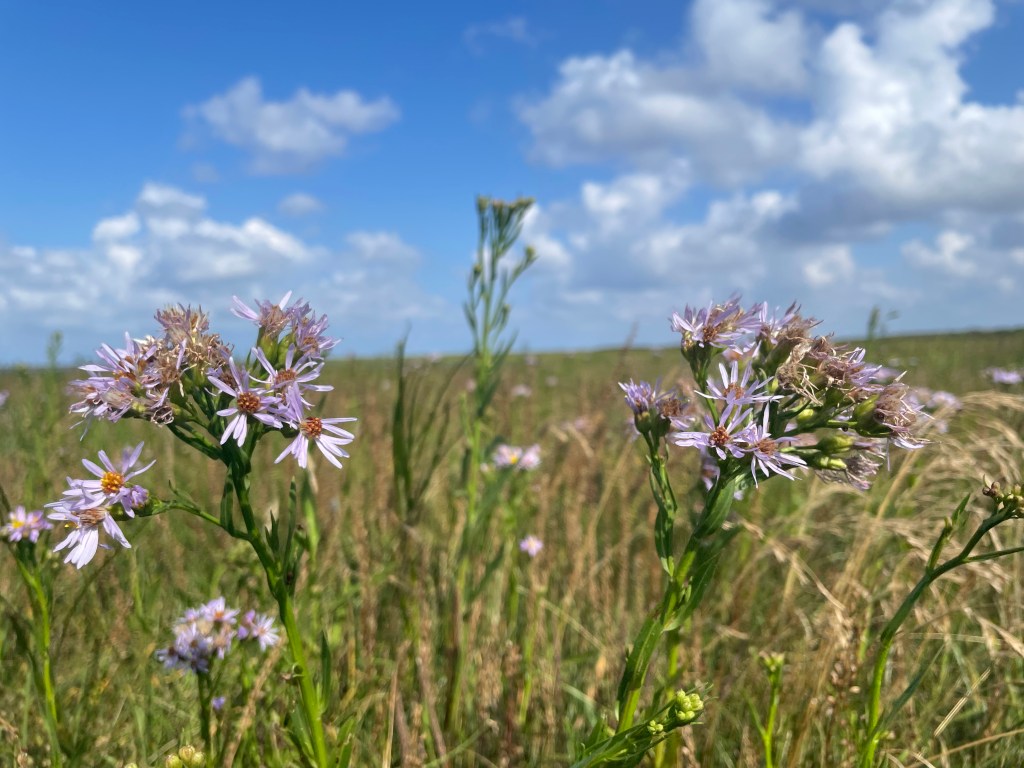
The wild marsh has green, dense reeds that sway and flowers that bloom in yellow, red, and purple. An orange butterfly basks in the sun, and bees collect pollen. Their honey, which we buy from an unattended wooden box, is white and solid and spreads like wax. We learn that the extra high glucose content in these wild flowers is the secret. Honnig (just the Danish word for Honey) is a bit different.

On the other side of the ruler straight road is green stubble that borders the wheat farms. Sheep graze behind a benign-looking fence. Every now and then, an adventurous one will jump across and chomp down on a wildflower from the marsh. They all have yellow tags in their ears. Arjun wonders if they are earrings. More like license plates, I tell him.
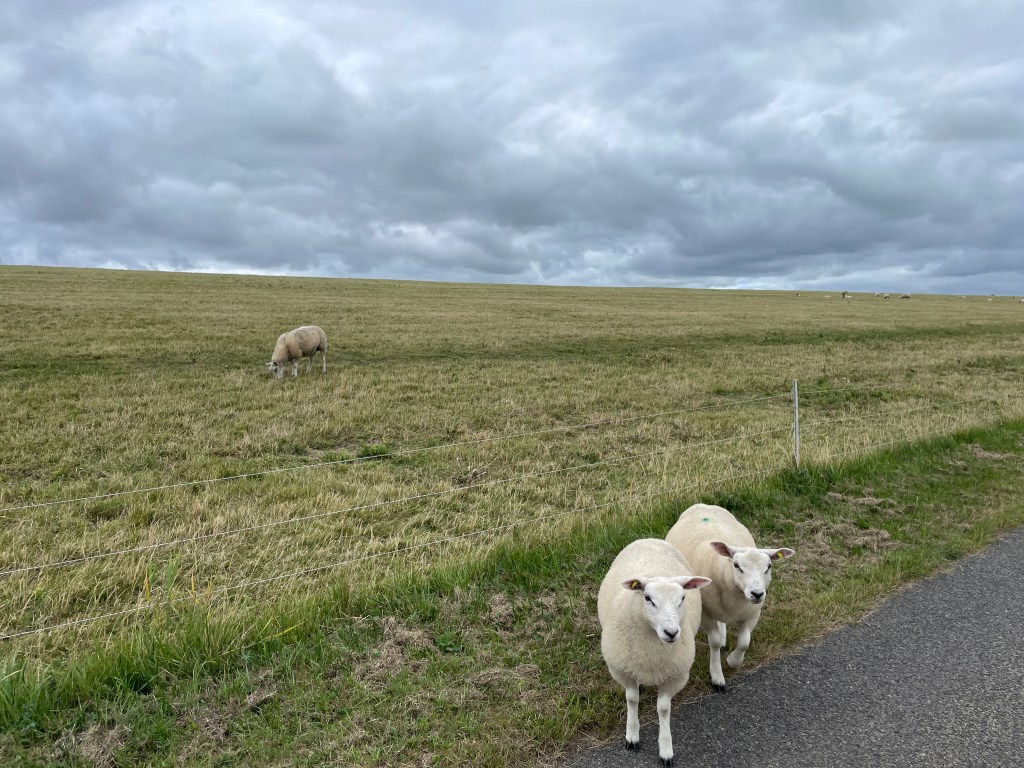
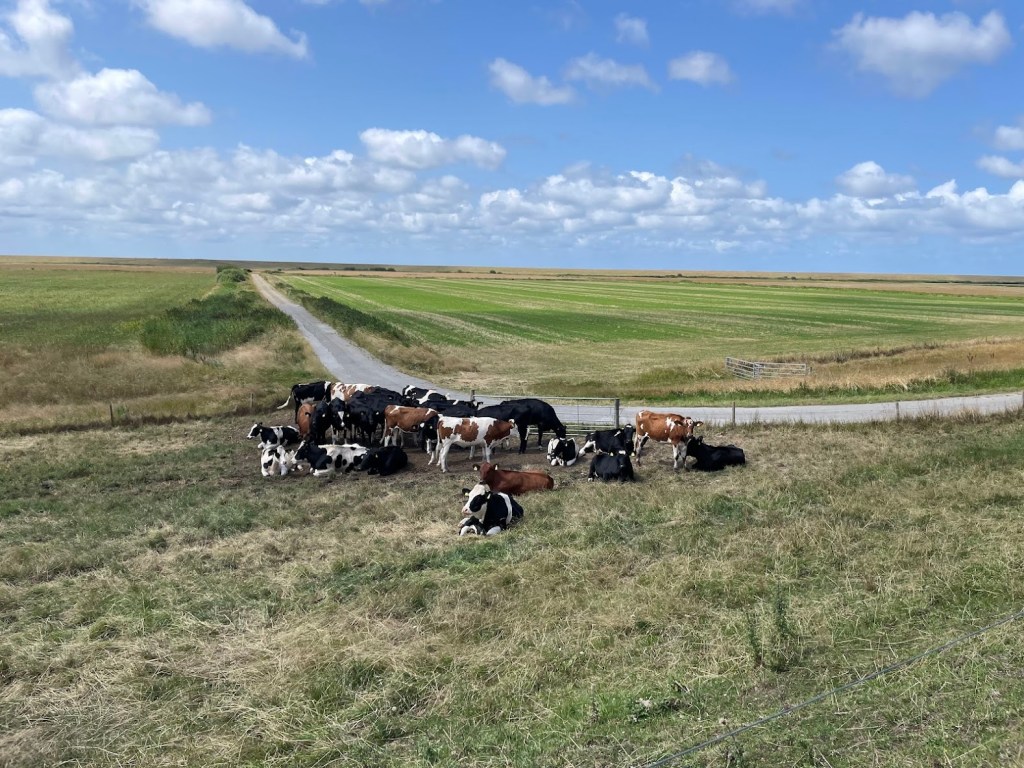
A Kestrel hovers over the grass, riding the wind and searching for mouse-like snacks. Unlike the sandpipers, the kestrel is not just passing by and will remain here in the winter. We cycle past cows that have not moved an inch since the last time we passed them.
Our campsite is located on the leeward side of a man-made embankment that runs parallel to the coast. Our camp host is a senior couple from Germany who live in their campervan with a cat whom they picked up in Spain. Chicco, the black and white feline, tries his luck with the wagtails on the lawn. But his attempted predation seems more recreational, and every evening he is lovingly carried by his human back to his home on wheels.
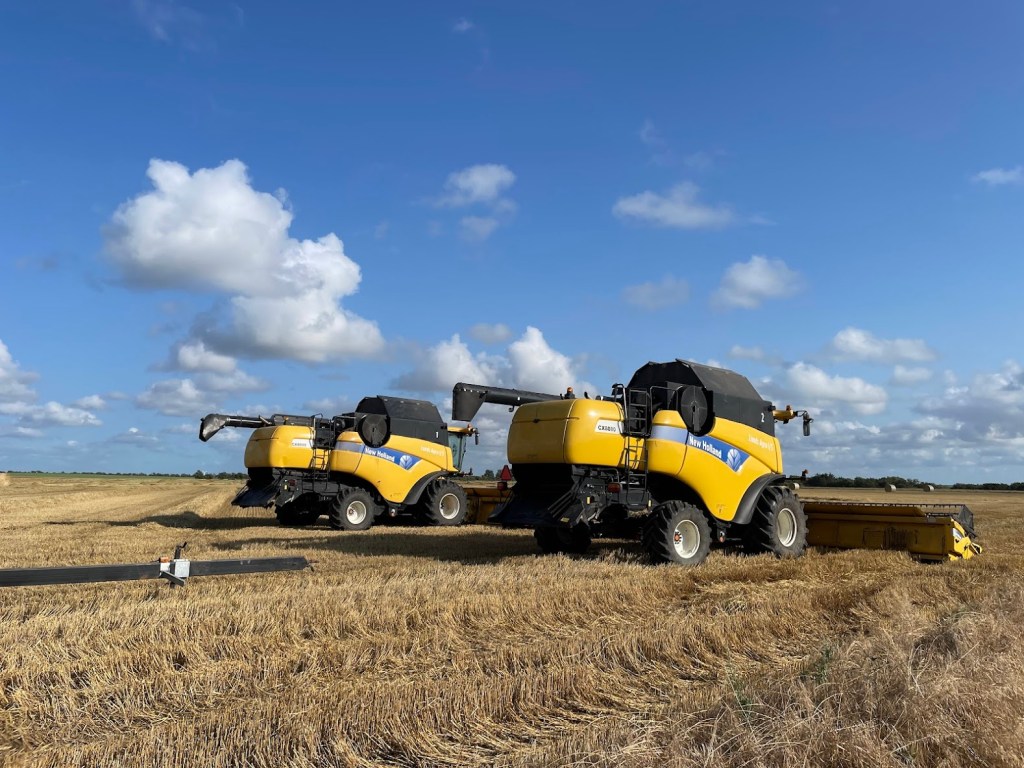
One afternoon, Arjun and I explore the flatlands around our camp. We aim for the white windmills and find a dirt trail that seems to point in that direction. A large blue New Holland tractor with monstrous tires provides for an interesting discussion on accessibility. How does the driver get in is the question?

Along the gravel road, we soon run into the tractor’s sibling. Another gigantic New Holland. A respectable-looking mom drives it and waves at us, as we pull over to the edge and let the behemoth by. I am no wheat farmer, but I insist on tasting some of the golden brown kernels that grow in abundance. Arjun gets the hang of manually threshing individual kernels. With so few humans and an infinite expanse of wheat farms, the giant tractors and combine harvesters make sense.
Past another red barn, the trail turns left, and we don’t get any closer to the windmills. They face the North Sea and whirr in slow, patient cycles. Two hundred years ago, rough and ready sailors speared whales for oil to light lamps from these very shores. In the town of Hojer, they still keep a few houses with thatched roofs for historic decor. Today, their descendants drive Teslas and farm wheat and electricity.

Continuing along the trail, I see a feral apple tree. The apples are still green, but of course, we must have a bite. I sit idly in the loose gravel and inspect the pebbles, munching. Suddenly, I spot a “pebble” that looks a bit different. It has five faint ridges that run longitudinally, and one end is a little flattened. A sea urchin Fossil! We whoop and dance in crazed excitement. What were the odds that amongst the million little pebbles, we would decide to take a break under this very apple tree with unripe fruits?

The gravel on this trail was excavated from a quarry nearby, and I learn that this little fossil is from a Genus of sea urchins called Echinocorus, at least a good 50 million years old. There were definitely no plump oystercatchers then. The urchin died a peaceful urchin death, and the slurry of silicates that drained into the shell hardened to this flint treasure.
All of us return the next afternoon. Yesterday, after the excitement of the little fossil, I had idly pointed out a bump amongst the flatness to Arjun, calling it the only hill in Denmark. A tourist brochure I read that night called it a “Bronze Age burial mound”. We had to go!
The first mound, the one that I thought was an innocent bump, is a few hundred meters into the wheat field. I plod with my shoes, stomping down the poky wheat that leaves a few scratches. Progress is slow, and thankfully, Arjun and Dhanya decide to study a few wildflowers. I approach the mound and circle around. Truly, it is just an insignificant mound. If not for the acres of monotonous yellow wheat that surround it, no one would give it a second look.

But someone did, and now these mounds are protected. The combine harvesters and tractors must let them be. Under this mound must lie the remains of a three-thousand-year-old person of enough importance to deserve a special burial. Maybe there is more than just one ancient. A family crypt, perhaps. Historians tell us that they had oak coffins, wore pressed bark, and worshipped the sun. Those winters must have been long. The arrival of the first sandpipers of the season would perk up the high priests and not just the birders.
I tow Arjun using an ingenious system that involves elastic straps. Dhanya startles a red deer when she steps behind a bush to pee. Horses wear jackets, and a farm dog barks. We cycle along and find more burial mounds that are thankfully easier to reach. Like little volcanoes, with their tops shaved off. A cloud hangs meaningfully low in the sky. I tick off another species for the trip – a yellowhammer.

On our final day, the heavens truly opened up. It has thundered all night, and slugs evict us from our cabin. We must cycle with full loads, and Arjun wears his gumboots and many layers of waterproof jackets. We persevere through the rain and wind. The cows have still not moved. We reach Hojer, with water sloshing around Arjun’s gumboots. He claims he is a sandals person from now on.


 Three Bears Travel