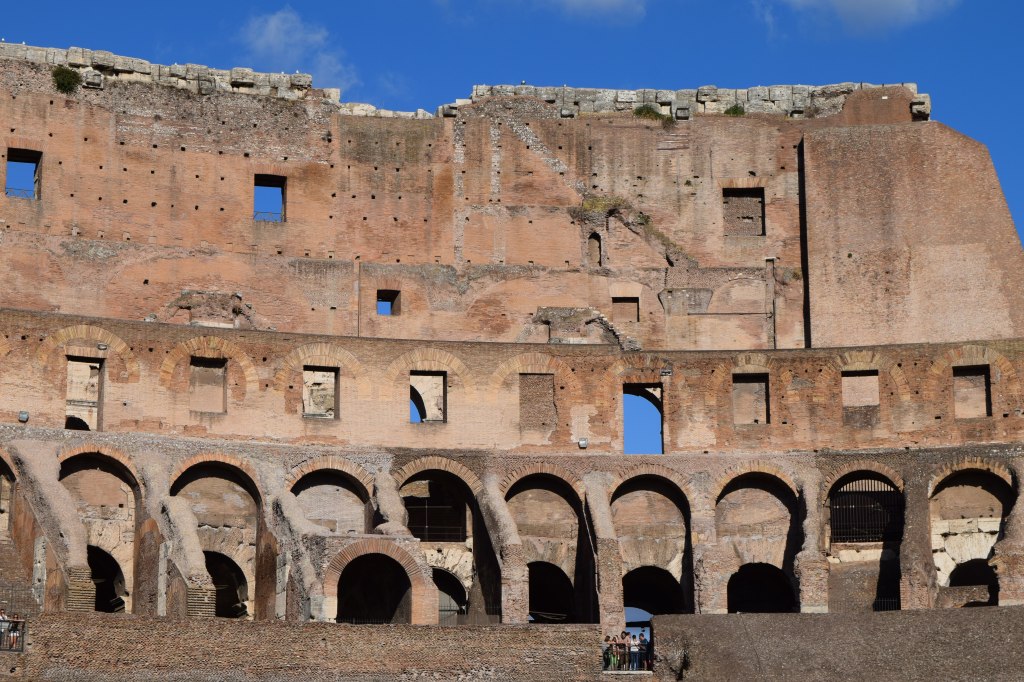
The big and rough tan-colored blocks of travertine provide a pleasant retreat from the stiff breeze and glaring sun outside. We ascend to the first level of the Colosseum on steps worn down by the eager rush of ancient spectators. Everyone must have wanted to find a good seat before the entertainment commenced.
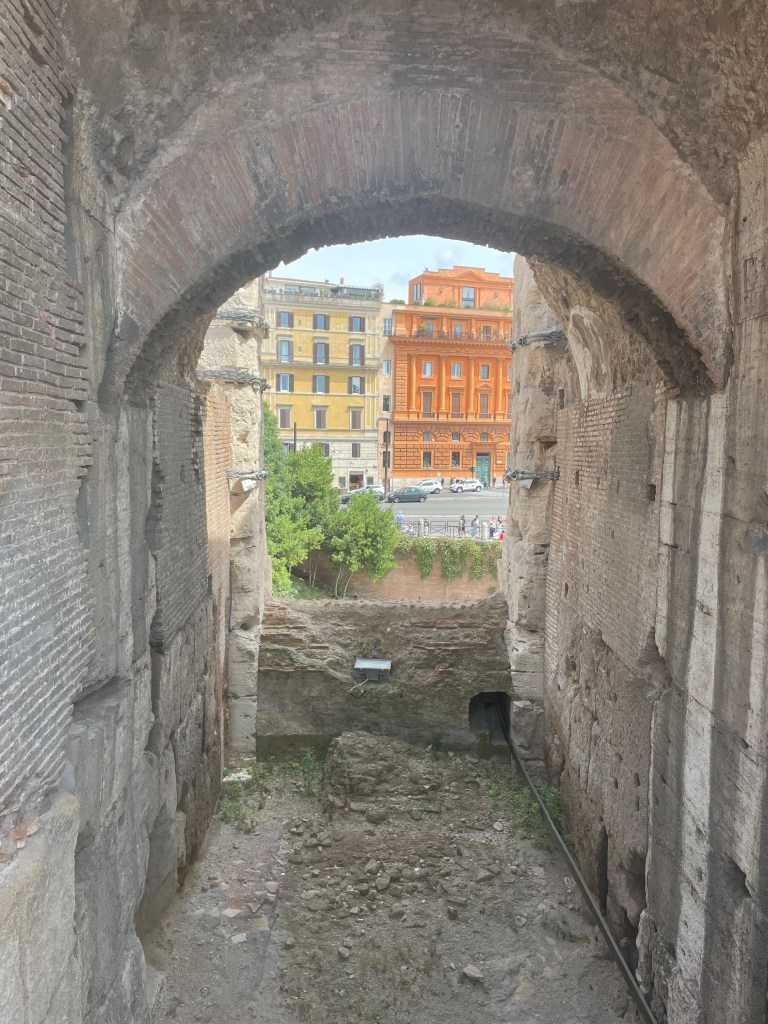
Arjun has rather unexpectedly decided to nap and Dhanya wanders away in search of a quiet nook. Under one of the less visited arches, she finds the perfectly eroded stone block to sit and sketch, while Arjun enjoys some downtime.

The Colosseum was not built for kids to nap in. When this great amphitheater was inaugurated almost two thousand years ago, the emperor Titus, declared a hundred days of celebratory games. Rome was being massively re-done, after a devastating fire just a decade ago. The public wanted some good cheer and the Romans had just put down a rebellion by the Jews in the eastern fringes of the empire. The booty from the temple of Jerusalem would fund this theater.

The afternoon recess was for executions. The wealthy patricians and other assorted well-mannered elites usually excused themselves from this and headed down for a tasty sandwich or two. The plebians ate their hurried lunches in the stands and watched the criminals put to death. Some were just common robbers and others might have had the misfortune of being early adopters of Christianity. They were subjected to the floridly titled “dammnationes ad bestias”. Damned by the beasts. The Latin sounds better.
What a spectacle the games must have been. The mornings were all about the animals. With an empire that stretched across the Mediterranean and licked the northern edges of Africa, beasts were not in short supply. Bears, bulls, lions, and tigers were the main course. A giraffe and an armour-plated rhinoceros, shipped all the way from the bush, must have been the exotic starters. Hunting these animals in novel ways was the task entrusted to the bestiaris, all professionals, some captured from the very same places the animals came from, the others just skilled free men who liked to hunt.
The Tigers who had survived the morning hunts, now had their chance to seek some vengeance against mankind.
The main act was in the afternoons. Fifty thousand spectators woke up from a food-induced daze and cheered for the Gladiators. This was no half-baked hurried violence. An editor curated the fights and was responsible for putting up a good show, with enough variety and an opportunity for all skills to shine.
A lightly armored net-fighter equipped with a weighted fishnet and spear took on a heavily armored clumsy swordsman. A draw was rare and a good gladiator, must have learned to entertain. Most of these brave men were slaves, captured in a war far away. But here was a chance to please the crowd and win your freedom. The emperor could grant freedom if the crowd was particularly moved. Rome was a republic after all and the plebians had to be humored.
Before we rush to pass judgment on the Romans, let us not forget that the plebians must have had enough leisure time to be able to partake in such diversions. With an economy that hummed along, the commoners did toil, but not without their rewards. Elsewhere in the world, they did not even bother to entertain the masses. The Romans had other quirks too. The poor and landless could not become soldiers. The rich fought, and every soldier provided his own arms. The thinking was that the rich had the most to lose in a defeat and would fight the fiercest. A practical solution, and maybe infinitely fairer than our current scheme of warfare.
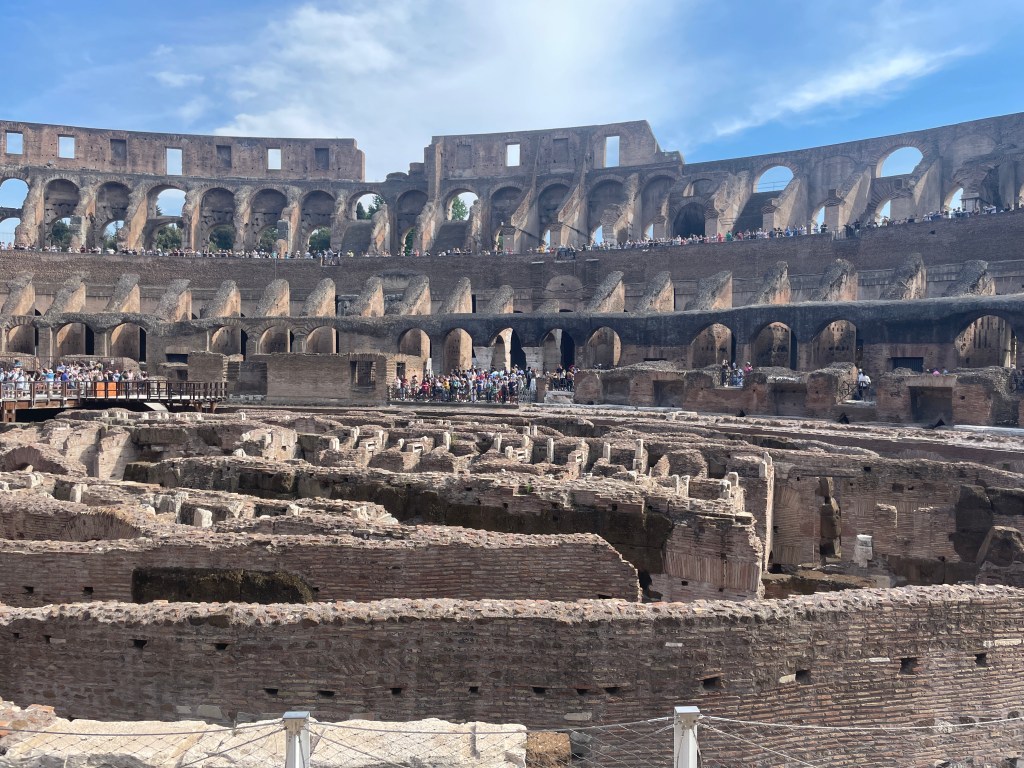
We walk around the viewing area and admire the ring-side view. Where once man and beast struggled, tourists mill around. Under the arena, there is a network of tunnels, from where animals, popped out from their trapdoors. The bestiaris had their work cut out.
The Colosseum is largely built with huge blocks of Travertine, a hard sedimentary rock, created out of the swirling debris of sea creatures that lived and died hundreds of millions of years ago. The blocks are glued together with concrete, a mix of sand, lime and volcanic ash. Roman concrete is harder than even modern concrete. The classical Greeks preferred the delicate marble and did not separate math from philosophy. The Romans focussed on building straight roads, piping water along aqueducts, and rough entertainment. Of course, they preferred the harder rock. When the empire crumbled, the locals pillaged the coliseum to build their dwellings.

They did look up to the Greeks though and even the outer facade of the Colosseum pays homage to all three styles of Greek columns. Fat Doric for the lower, slender Ionic for the middle level, and floral Corinthian for the third. The classical Greeks, perhaps would have been none too impressed by this mixing of styles.

On the other side of the Tiber, is the world’s tiniest country, the city-state of Vatican. Carved out of Rome, the Vatican is home to the biggest and grandest of all churches. St. Peter’s Basilica is its proper name. It’s the holiest of the holies of all the catholic faith, and being its own country, pays no tax. Those medieval popes, who wanted their own country, sure employed the best tax consultants.

In Roman times, these expansive grounds hosted chariot races. An Obelisk, that was dragged all the way from Egypt when the Romans thrashed the Pharaohs still stands. Now the pagan tower is topped with a crucifix and its base has a bunch of Latin. This is no “dammnationes ad bestias”

Back when Chritianity was just getting started , Paul, a fisherman and close confidant of Jesus, began preaching rebellious stuff and was crucified for his troubles. The Romans were grumpy about the great fire and Nero blamed the new religion. Paul, crucified in anonymity would then become the first Pope. The rest is history.

There is a long line of tourists wanting to get in and everyone must be screened by metal detectors and guards. These are the stern types and carry guns. The vatican is also famous for its rather colorfully attired guards who stand with spears and do their best to look like somber clowns.

Everyone wants to know where Peter was crucified. But one can’t really be sure. It was a common enough fate for criminals back in the day. We enter the grand church through towering columns. There is plenty of shiny marble, red porphyry, and golden glitz. Michelangelo’s Pieta has been moved for some touch-up, but there are plenty of other niches where tourists can take pious pictures.
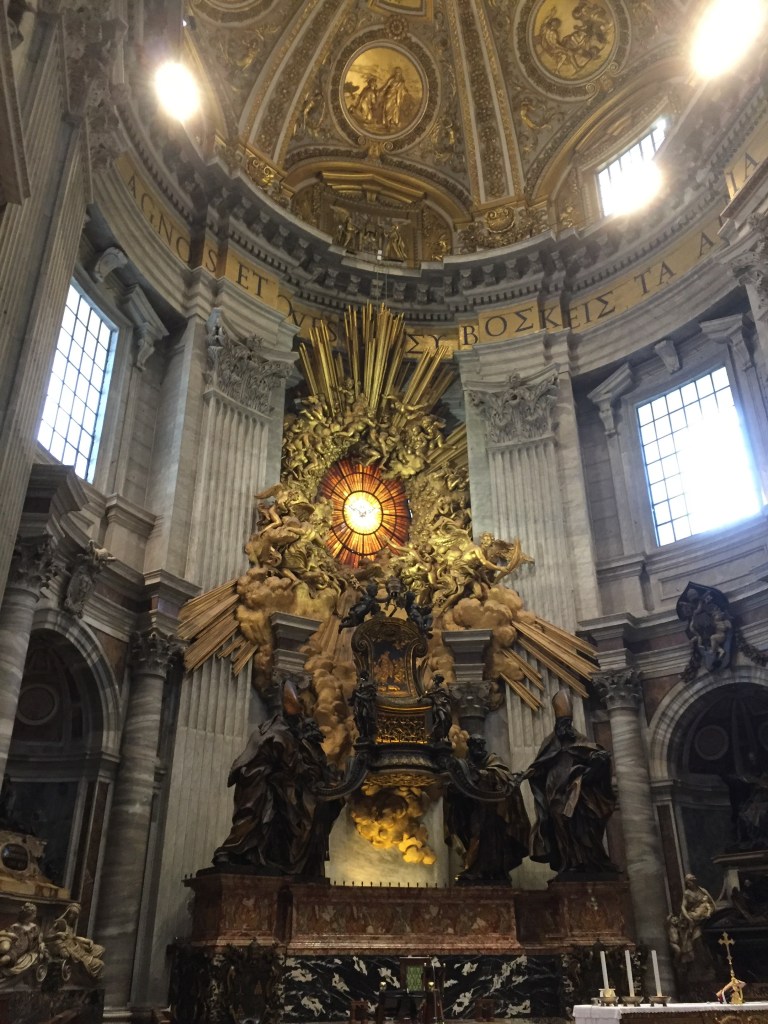
Apparently, there is a separate entrance for those who wish to pray, so the faithful don’t have to be trampled by the vacationers. There is an altar with plastic candles and LEDs that flicker when you drop a few euros. I hope the pious have real wax candles to kneel for. For all its exterior grandeur, the dome is strangely shallow from the inside.

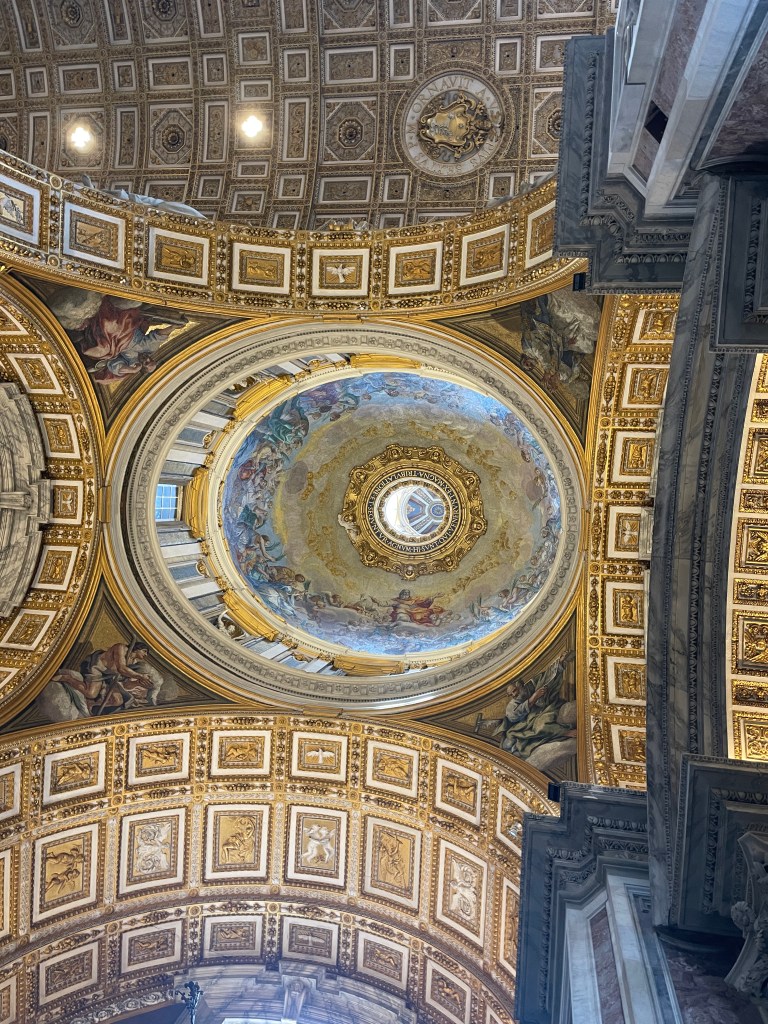
Back on the other side of the Tiber is another ancient temple, with a dome that inspired all domes. The Pantheon has been a place for the pious for two thousand years. A perfectly hemispherical dome, with a circular eye open to the heavens. Looking up into the blue sky as clouds float by and a bright disc of sunlight illuminates the sides, even a hardened tourist is moved to piety.

We sit on the wooden benches for a long and look to the heavens. The dome is a miracle in concrete. Without beams or any ugly reinforcements, the Romans raised this dome, layer by layer, using a lighter mix of concrete as they went higher. The top is mostly pumice, a light volcanic stone, and the dome gets thinner as you go higher. The Renaissance artist-engineers spent many hours studying the Pantheon. Raphael is buried here and so are some of the kings of Modern Italy.

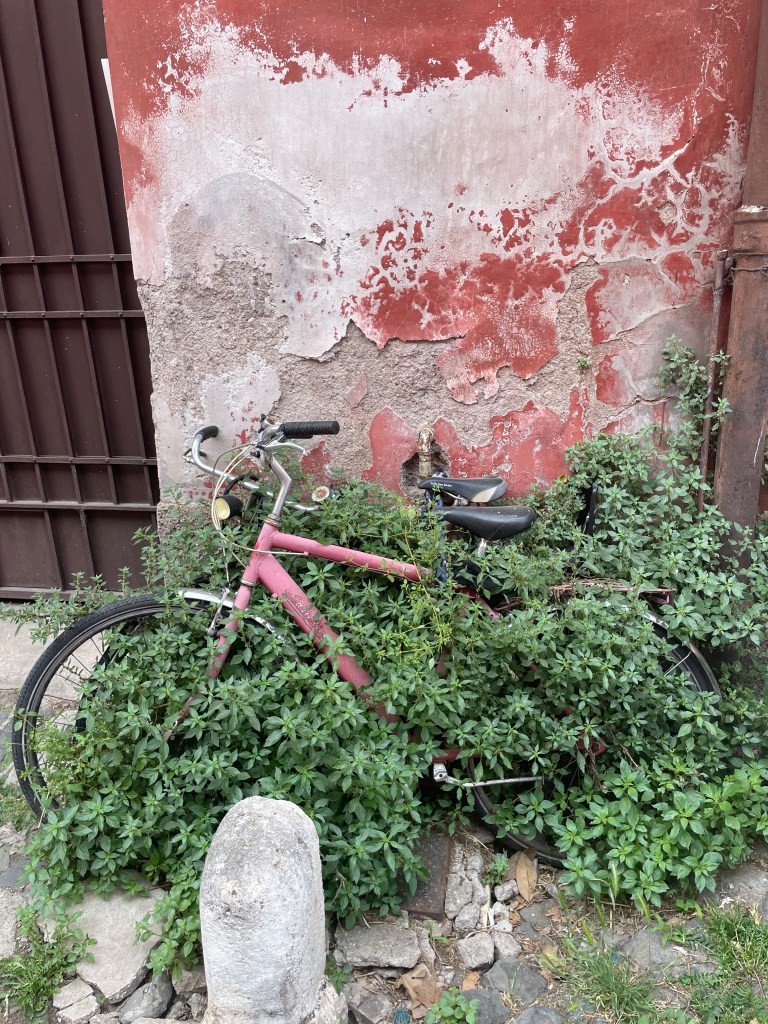
Seagulls, squak loudly on a small mud bank on the Tiber. Our home is in the neighborhood of Trastevere. A rusted cycle, leans against a wall and is engulfed in a leafy creeper. The paint on the wall peels off in scraps of pastel red. Truly Rome crumbled beautifully.
 Three Bears Travel
What a rough-and-tumble world life at the Colosseum was. Thank you for taking me back there.
LikeLike
Thank you for reading ! The colosseum must have really been a crazy spectacle . To think that the serene Pantheon is just a short walk away is bizarre
LikeLike