I have always been fascinated by pines. Growing up in hot and humid tropical south India, pine trees carried with them the air of exotic and cold mountain lands.
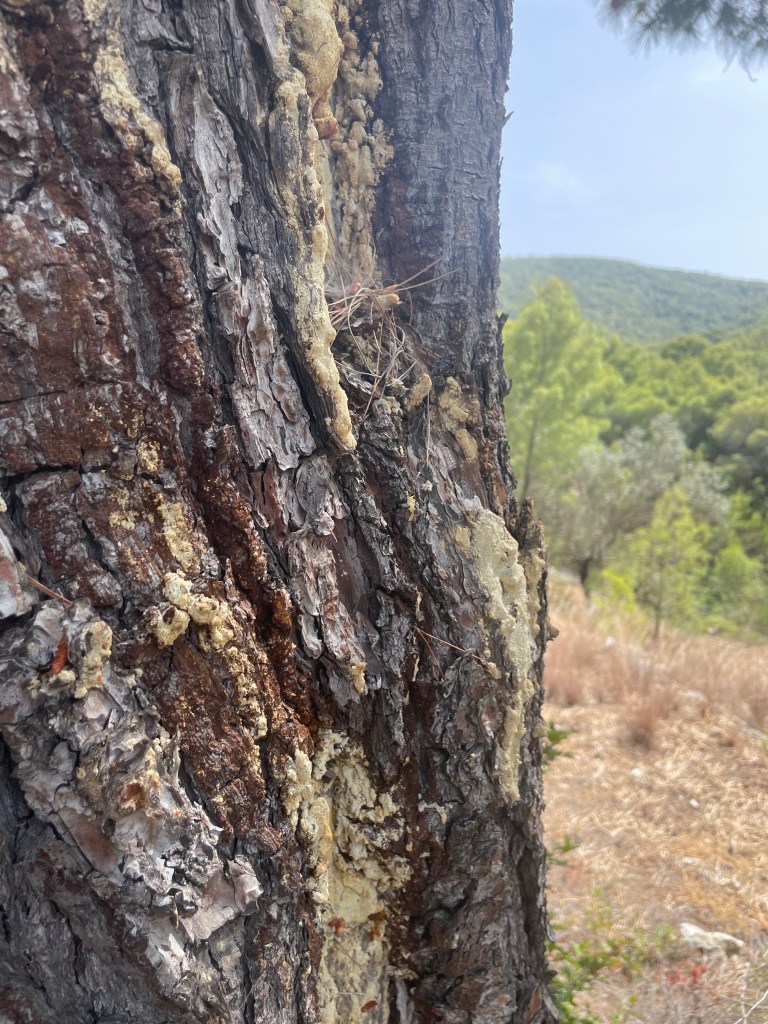
The small island of Agistri, a tiny blip in the Saronic Gulf, has plenty of pines. There are no real mountains here, only low hills and the pines are not particularly tall or majestic. But they ooze with yellow resin, the fragrant sap, drying out like the drip from a hot candle. Rubbing the resin between your fingers, inhaling, and making “collections” that we rarely use after getting back home is a ritual that never gets old.
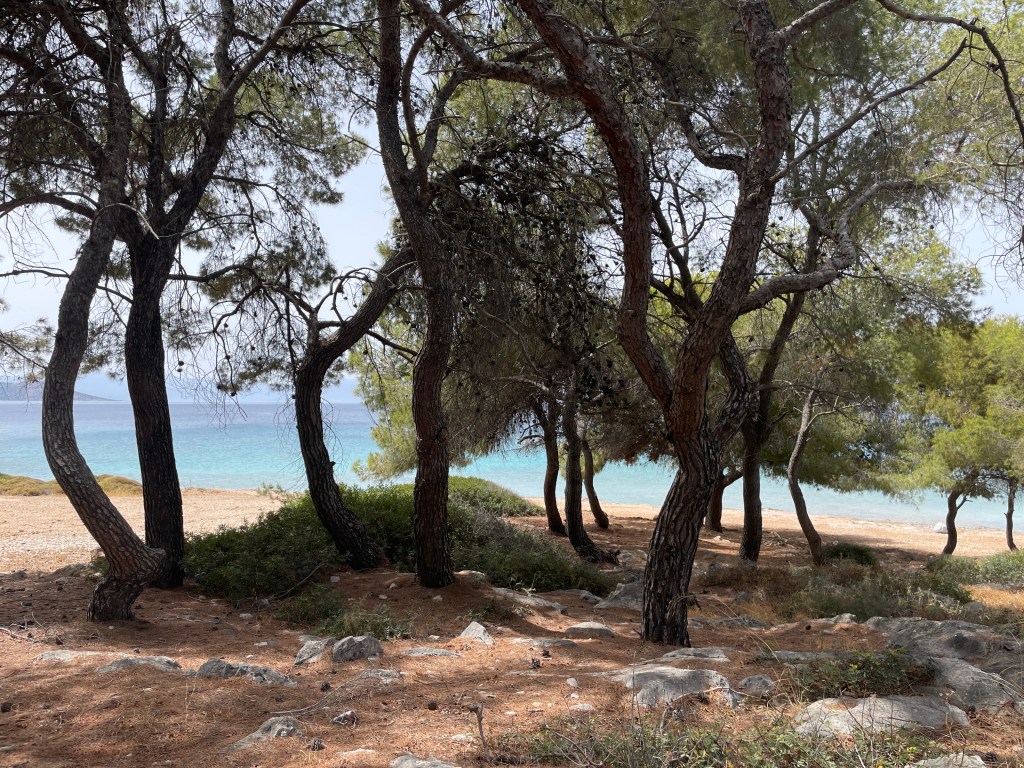
On the clear blue waters of Dragonera, Arjun sips orange juice while we sit in the shade of the green pines that grow right to the edge of the sand.
Our home for a few days is amidst the small settlement of Megalochori. A small port town where a lone fisherman sells his produce from a boat and most stores shut down during the afternoon. The resident population is only about a thousand, and during the summer months, a few more thousand stay here catering to the tourists. What would happen to the Greek islands without tourism? They would probably crumble beautifully.

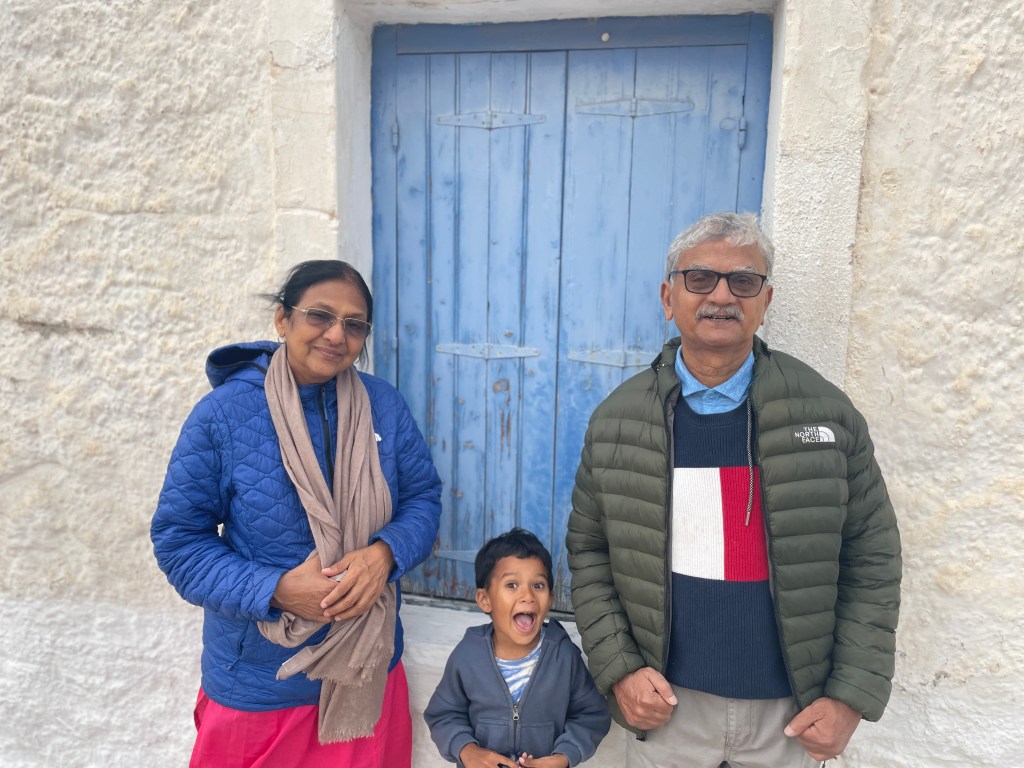
Behind us are olive orchards that blend with the pines on the hills. During the day, an elementary school that’s next door diligently does its civic duty and at night scops owls call quite incessantly.

A walk amidst the hills behind our home reveals some rather exotic birds. I flush a pair of Chukar partridges, far away from their native lands in the mountains of Asia. There is also the Indian peafowl, introduced perhaps by some early settler eager to add a bit of colorful fauna.
There are beautiful views of the blue seas, and the ever-present sprawling island of Aegina, that is a few minutes away by ferry, reminds you of the smallness of Agistri.
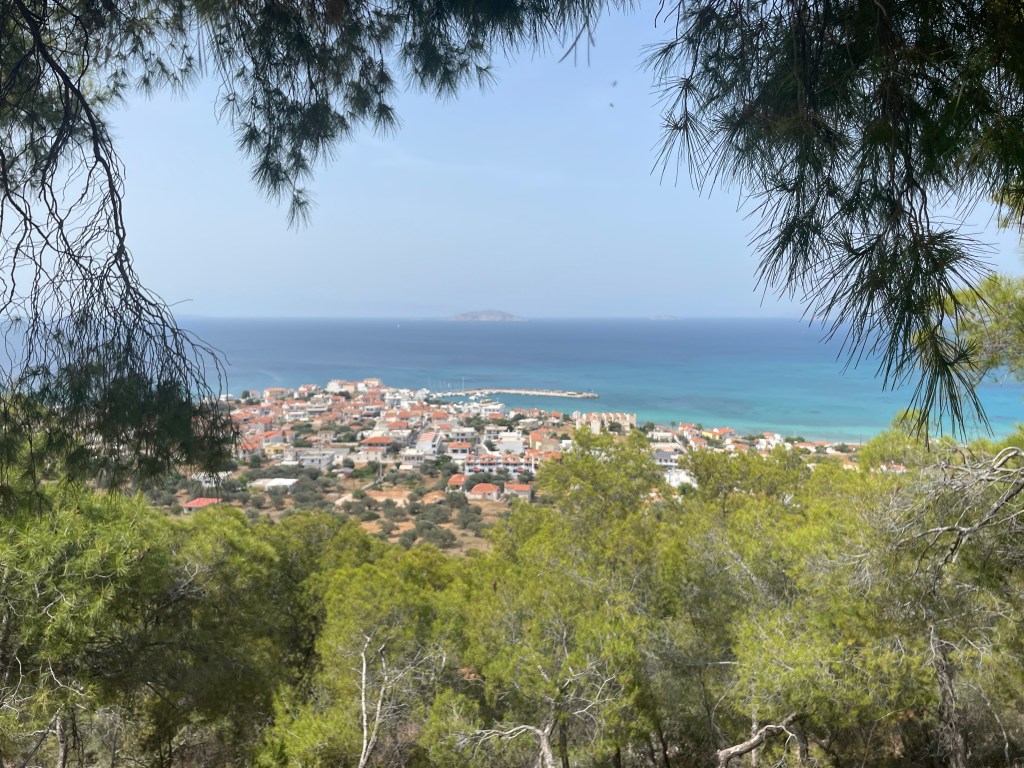
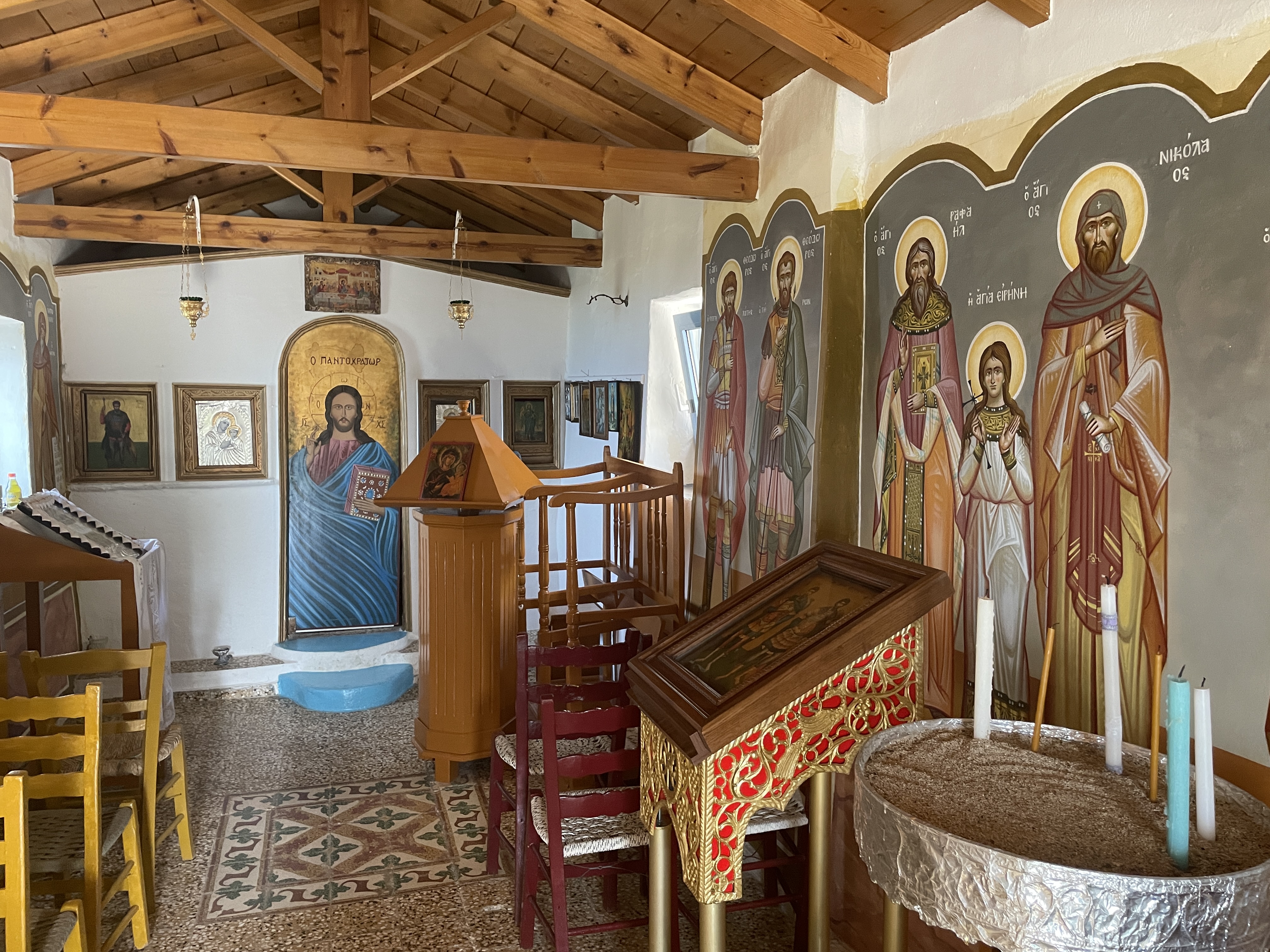

The trail is through low pine trees. There is the requisite number of small Greek orthodox chapels, the benches for the devout neatly empty and provisioned with incense and candles. One of the chapels, claims to be 300 years old. That’s roughly when folks from modern-day Albania, began settling on this island
The historical records for Agistri do not run very deep. There are no fallen marble columns, Ionic or otherwise. Homer appears to have mentioned it in the Illiad, but there’s not much else. Pirates must have cooked barbeques on the beaches, but they don’t leave behind any buried treasures.
I retrace my steps back to the trailhead. There is a small fire station with two classic Unimog fire trucks. This is going to impress Arjun and in the evening we all walk back for a closer inspection. The Unimog trucks are the real deal. Giant tires, round headlights, and a big winch. Every possible box is ticked off for Arjun. This is a lucky sighting.

These trucks specialize in fighting forest fires. All these sweet-smelling pine trees are inflammable and Greece has been fighting forest fires with increasing regularity. With the Unimogs, protecting us, we feel safe as we tuck into a delicious lunch of grilled fish. They even hand out free shots of mastiha, a sweet liquor, distilled from the resin of the Mastic tree. I learn that almost all the mastiha comes from the Greek island of Chios and a few years back, most of the mastic trees perished in a massive blaze. Did they have unimogs in Chios?


 Three Bears Travel