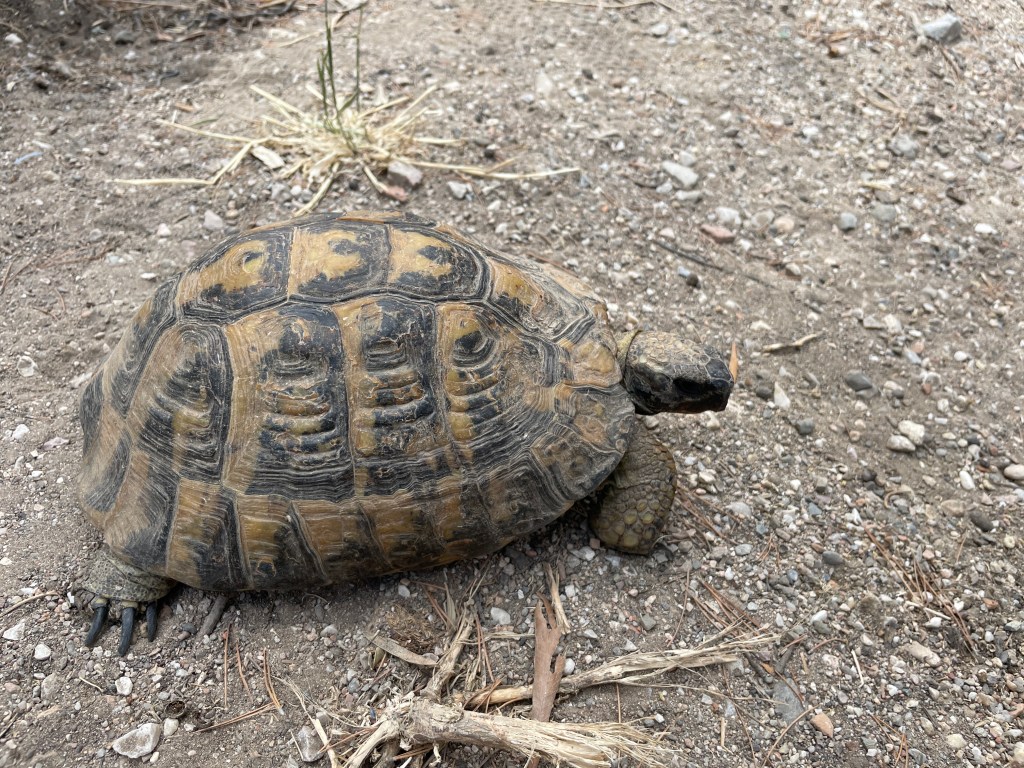
The Agora today is a sprawling tumble of marble blocks and shady nooks under oaks. After the huff and puff of climbing the acropolis, it’s a pleasant place to take it all in and perhaps molest a wandering Mediterranean tortoise. Truth be told, there is not much left standing barring the magnificently intact temple of Hephaestus.
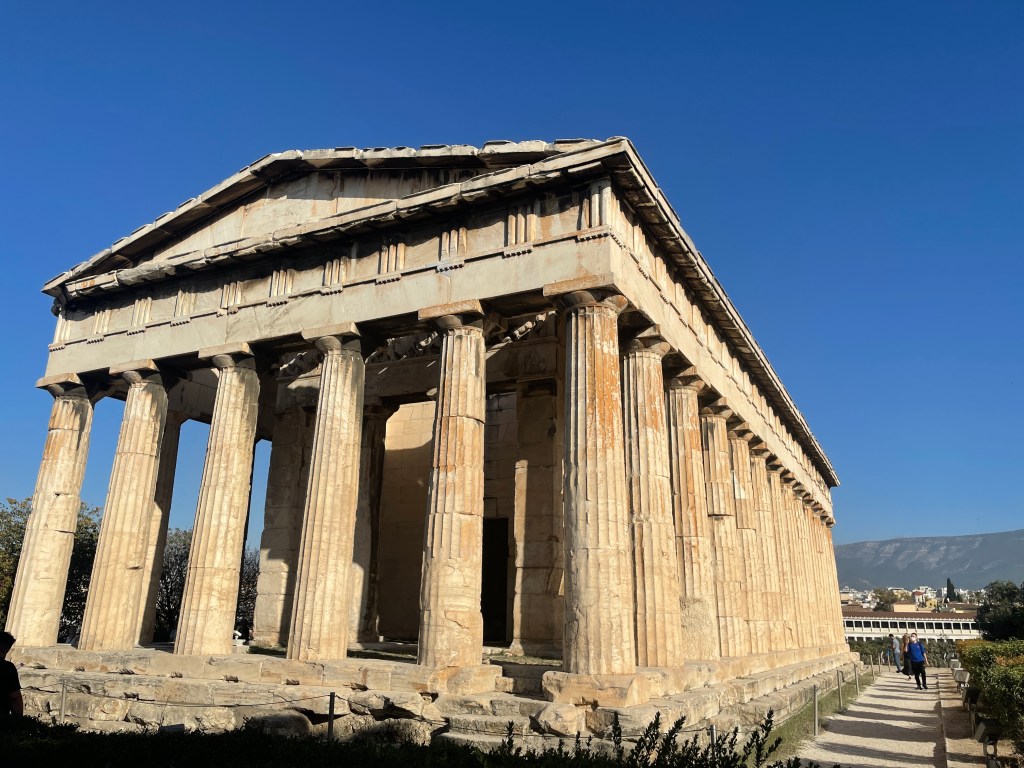
But what a marketplace it must have been in the ancient days. After buying a nice sea perch from the smelly fishmongers, you would wander to the more pleasant-smelling thyme merchants and choose your spice for the day. Marble sculptors toiled on whatever fashion of column was popular in the day and finely chopped out a God or two. The Greeks were polytheists and a well-paid sculptor must have been a generalist.
A babble of philosophers hung out in the Agora. The lesser of them could be rented out by the hour to plead your case or make a winning argument. Being the original Renaissance men and (rarely) women, these philosophers must also have been amateur wrestlers and mathematicians. Rhetoric was not the only tool at their disposal.


My dad is a practicing philosopher and this is hallowed ground. On the slopes besides the agora, are small natural hollows in the limestone mounds. Socrates, the famously bald free thinker who founded what we call “Western philosophy” might or might not have been kept a prisoner here. Anyway these days, the entrance has a barred metal gate and looks sufficiently like a prison to justify its name. We all pose sheepishly with a hand on the gate. In later times, “Socrates’s prison” was apparently used to stow away the Parthenon’s robbed treasures.

In our overzealousness to pay homage to all the philosophers, we clamber up a small hill and find a stone bench carved with 7 seats on the bare rock. Alas, this is not “Plato’s bench”, but the rather prosaically named “Seven seats plateau”. What a difference a few vowels make.
The next evening, we head a bit out of the Athen’s tourist heart to the real Plato’s Academy. It’s interesting that Platonos (the Greek version sounds so much better) chose this site here which must have been a good hour’s walk away from the Agora to set up his school. Inside there was an olive grove and on the gates outside, there was the famous inscription that forbade entry to anyone who does not know geometry.
My dad’s mathematics is rusty but we boldly step into the Academy. It is now a large public park and is full of pleasant evening vibes. Kids kick a soccer ball in the grass and politely apologize when the ball gets too close to Arjun. To our right, there is a well laid out children’s play area, fitted with interesting climbing slides.
We walk along the paved trail and come across a gathering of locals singing and slow dancing. Women dressed either in all white or black sing in a chorus. Men beat drums and someone even has a bagpipe-like instrument. Arjun is more interested in the large van that provides electricity. We take seats and watch.
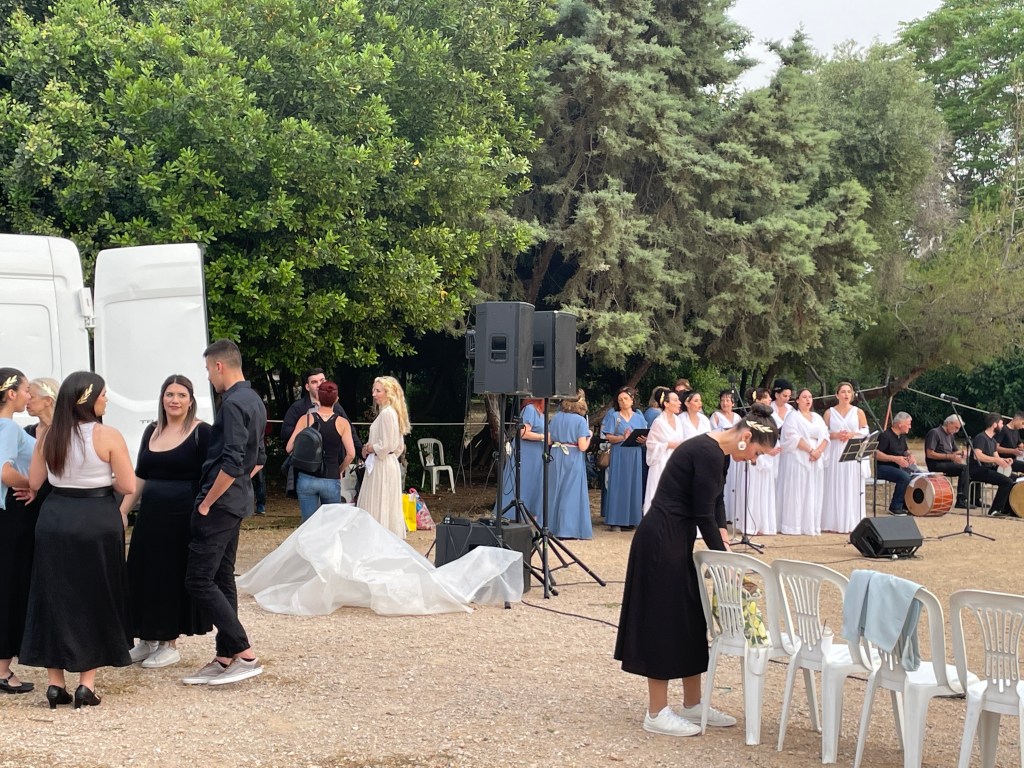
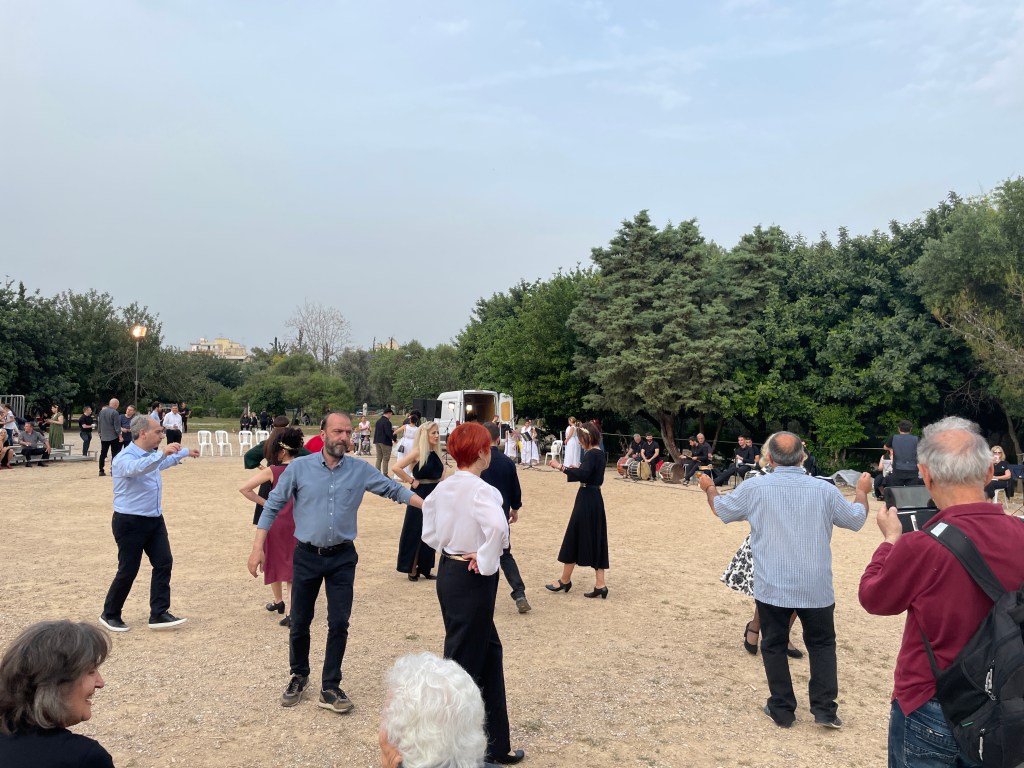
After much back and forth, it emerges that this is a celebration of the “act of naming” the park. This tantalizing bit of information raises more questions. The music stops for a while, while the next act gets readied.
We head off down the trail and walk into a hollow. This is the gymnasium of the Academy. There are blocks of stone that look appropriately old. My dad sits on the stone and ponders philosophically. I try and keep Arjun in sight as he runs around the grassy hollow. There is an informational plaque with the exact dimensions of the academy and other such prosaic details. Someone has spray-painted graffiti about the ongoing war in Gaza. Plato might or might not have approved.

To me what’s remarkable is that this ancient school of the mind had a wrestling arena. Plato was apparently quite an enthusiastic wrestler and Plato was not even his real name. Born Aristocles into an aristocratic family, he might have been called Plato because of his broad wrestling shoulders. Platys means broad in Greek.
Perhaps, it is this focus on the external as well as internal that freed the Greeks to achieve what they did. They dug tunnels into mountains from opposite ends, that met in the middle to channel river waters and had heat-powered temple gates, that opened magically when you lit the holy fire. Philosophy, engineering, and the relative freedom to think. Socrates even had the luxury of a trial before being put to death for thinking a bit too freely.
After 500 years of the Academy, when the Romans took over, the dictator Sulla, obviously a man of more action than thought, destroyed this school of ancient Athens.
Arjun gets his promised playtime in the park before we leave.

 Three Bears Travel