After a month in Greece, we landed in Jordan and we were in Madaba in no time. The highway from the airport is smooth grey and all around you is light brown sandy mud stretching for miles. Our rental apartment was owned by a Christian man and was under right the liquor store (goes to show you how liberal Jordan is) he owned. It faced an olive garden full of stray dogs and discarded plastic bags. It was comfortable without being any more than that. It had interesting decor, this house. The sofas were tiger patterned velvet and the house also had a fake brick wall decor made of styrofoam on one wall.
Jordan is very different from Europe. The landscape is stark with sandy plains and desert, it’s streets utilitarian and somewhat ugly. This was my first impression of Madaba. Well, it took about a week to settle into falling deeply in love with Jordan. When we did leave it after a month I left vowing to come back.
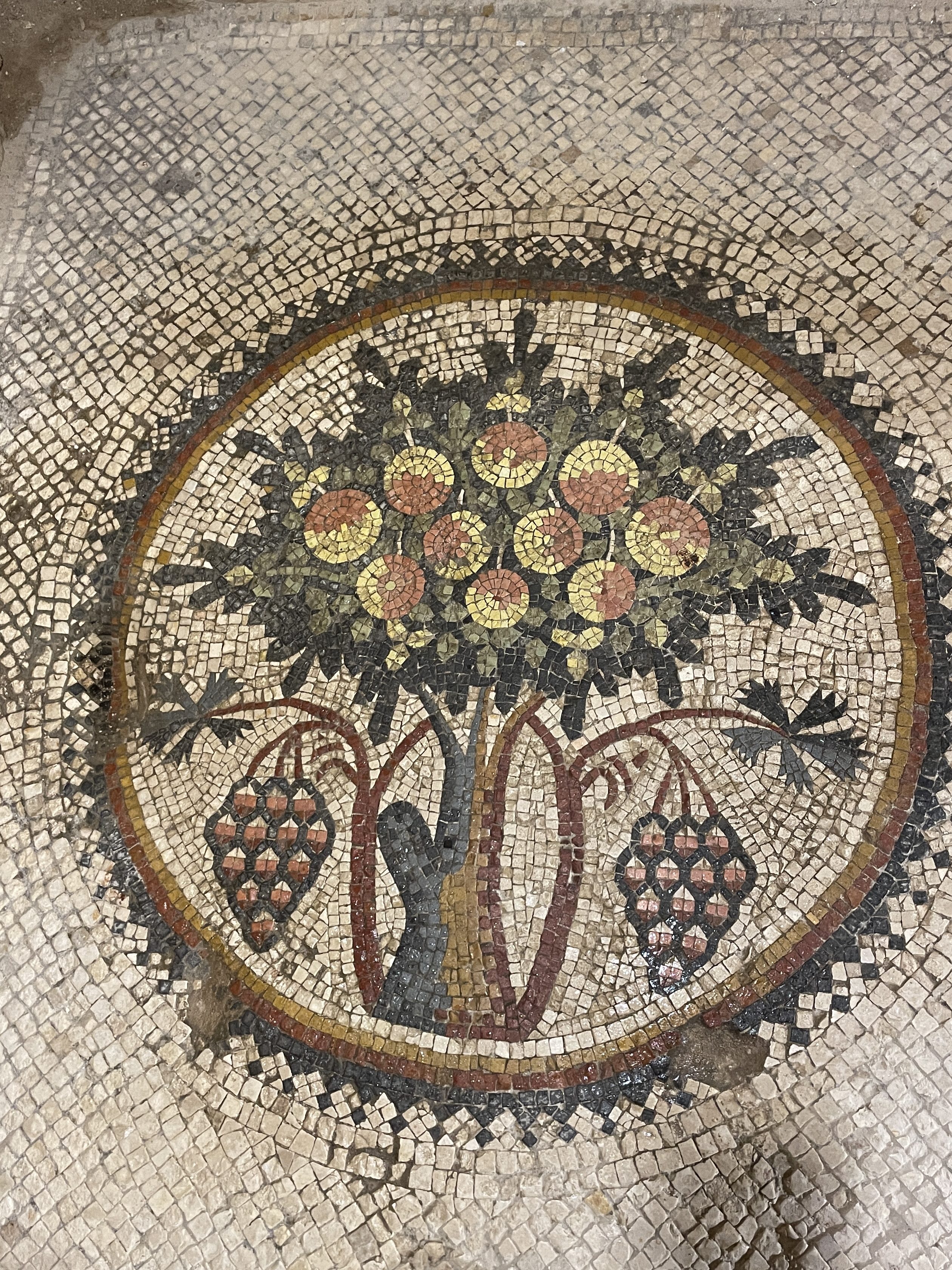
Madaba is a sprawling, busy town with a mixed population of Muslims and Christians who live very harmoniously. Its central features are all remnants of its past as a Greek settlement. We set off viewing the famed mosaics of Madaba. A roofless Byzantine greek church from the 6th century is today a protected monument and it houses some splendid mosaics.
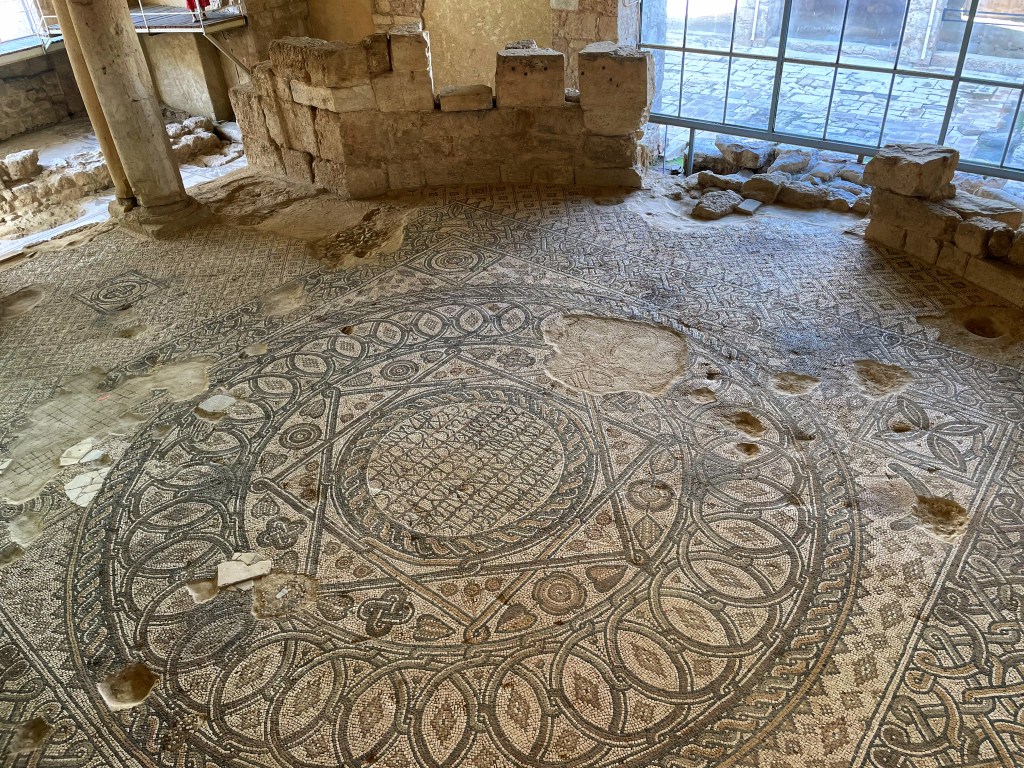
Humans have a penchant to keep building over structures already existing. Sometimes it is for religious reasons and sometimes for sheer availability of ready material. The Hippolytus Hall in Madaba used to be a 6th century Greek orthodox church housing the Virgin Mary. It also houses some Roman crypts and later on some Byzantine villas were probably built close to it or over it, which boast the most extensive and well preserved mosaics we had seen so far. Outside the roofless church (housed within a modern shelter) is also a part of a Roman highway still formidable and intact in structure. What is Byzantine you ask? It’s a curious mixture of things. It is Christian Greek Art and Architecture produced under the Eastern Roman Empire.
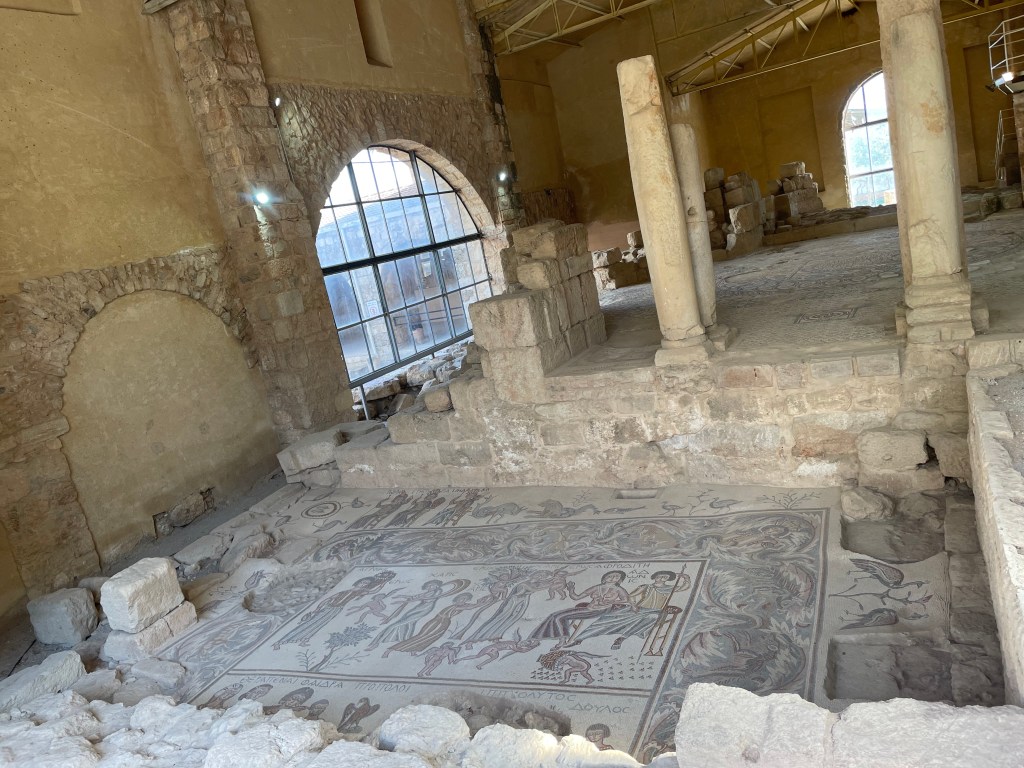
We had the luck to get a private tour of the mosaics from the proprietor who sprayed the mosaics with water from a spray bottle which brought them to life in vivid colors. The downside to this tour was that I hardly got time to absorb the details let alone read the small information boards propped here and there.
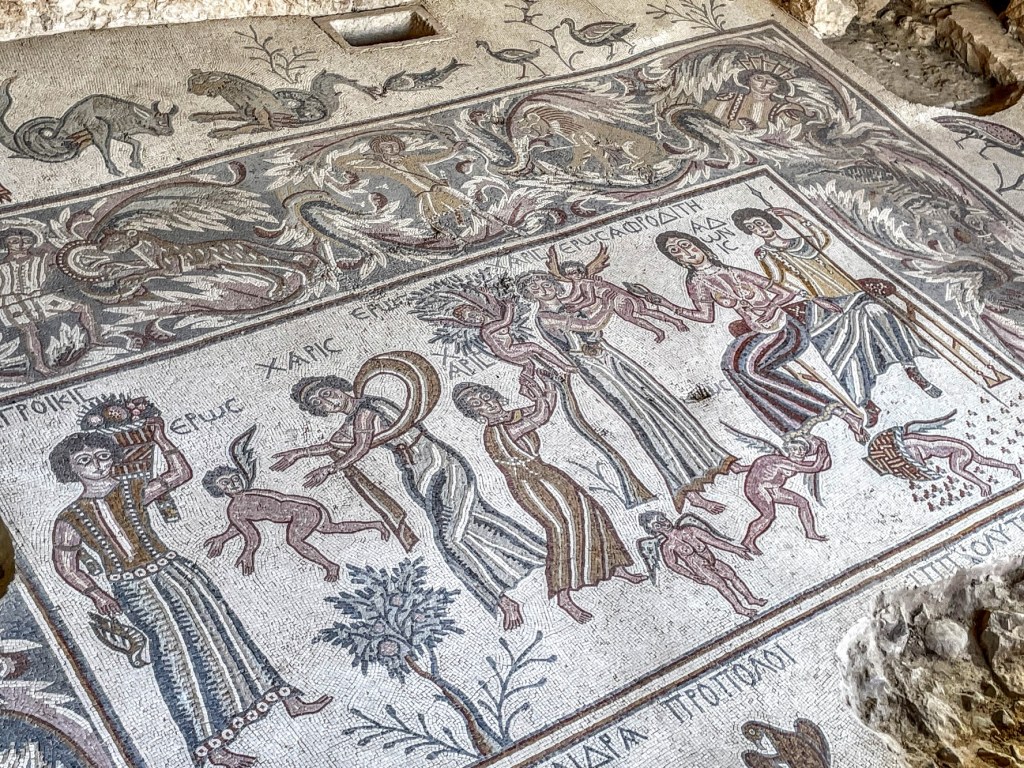
The mosaics comprise of two main panels bordered by the four seasons in each corner. Aphrodite and Adonis are seated on the very right. Adonis carries a spear in his left hand. All the characters including a man/peasant carrying a basket and grouse on the very left have their names written in mosaic on top of them .

Aphrodite holds a slipper which she is brandishing on Eros (Cupid) her toddler son. Eros is a cherubic winged boy with arrows that could spark passion in anyone. He was also ever mischievous and could hardly be disciplined. He is held by Xapic who is trying to shield him from the blows.
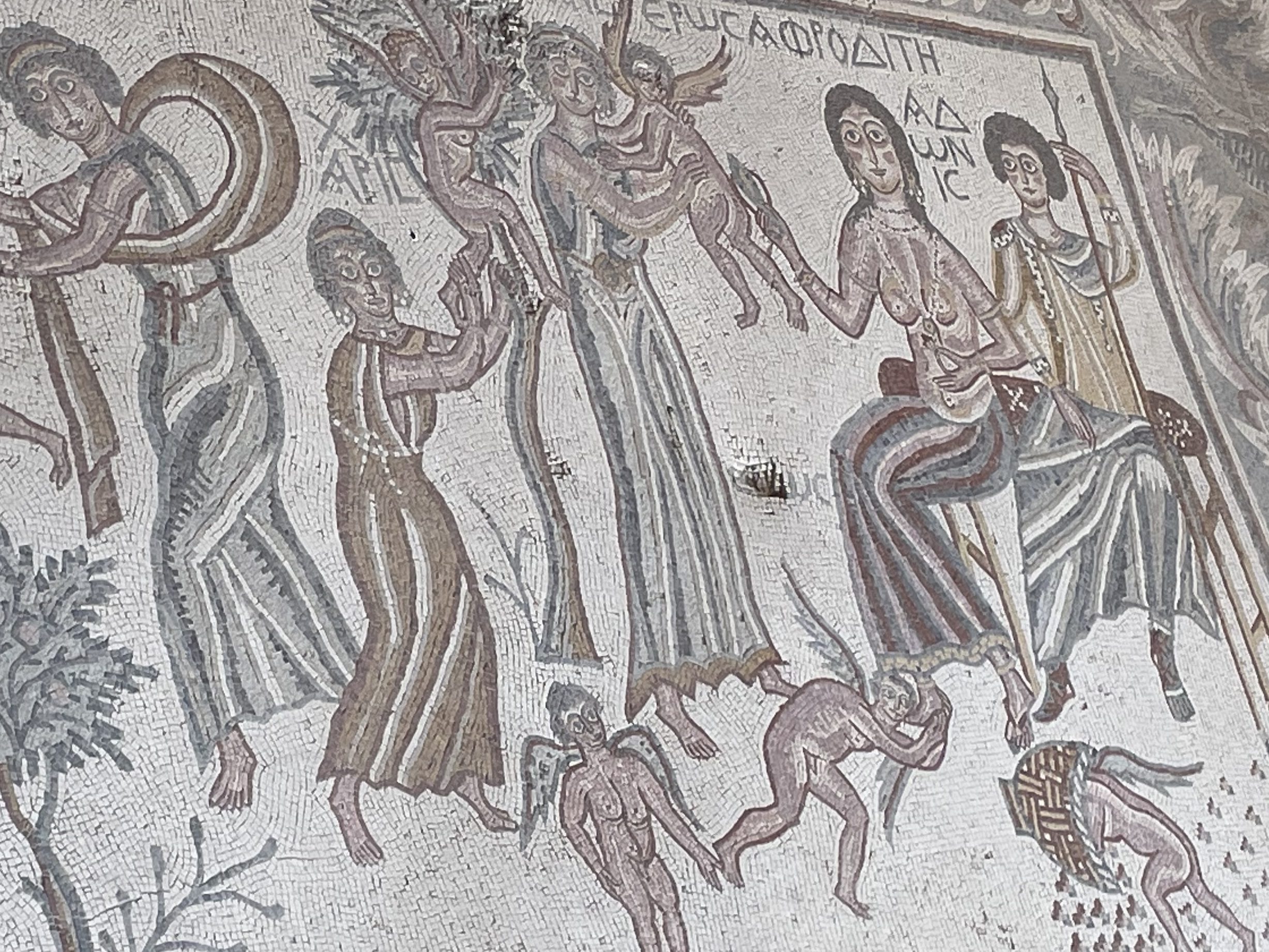
Look how two more female figures are titled Xapic? The Xapic were three graces who were the attendants of Aphrodite. Generally they stood for charm, beauty, creativity and fertility. They also seem to have been great baby sitters. You can see Eros is in six different places in a sort of comic continuous narrative. Each of the grace cares for him and tries to keep him from mischief and safe.
Eros is seen disturbing a honeycomb. You can see him surrounded by bees below Adonis’ feet wearing a shield (This happens to be a well known myth and the Greek poet Theocritus wrote a poem called ‘The Honey Thief’ in which Eros complains of the bee stings to Aphrodite) Next you also see him prostrated in front of Aphrodite’s feet clearly asking to be forgiven for his mischiefs. Is disturbing the honey comb the mischief?
Below is the myth of Hippolytus (which was dramatized by Euripedes. Euripides was a master in tragedies and this one is no different). Hippolytus was the son of Theseus and Hippolyta, the queen of the Amazons. Hippolyta dies and Theseus marries Phaedra a Cretan princess. Hippolytus is a devout worshipper of Artemis the goddess of hunting and Chastity. Aphrodite the goddess of love and passion finds his inattention towards her a snub. She instructs Eros to pierce Phaedra with one of his arrows of love which he does. Phaedra much to her grief is attracted to her stepson.

Phaedra’s nurse hearing her woes sends a messenger with a note of love from her mistress to Hippolytus. Hippolytus refuses and angers at his stepmother which in turn makes her scared. She tells her husband Theseus that Hippolytus tried to rape her. Theseus rages and sends his son to his death. Phaedra takes her own life.
Two hand maidens soothe Phaedra. Phaedra is black haired, wearing earrings and a necklace. She is looking in the direction of her stepson the mosaics for which are missing today. Next to her is the bearded falconer who sent the message and the falcon is perched on his wrist. Hippolytus is allegedly falling from his horse in the destroyed mosaic, which is how he met his death. Far right is most probably a horse stable boy. You can see him holding the reigns of the horse. I could not decipher the Greek name above this character.
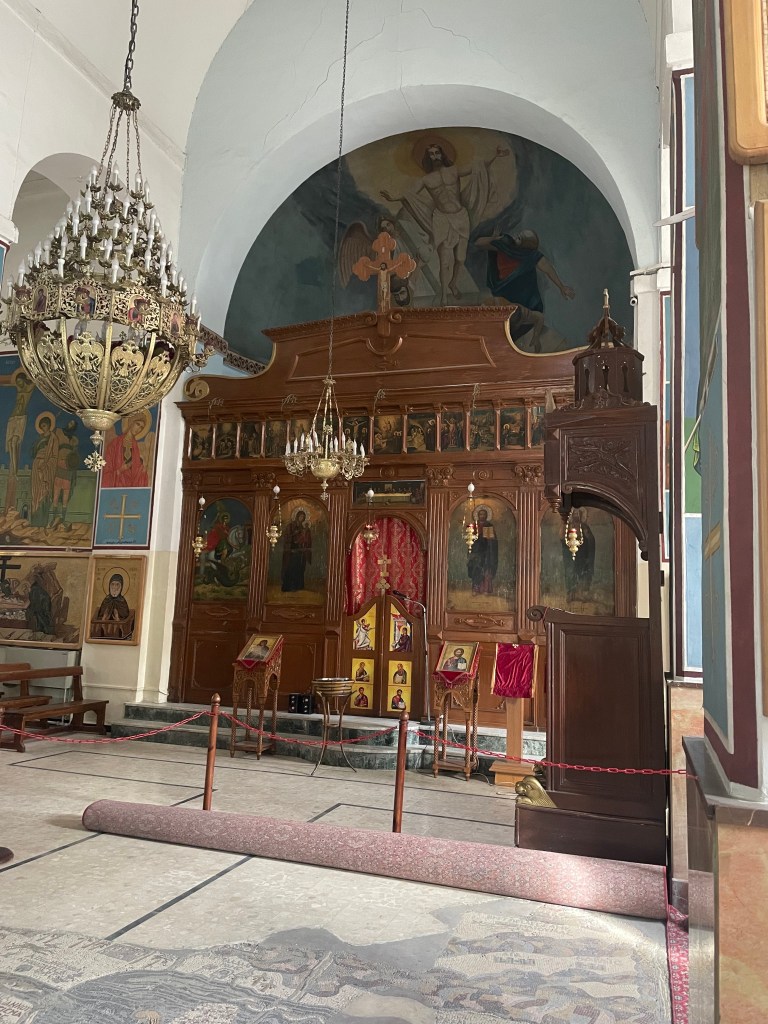
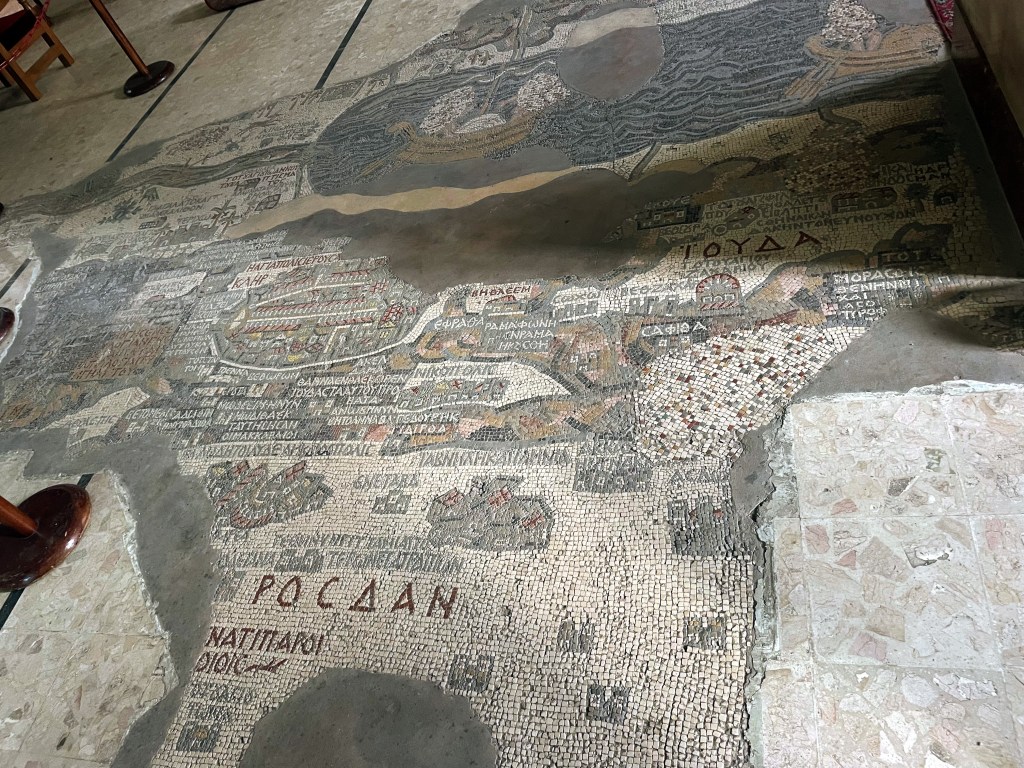
Madaba boasts of many more mosaics, in two other archeological parks and one Greek orthodox church that is still thriving and has one of the first known maps to exist. It shows the old city of Jerusalem in great detail, Bethlehem, The dead sea and many other topographical features in great detail. Parts of the map are destroyed and its vivid colors are washed out with age. The church resonates more with its devout many of him are kneeling in prayer or chanting from books. A large number of Greek christian tourists visit Madaba as a religious destination.

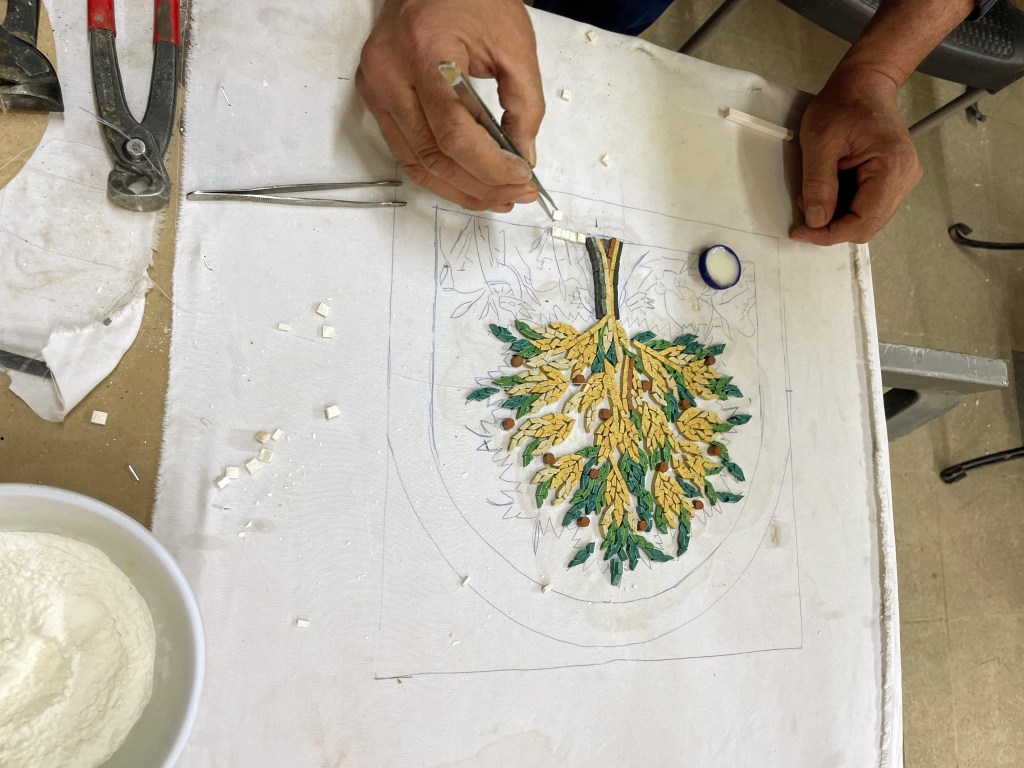
You can get your fill of buying souvenir mosaics of all sizes in Madaba. There are schools (students study for two years) and several guilds making mosaics today. An old technique has apparently been passed down since all these centuries. Rice paste is mixed with olive oil and tiny cut stone pieces are pasted onto a cloth to make the image. Once complete it is placed face down into wet plaster or white cement and once set, the cloth is removed with water which loosens the rice paste. The new technique simply glues the mosaics directly onto a plastic sheet which is then placed on wood and framed. The old technique has no gaps in between the pieces thanks to the technique.
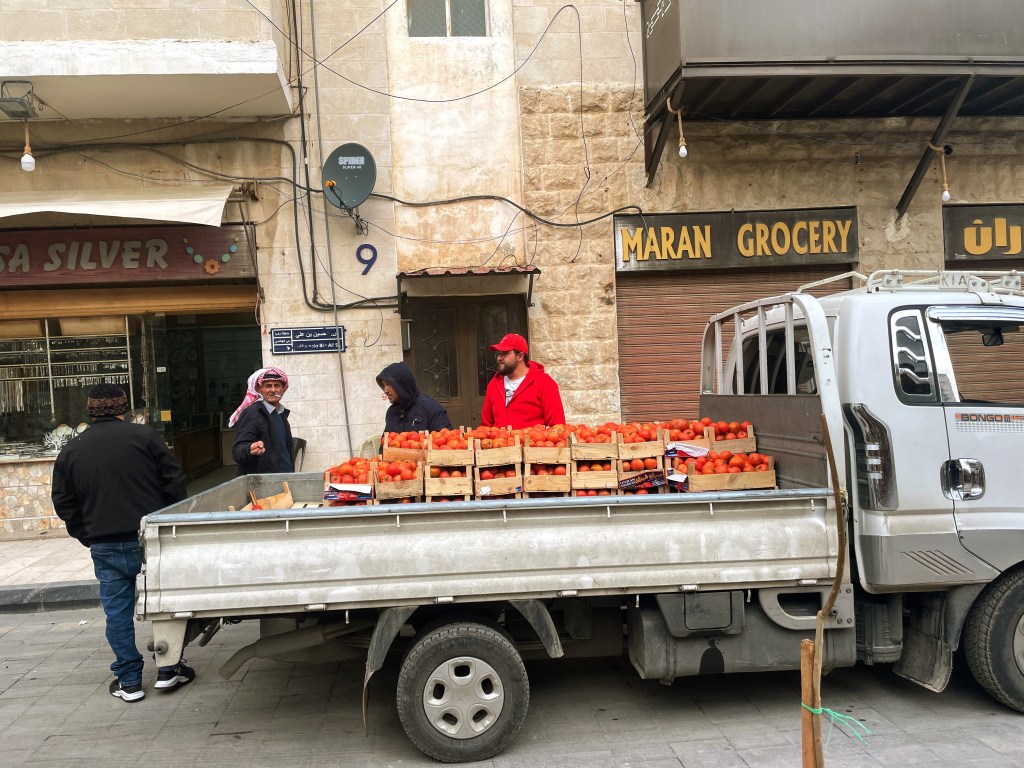
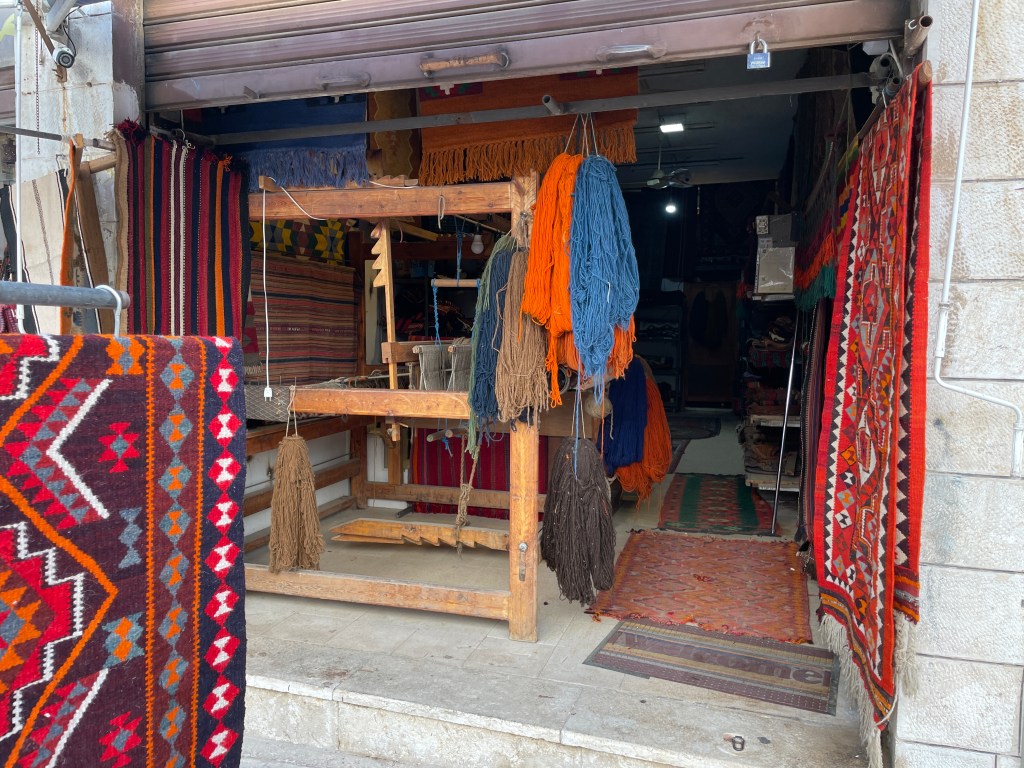
Madaba also sells hand woven carpets in sheep’s wool and there is no dearth of things to eat around town. We stroll around and find absolutely amazing Khunafa the cheesy, syrupy Palestinian dessert that has become ubiquitous in Arabia. Warm and sweet, it is heavenly.

We practically lived on Mansaf, meat and fragrant buttery rice accompanied by the most umami yoghurt sauce on the planet. Dried fermented yoghurt is used to make this addictive soupy sauce. Some styles of Mansaf meat get cooked in the yoghurt sauce itself. A generous amount of fried almonds are also a part of the rice dish. What more do you need? This dish I miss right along with the unbelievable cheerfulness and generosity of the bedouins.

If you are in Madaba go to Kawon. It is a secondhand bookshop and also runs the only vegan cafe in the whole place. It has a lovely vibe and about twenty different kinds of spices that you can ask with your tea.
 Three Bears Travel
Fabulous photos. Love your descriptions and thoughts on your experiences. Great blog! Happy travels. 😊
LikeLike
Thanks so much. It makes a big difference to hear back from readers 🙂
LikeLiked by 1 person