Cordoba is a city in Andalusia where the layers of history cling stickily like an Arab pastry. The hottest city in Europe, temperatures in summer can reach a searing 40 degrees celcius. The sandy desert soil and date palm trees give are natural history reminders of its Moorish heritage. The Romans settled here, built bridges and temples and called it Patricia. The Moors conquered it in the 8th century, built mosques and called it Qurtuba

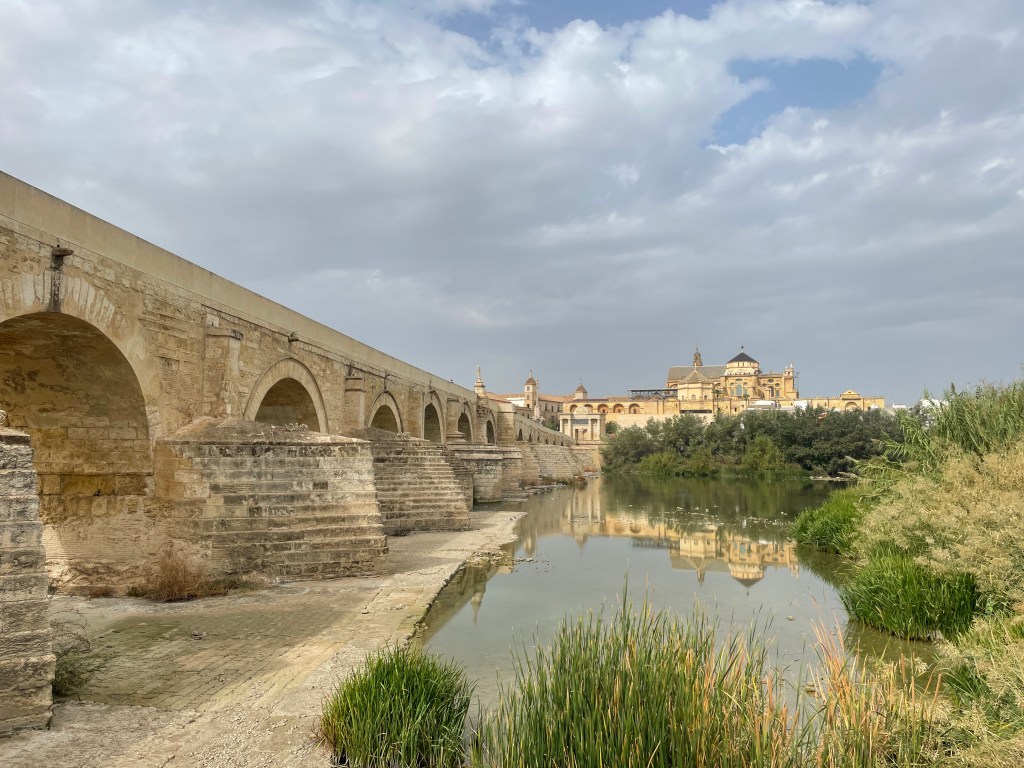
The Roman bridge over the river Guadaquivir still stands, sturdy and wide. The great stoic philosopher Seneca was born in Cordoba. The Moors fortified the city, built walls and trade flourished. Cordoba became the capital of the Ummayad Caliphate. At one time it is said to have housed over 80 libraries, before the vizier burned down all of them to appease the ulama. History ebbs and flows, and Cordoba was was re-conquered by the Christians in 1236. Mosques turned into cathedrals, but retained their horse shoe arches and intricate inlay work. The minarets were conveniently converted to bell towers.
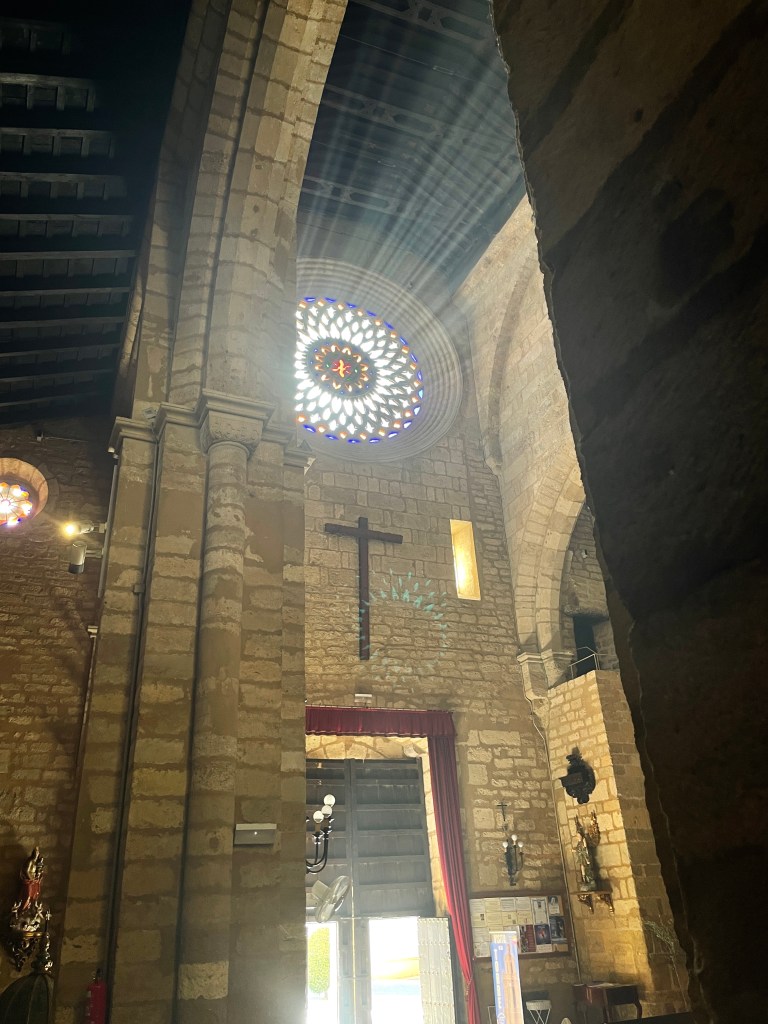
The Mezquita-Cathedral is the center piece . Several large arched doorways allow visitors into a courtyard of orange trees growing in a neat grid. The oranges are green and unripe, but Arjun must taste some. It’s one of the sourest things we have eaten. A few date palms, have enticingly shed their fruit, but they are rather muddied beyond repair.
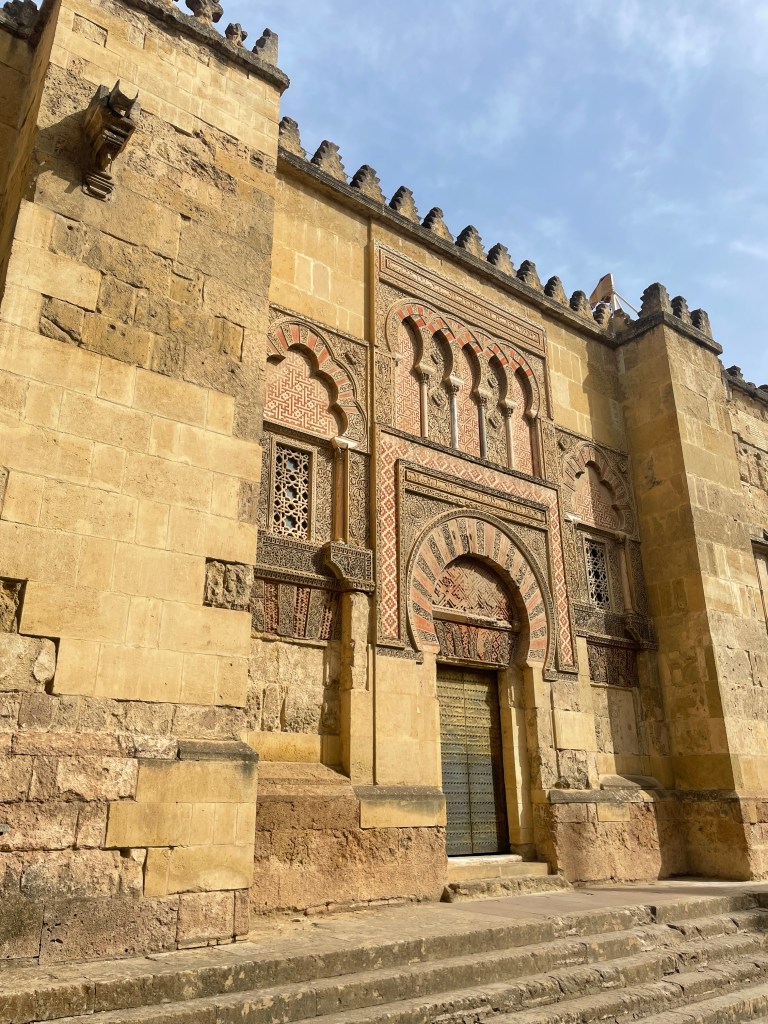
A water spigot flows into a large granite ringed basin and makes for the most challenging of drinks. The basin is large and the water flows in a steady stream and splashes, just out of reach as you lean over. With much contortions, I manage to get a few gulps of the cool water, wetting my nose, performing the sacred acts of ablutions. Later on, when trying to give Arjun a drink, he wets his shirt and is not too impressed.
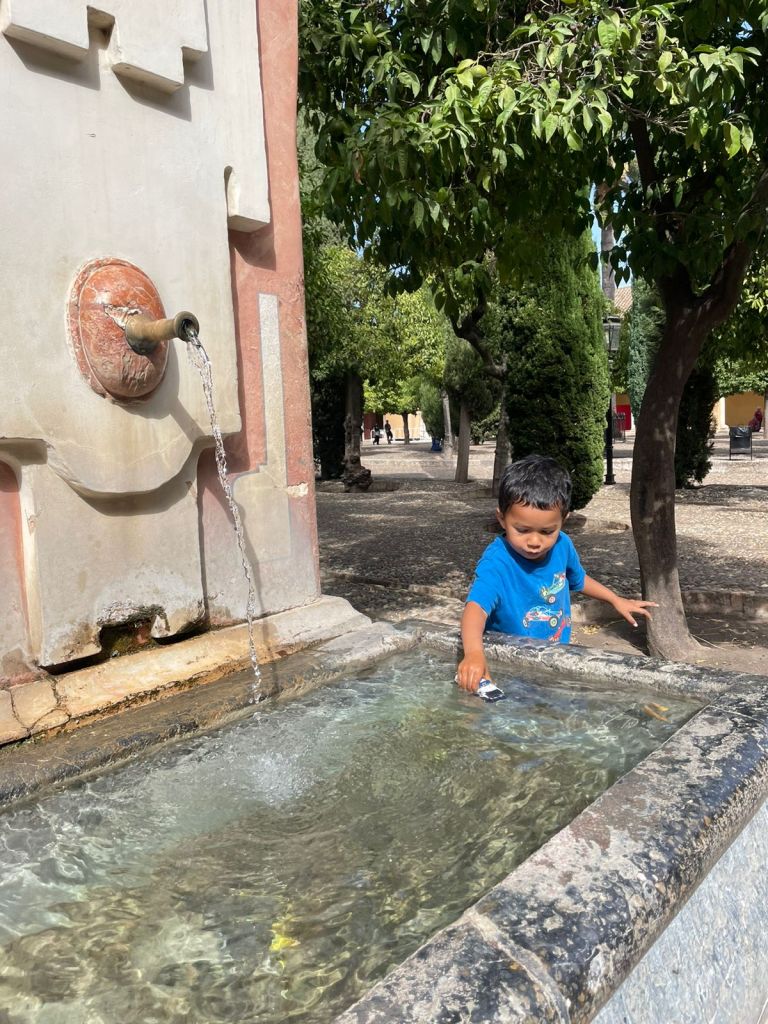

The orange courtyard or patio de los narranjos, would soon become our favorite hang out. Free to enter, and offering shade, its a great place to observe the flow of tourists and the devout.
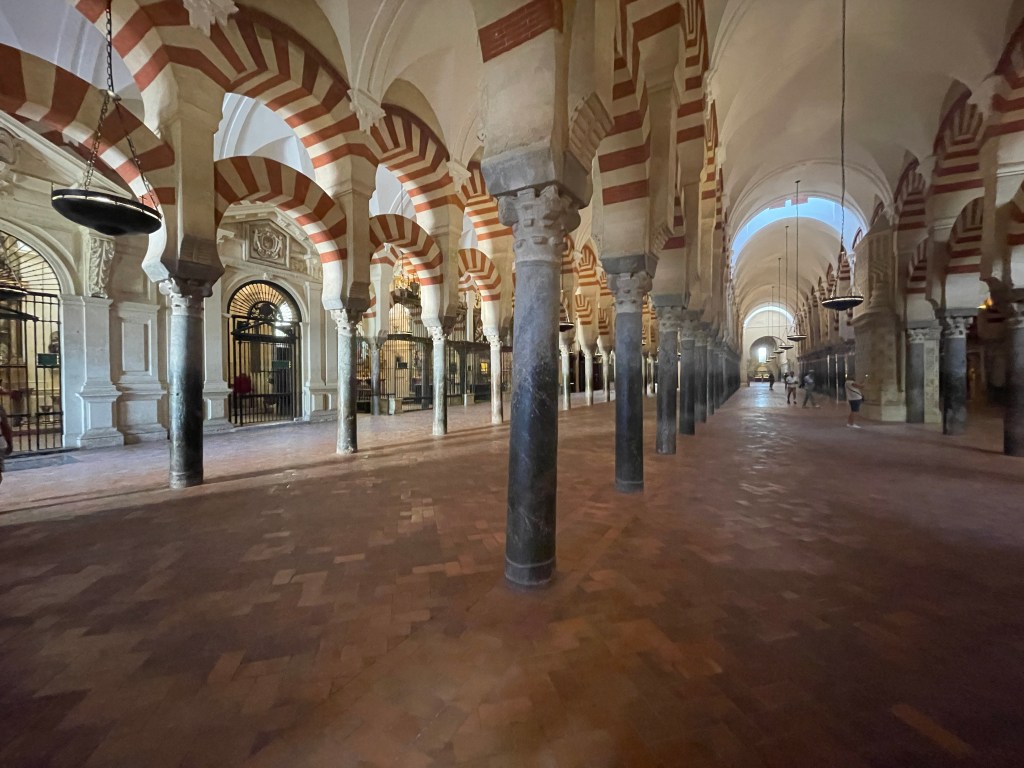
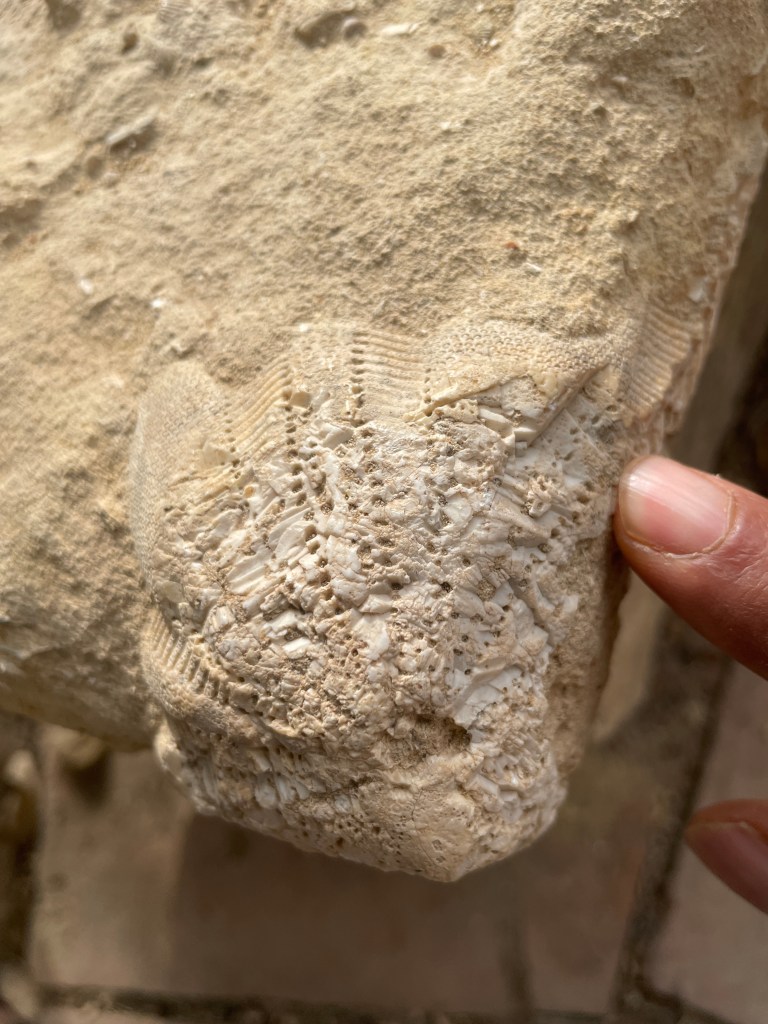
The main hall of the Mezquita has an abundance of pillars. Some marble, some reddish porphyry and some black granite. They support two tiered arches. The double arches are the subject of much interest. The artistically inclined argue that their resemblance to date palm trees was what inspired Abd al Rahman, the caliph who built it. The engineers content that the double arches were required because the pillars were not long enough. The double arches add a few feet of height. Some of the pillars are reused from ancient Roman structures and perhaps the builders were forced to innovate once they went down the path of recycling pillars.

To one end there is a tiny museum and great pains are taken to illustrate how there was a Visigothic church before the Moors built their Mosque, which was followed by the Reconquista cathedral. So the official historical timeline is Visigoth Church followed by Mosque, followed by Roman Catholic Church. Later on I found out that the Visigothic Church theory is a little disputed. A beautiful rose window, throws multi hued light on the floor and Arjun is enthralled. Our blessings to whoever built that rose window.
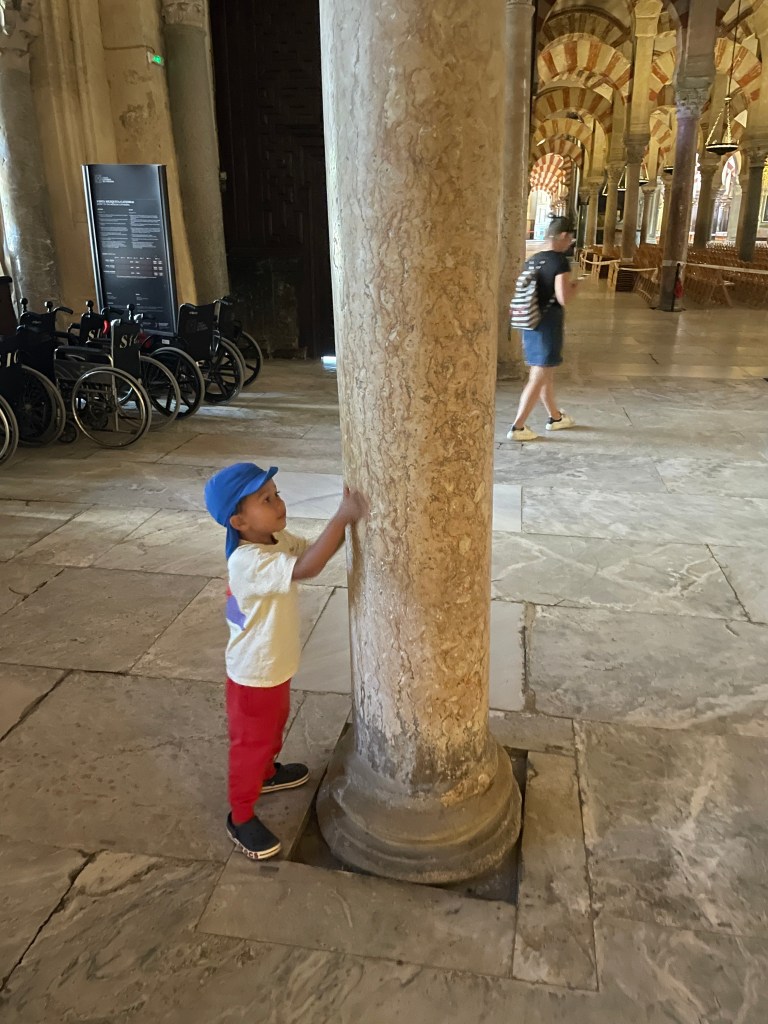

After the reconquest in 1236, the Cathedral was dedicated to the virgin Mary. In the first few hundred years, the cathedral was pretty much the old mosque, with only minor additions. The minaret was easily modified to the bell tower. In the 16th century, flush from the gold of the new world, the cathedral was majorly revamped.
The later christian additions are obvious. There is of course the high domed ceiling, heavy gold gilding and angels looking down. Although entirely a cathedral now, the church-y and mosque-y parts are easily differentiated.

On another day, as we sip fresh orange juice, outside the Mezquita and watch tourists ride the horse carriages, I overhear a south asian muslim question, “But where is the masjid ?”. Today, the muslims have been trying to get access to pray inside the cathedral, but so far the Vatican has refused. One famously exception, was back when Saddam Hussein was still considered a “good guy” and was allowed to offer muslim prayers on his visit in 1974
We walk outside the walled city and cross an old Roman bridge. It’s a sturdy and wide pedestrian only avenue now. To the other side are grass banks and a children’s park, which has plenty to interest a toddler. In the late afternoons, teenagers swing by and try out the slides.

One afternoon, we walk along the ancient city walls.It is a pleasant walk and a great way to make a tired toddler actually fall asleep. We see a few dressed up fine looking horses. The horses of Cordoba are a well known breed, mixing Arab blood with the Iberian. Quite like the rest of Andalusia.
We re-enter the old city through another horse shoe arch and walk past a sculpture of Ibn Hazm, a strict interpreter of the hadiths.

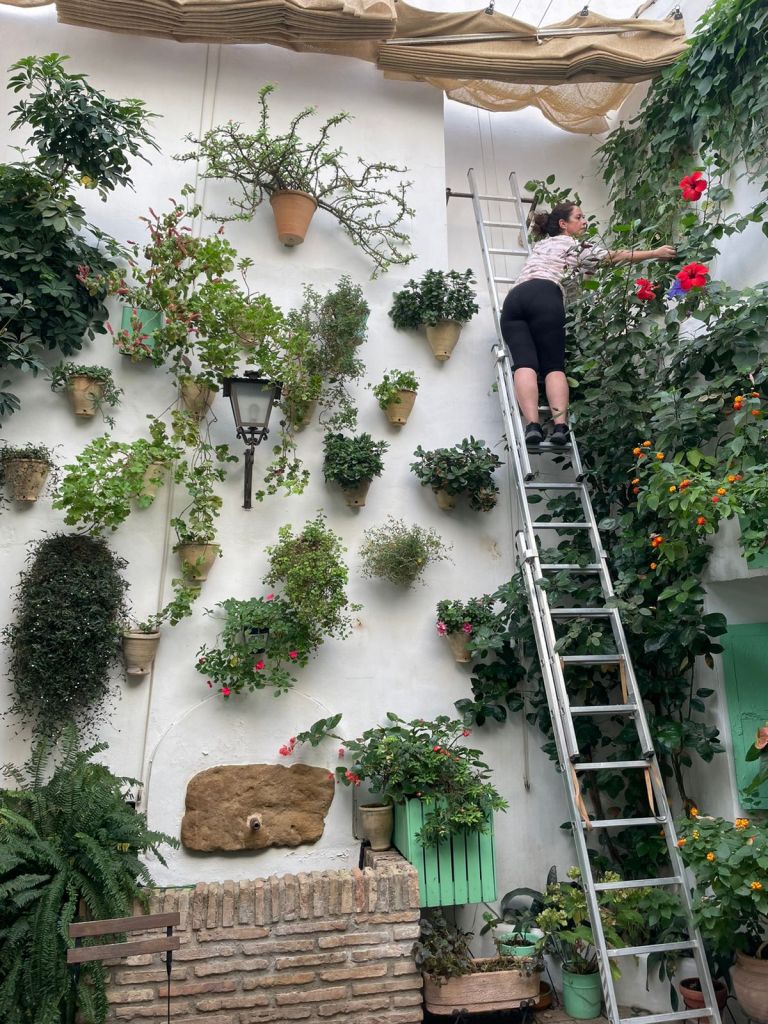
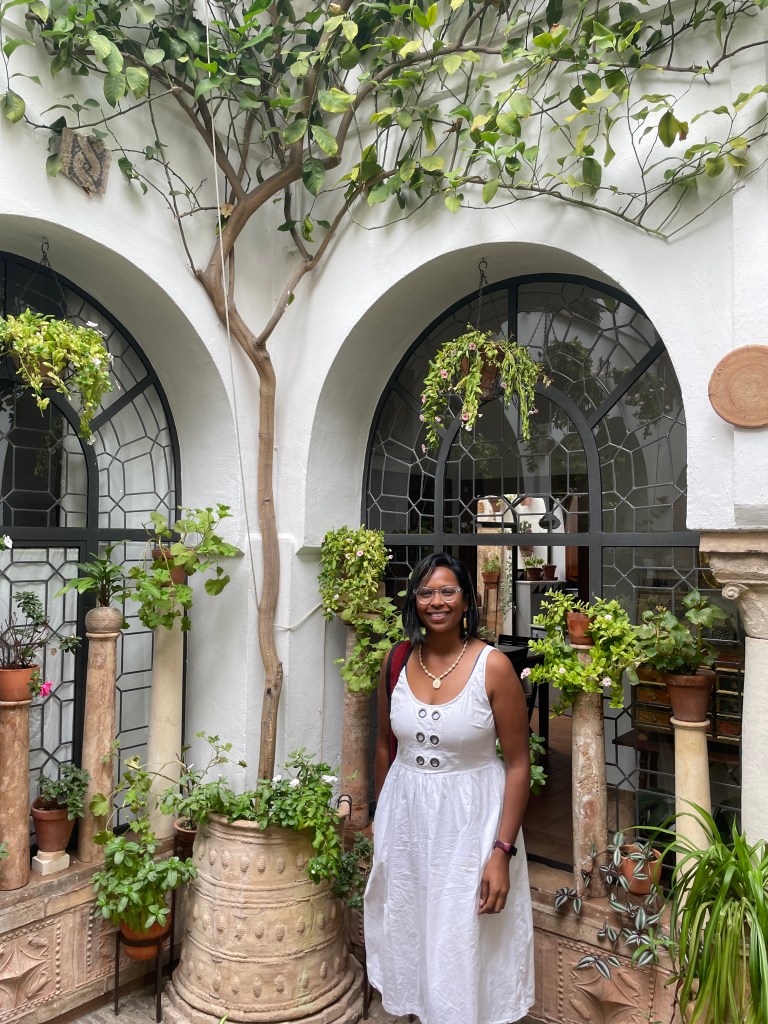
We are suddenly in an alley with beautiful patios. We enter a home and creepers rise up the white walls. Flowers gush out of planters and an ancient lemon tree clings to the walls. Cordoba holds a patio festival, every year and we are at the home of one of the winners. The proud owner , points out a roman mosaic and claims that the lemon tree we saw earlier is from the time of the Moors.

 Three Bears Travel