We drive through the “montado” in Portugal and enter Spain. There are no border check-posts and the only difference we notice is that the olive trees in the orchards grow a little closer together on the Spanish side. The hot sun continues to beat down on the red earth and beavertail cactus grows amongst the oak where the Iberian pig shelters in the shade.

Jerez de los Caballeros is a small town in the Extremadura province of Spain just a few kilometers from the border. The Conquistador Hernando de Soto, who alongside the more famous Pizarro brought down the vast Inca empire in Peru was born in this town. Pizarro , the illegitimate son of a small time nobleman, spent his youth herding swine in this harsh land, before going on to more lucrative adventures in the “New World” . He would assemble a lot of his crew from the Extremadura.

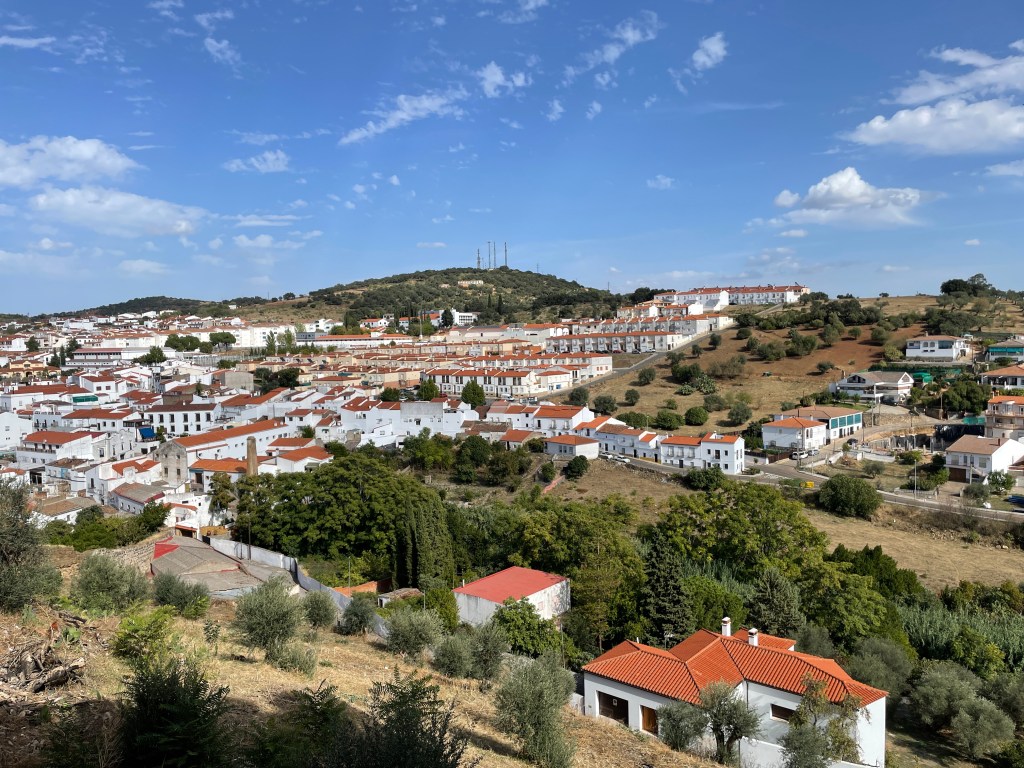
Jerez de los Caballeros is set on a small hill that rises from the plains. We stay just outside the walled city. Our ‘home’ for a few days, is set amidst a small orchard, under what must surely be the quietest fly over in the world. Hardly a car goes over head and our worries about being disturbed by the sound of traffic are dispelled immediately.
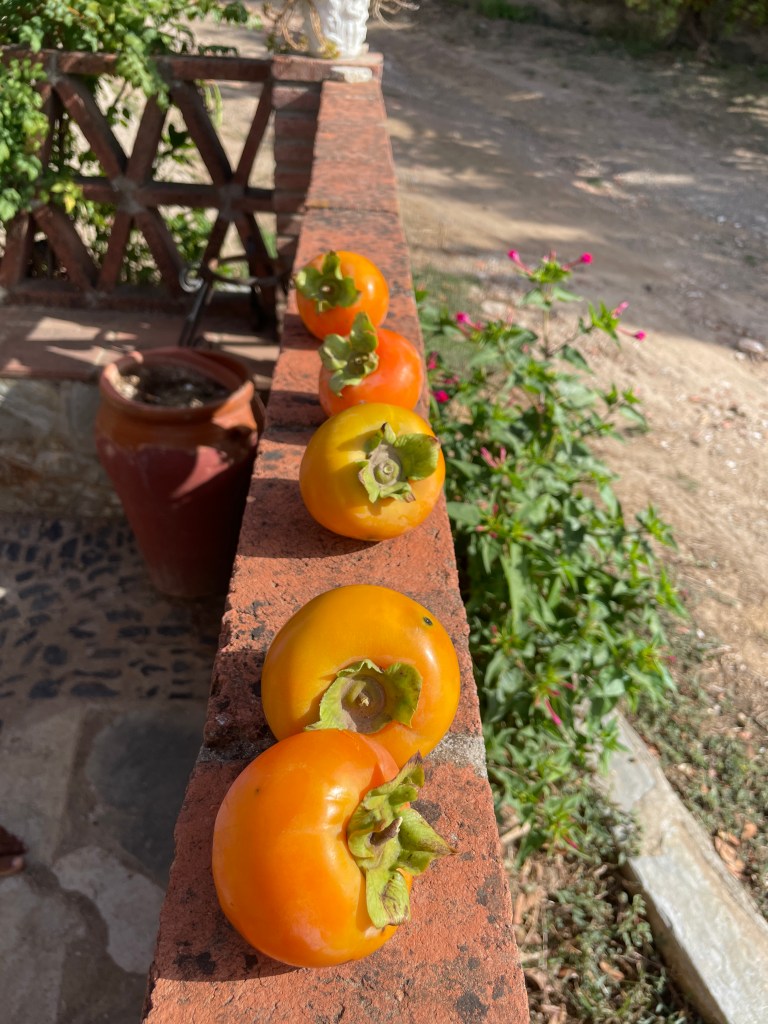
The small orchard has olives, oranges and persimmon. An aging farmer, digs with a shovel and is the picture of rural cheery spirits. He gives Arjun several juicy persimmons (cachi in spanish), heads over to the hen coop and procures 3 large brown eggs. Then amidst much chatter in spanish that I barely follow, explains to me that he now needs to get a drink and then lunch.
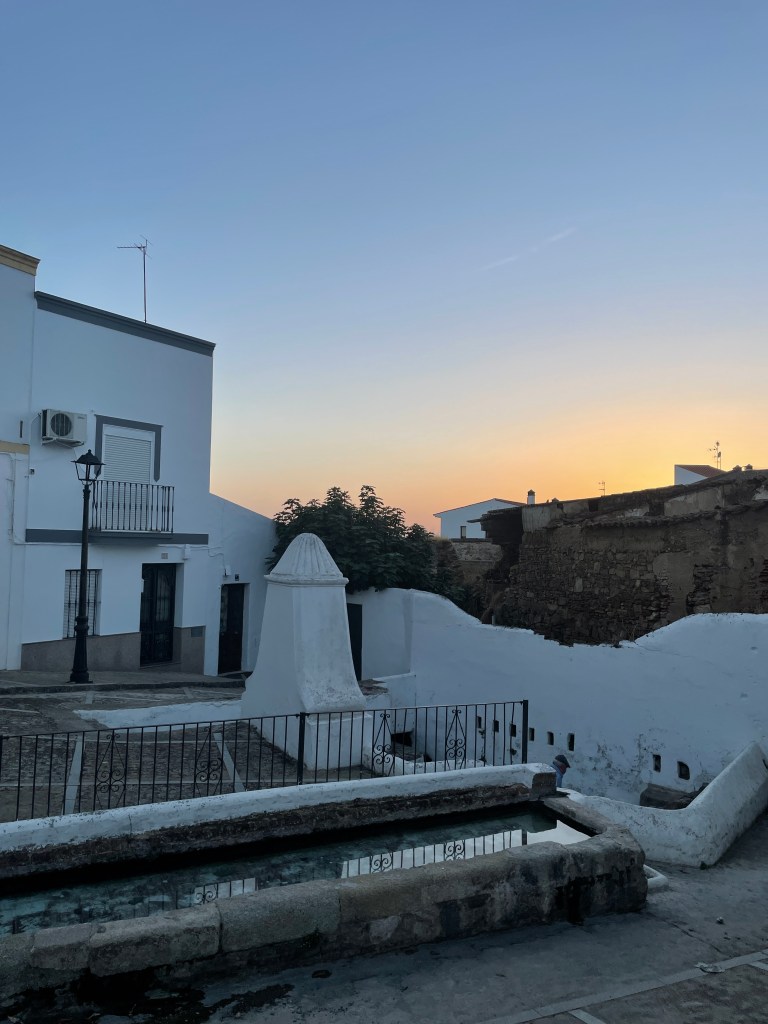
The next day we explore the town. Walking uphill on the now familiar narrow cobbled lanes, the whitewashed walls have a bare severity, we did not see in Portugal. Not too many flowering plants. The soil of the extremadura is said to be quite poor and perhaps does not make the greatest substrate for a colorful patio.

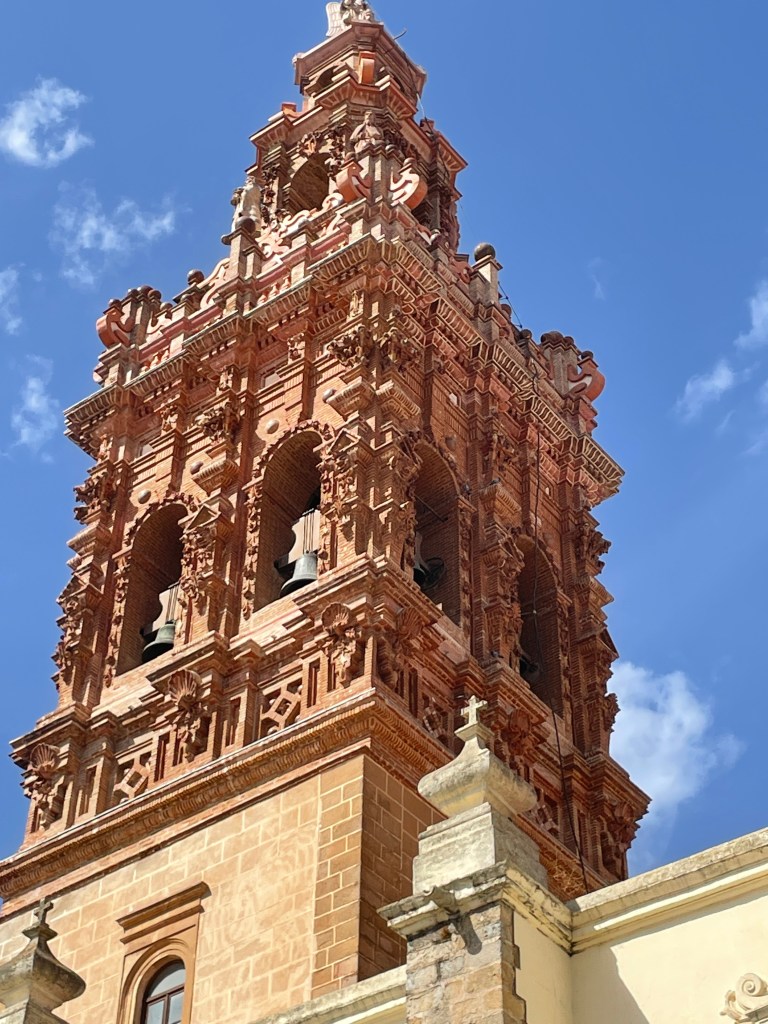
We climb to the castle and admire the views from the ramparts. To one side, we see the sparse oak forests stretch amidst the rolling plains. The white washed walls and red roof of the homes make for a pleasing view. On the other side rises the bell tower of the Iglesia (Church) of Bartolome.

The intricately carved Baroque tower of the church is faintly reminiscent of a South Indian temple to me. The tower was once a minaret when the city was under the moors.
The moors (a loose term that is a catchall for all Muslims) ruled for about 400 years and amongst other things introduced irrigation to Iberia. The knights templar who helped reconquer this city in 1230 made this their town. The “los cabelleros” whose literal english translation is gentlemen, refers to the Knights Templar.

Alas the tide would soon turn for the Knights and they were all beheaded just 90 years later in what is now appropriately called the “bloody tower”.

The templars are now celebrated in an annual feast that is held in July. There is a lot of dressing up in medieval style and templar tourist mementos line the few stores. Apparently the templars are back in fashion.

 Three Bears Travel